More on K0EOO’s Amazing Homebrew SSB Rig

Hello Bill,
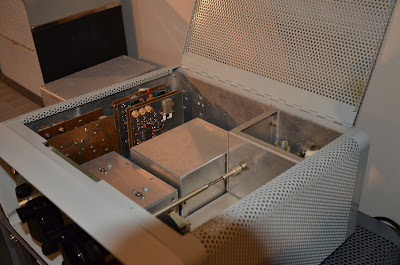
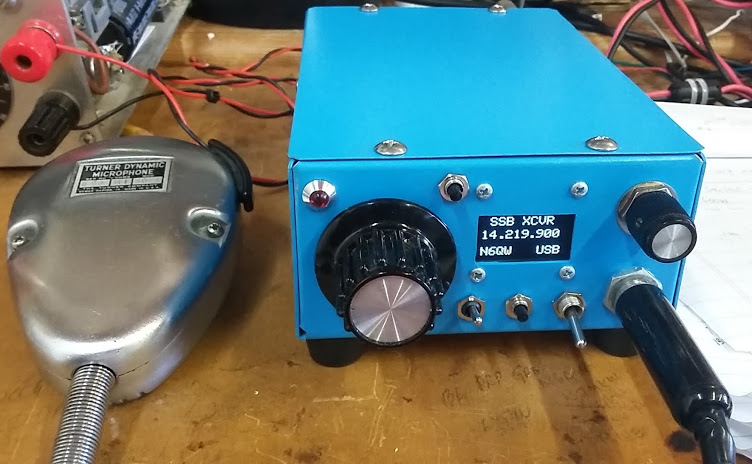
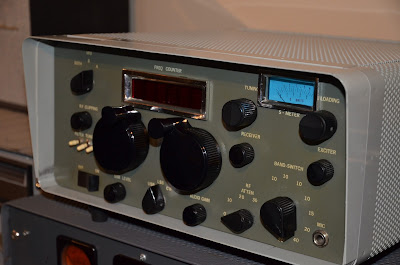
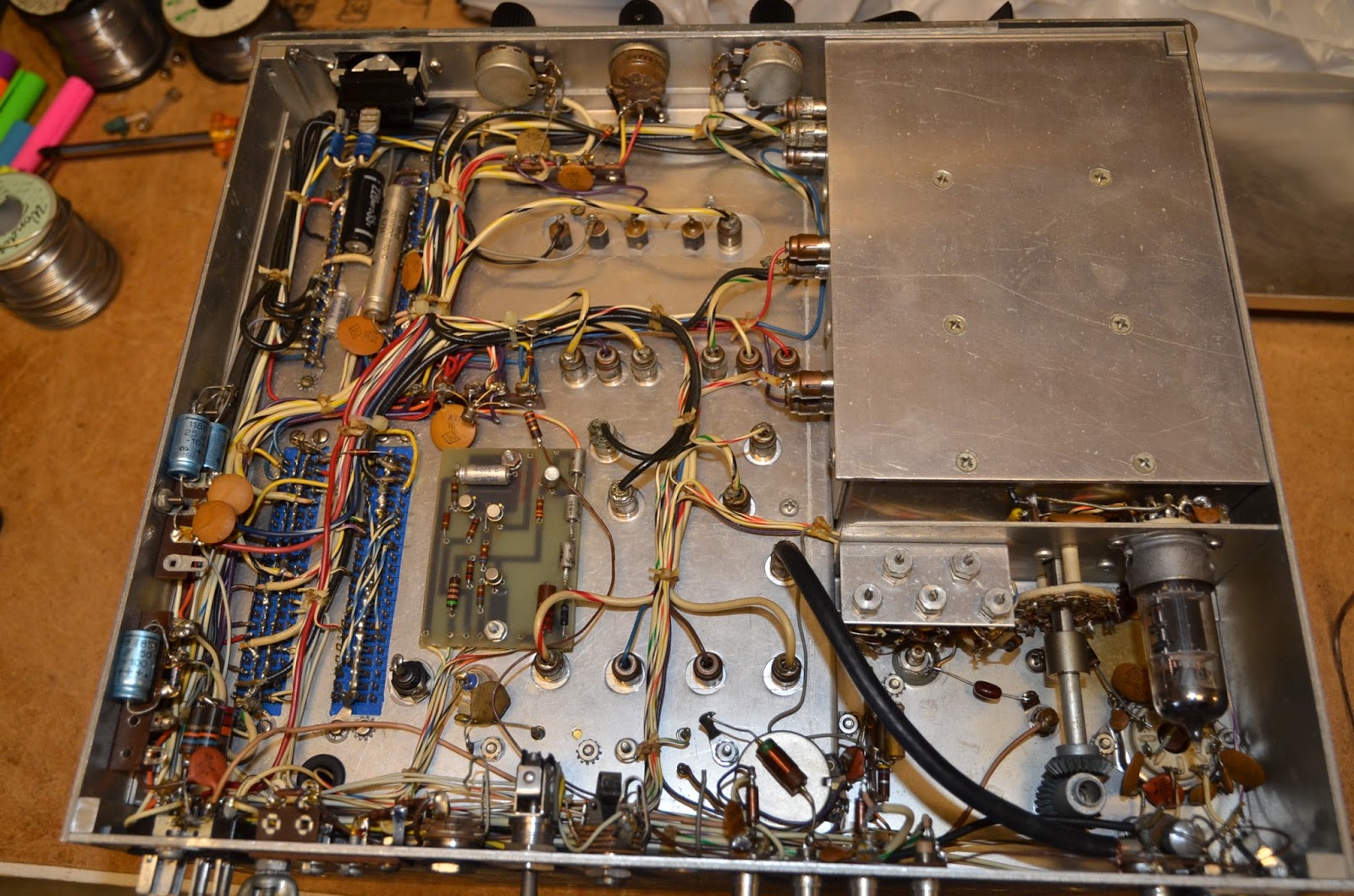
The rig was my own design based on an article by Guy Gillet, ON5FE, published in QST, Jan 1970. (Editor’s Note: ON5FE’s article also appears in the 1970 edition of the ARRL’s book “Single Sideband for the Radio Amateur.”) His article had some features I wanted and became the guts of the transceiver I finally came up with… The rig took me some 2-4 years to complete mainly because I keep changing circuits and improving performance. For example, I started with a 4 digit counter using nixie tubes and ended up with 7 digit 7 segment LED counter summing the BFO, VFO and HFO. I also later added the keyer and CW audio filter and so on…..
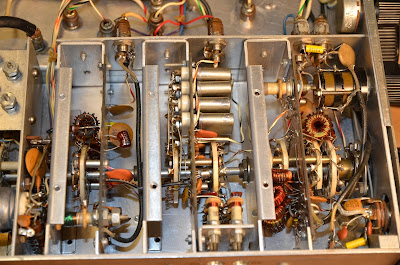
Other than the outer cabinet from LMB, I did all the metal work complements of the metal shop at our lab at CDC’s advanced design lab.

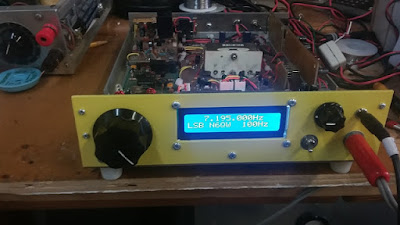
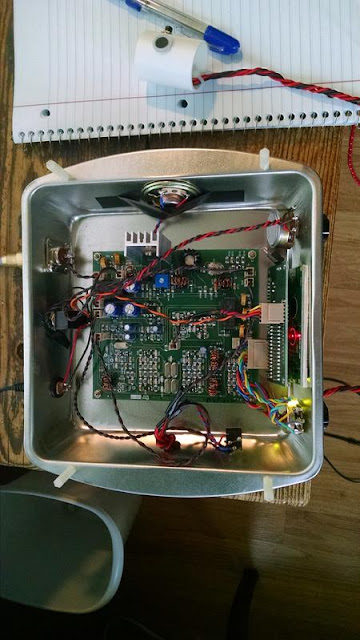
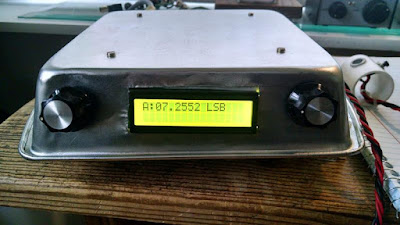
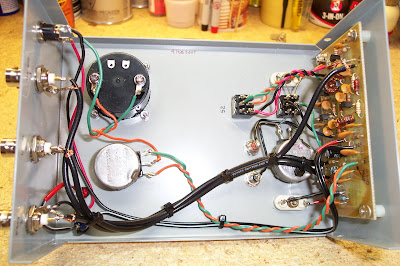
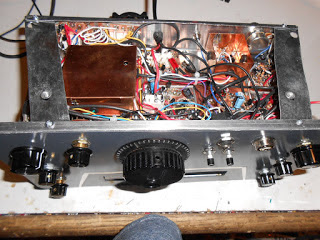
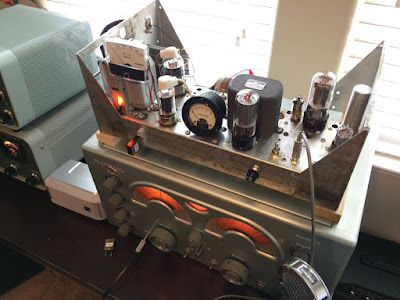
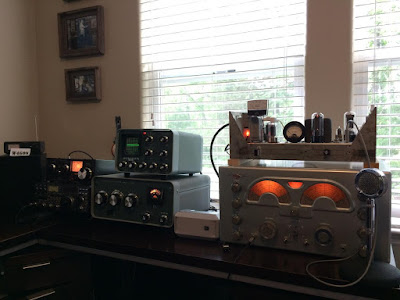
Pictures show bottom with RF bottom plate installed and bottom view of RF section with plate removed. Front panel and picture of top cover open showing the plugin PCB’s. Cannot see the digital counter display board in any of the pictures.
Here are a couple pictures of the old girl. I’ve added a description of the rigs features:
Features:
  • Dual conversion, first IF tunable, second IF fixed
  • RF clipping
  • 7 digit readout of exact operating frequency (digital summation of BFO, VFO and HFO)
  • All solid state except for 6146 and 12BY7 driver.
  • RF gain is 0-60dB step attenuator on input
  • Dual VFO’s for separate receive/transmit or transceiver A/B
  • Modes are USB/LSB/CW
  • Auto zeroing S-Meter
  • Built in VOX and PTT
  • Built in CW keyer and sidetone generator
  • Built in CW audio bandwidth filter
  • Built in Tune mode
  • Built in RF Clipping lever control
  • Built in keying to PTT external amplifier
  • Output signals for SB-610 scope receive signal monitoring
  • Output signal for SB-620 Scanalyzer panadapter
  • Diode T/R switching through out the radio, no relays, totally silent TR switching
Well Bill, you opened Pandora’s box when you asked me for more details, hi, hi… You can almost see the buttons popping off my vest as I reminisced the feature list…
Regards, Dennis, K0EOO
K0EOO: Homebrew SSB in 1974

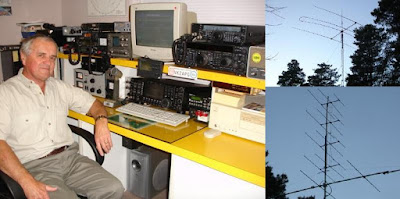
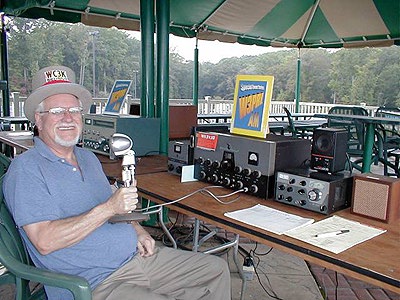
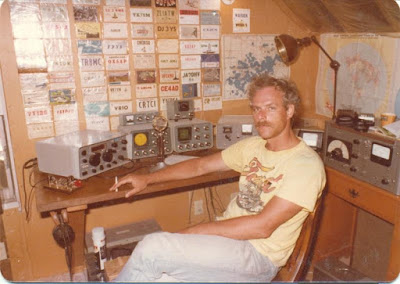
It is not everyday that you get on 40 meters and run into a guy who has actually built a single sideband transceiver. But that is what happened to me today. I spoke to Dennis, K0EOO. He showed an unusual interest in my BITX DIGI-TIA. He went on to explain that he had done some homebewing himself. In the picture (from 1974), right next to his Vibroplex bug we see his homebrew, 80-10 meter, dual conversion, solid state (except for the 6146 final) SSB transceiver with digital readout. Wow. That’s a beautiful rig.

Off his right shoulder is a homebrew 700 watt amplifier using dual 4CX250s. And behind his left shoulder we see a homebrew tube-type receiver.

Note the look of pride and determination in OM’s eyes. You can just hear him saying it: “Rig here is homebrew.”

More pictures of Dennis and his rigs (including some amazing vintage gear) here:

https://qrz.com/db/K0EOO

http://www.isquare.com/millen/members/k0eoo.htm

http://www.vintagessb.net/k0eoo.htm

Thermatrons Al Fresco: W4GON’s FB HB AM Rig

I was listening to 7290 kHz with my BITX this morning and I heard W4GON say his AM rig is homebrew. So of course I fired up the DX-100 and the HQ-100 and gave Joel a call. Conditions were terrible but we had some support from the radio gods.

From Joel’s QRZ.com page: “It uses a pair of 6L6s in Push-Pull Class AB1 high level plate and screen modulating a 6146. I still have a lot of work to do on this rig, like building an enclosure, but it works and I just couldn’t help but getting on the air with it!”


I think it is a thing of beauty.

“So You Want To Build?” Words of Wisdom from Pete Juliano


Everything on Pete’s blog is worth reading, but this article was so good that I could not resist posting a link to it here.

Tribal knowledge from a leader of the homebrew tribe:

http://n6qw.blogspot.com/2017/08/a-new-line-of-transceivers-difx.html

AE7KI (VK2APG), FT8, and WAS on a BITX20

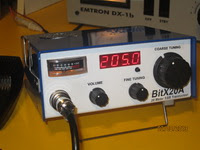
I’ve had several very nice conversations with Gerry AE7KI (aka VK2APG). His Australian accent sets him apart from the other Tennessee stations. Last time we talked Gerry mentioned having competed Worked All States with his BITX20 (below). Very cool.
Gerry also alerted me to a new digital mode created by Joe Taylor. This one is called FT8. Gerry is using it to good effect on the 6 meter band. Here is Peter Marks’ initial reaction to FT8:


As I type, there are 252 stations monitoring 6 meters for FT8 signals. You can see a map displaying these stations here:

Yellow Fever! The Cold War Origins of Juliello

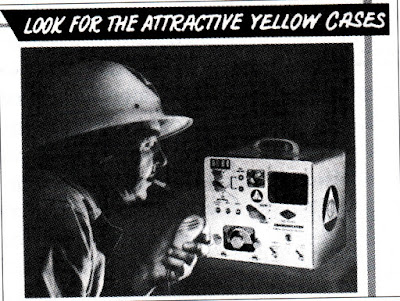
How could you miss them? That yellow was bright! Apparently you needed high visibility to cope with the looming danger of nuclear annihilation. The operator in the ad is obviously calm in the face of Armageddon — note the cigarette dangling from his lips. In this 1956 Gonset ad we can see the inspiration behind what — many decades later — has emerged as the avant-garde ham radio color scheme known as Juliello. The roots of this aesthetic are clearly not in the psychedelic “Mellow Yellow” hippie era. No, this color has harder, more flinty origins.

Pete Juliano is not the only one to embrace this look. Podcast #198 elicited this response from our friend Armand WA1UQO:

Pete:
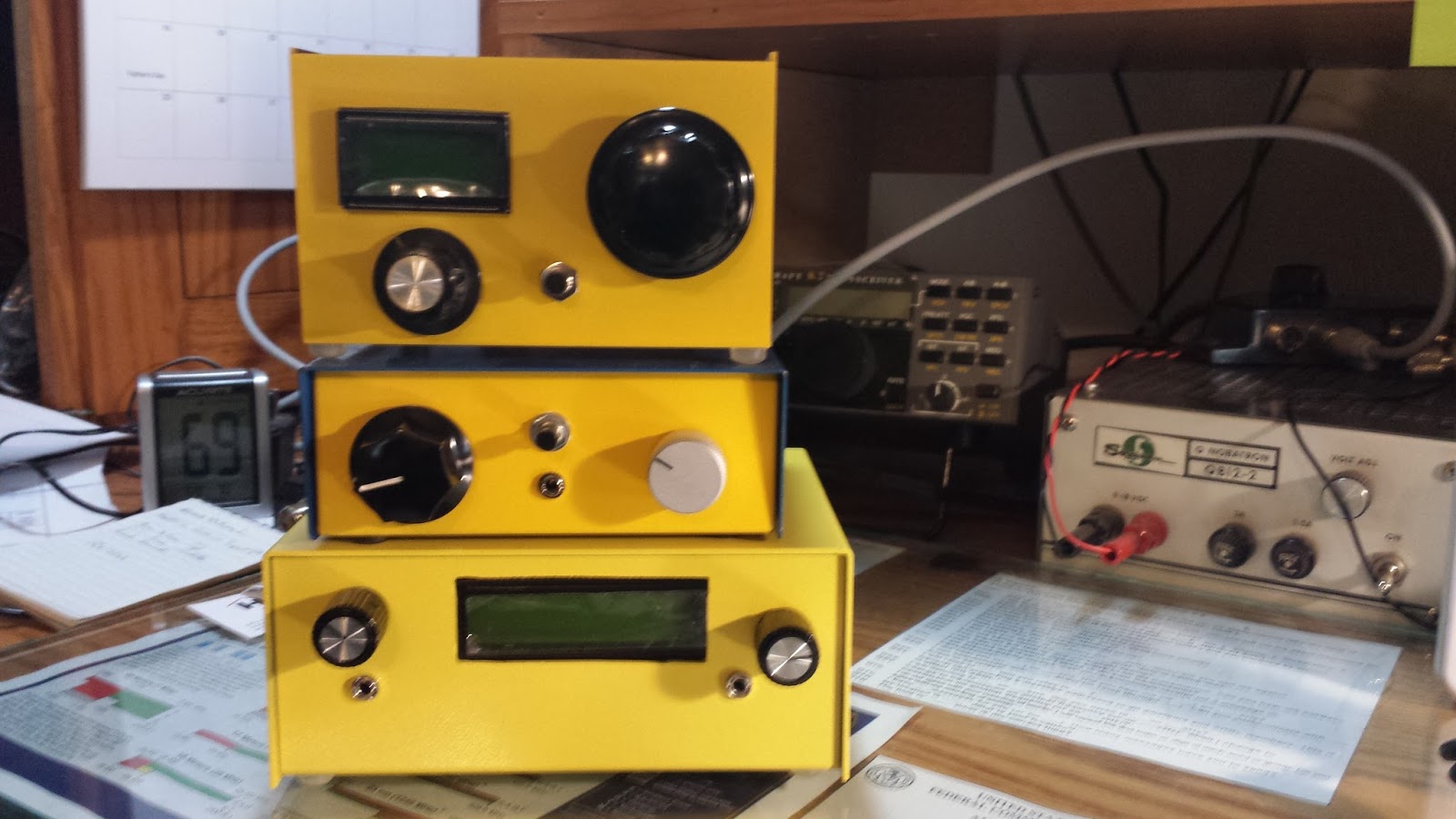
Don’t let that Meara guy give you a hard time over the yellow Rigs. The last three of mine have been yellow and I’m happy to see I’m not the only one with good taste. In the picture they are from top to bottom a 30M One Watter, a 20M One Watter and of course the BITX 40. The 20M does have a Juliano Blue cover though to give it an extra bit of class! As always, enjoyed the podcast.
Bill, see you at Berryville?
73, Armand WA1UQO


SolderSmoke Podcast #198 – D-104, HW-8, Juliello, DIFX, Dishal, Baofeng, MAILBAG

Bill Breshears WC3K (SK)
SolderSmoke Podcast #198 is available.


29 July 2017

Sign on a beach store: SHACK-TACULAR!

Noticed that EB63 amp was getting hot. Why?
TT2, Herring Aid5, Farhan’s Key: QRPp and CW! See?
D-104 lore — Reading from Bill Breshear’s (WC3K) ER article
Astatic crystal/ceramic element — disappointingly flimsy
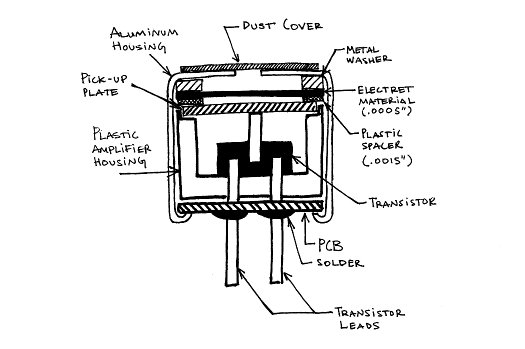
Electret-ing it. The G-Spot (see picture above)
Walery KB2FIV sent crystal mic element and piezo buzzer (reverse for mic!) FB
HW-8 AF filter Center Frequency Problem. IT’S TRUE! Fixed! Finally.
Shack re-org at N2CQR
Got Steve Silverman’s HP 8640B Sig gen on the bench. Required reinforcement
Pete’s new DIFX
LM373 rigs. Perhaps with that CA3020 Pete sent me. Chips Ahoy!
Juliano Yellow? Origins of Blue? Juliello? Julionyx?
HB Crystal Filter Capitulation? Don’t give up Pete — just dish the Dishal!
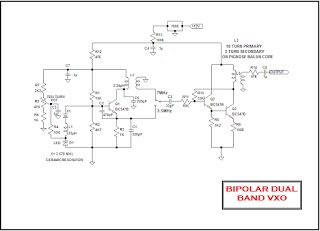
Ceramic VXOs? K.P.S. Kang
Crystal testers by G7WKE and Dino KL0S. Impressive.

Antennas and BITX40 modules. Antennas are important.
Bill’s new Baofeng HT on 440.
Fixing my Sony SW7600GR
MAILBAG
Steve Silverman alerts us to NYC radio row now in the Bronx.
Tony G4WIF on the cover of SPRAT — Getting the Don Cameron award. FB
Armand WA1UQO points out that the Berryville hamfest is coming up…
Thomas KK6AHT F4HDQ writes in.
On the air with W8NSA

Juliello. No.

Ralph Baer — Video Game Inventor

Thanks to Stephen G7VFY for alerting us to this very nice video. Ralph Baer did pioneering work in video games. It is fun to see him in his workshop. He obviously has a variant of The Knack. Stephen hinted at a reference to “noodling” but I didn’t hear it — perhaps Stephen meant that the whole thing was about what we’d call noodling. I found the box on his bench labeled “Wire Wrap Materials” kind of ominous — remember our April 1 announcement about the launch of the new “Wire Wrap Rap” podcast?

I liked Ralph’s summary comment about how these days he just has fun building things.

Intuitive Repair of a Sony Shortwave Portable

A few years ago my wife got me this nice little Sony ICF-SW7600GR receiver. On the front it proclaims that it is “AM DUAL CONVERSION” and “PLL SYNTHESIZED.” It has a BFO, and a filter of suitable width for SSB. It also has a synchronous detector — it generates an internal carrier that matches the frequency and phase of the carrier being transmitted by the SW broadcast (or ham AM) transmitter. This helps overcome the selective fading that often plagues AM signals. Sony advises switching to USB or LSB once the synchronous generator locks onto the carrier. Pretty cool.

The BFO is the reason I wanted this receiver. And wouldn’t you know, when I dropped it, it landed EXACTLY on the little BFO fine tune control pot. It was as if the Radio Gods disliked all the fancy digi PLL synchronous IC circuitry.

I tried without success to find the value of the destroyed pot. Finally, last week I just decided to have a look in there to see if I could just figure it out.

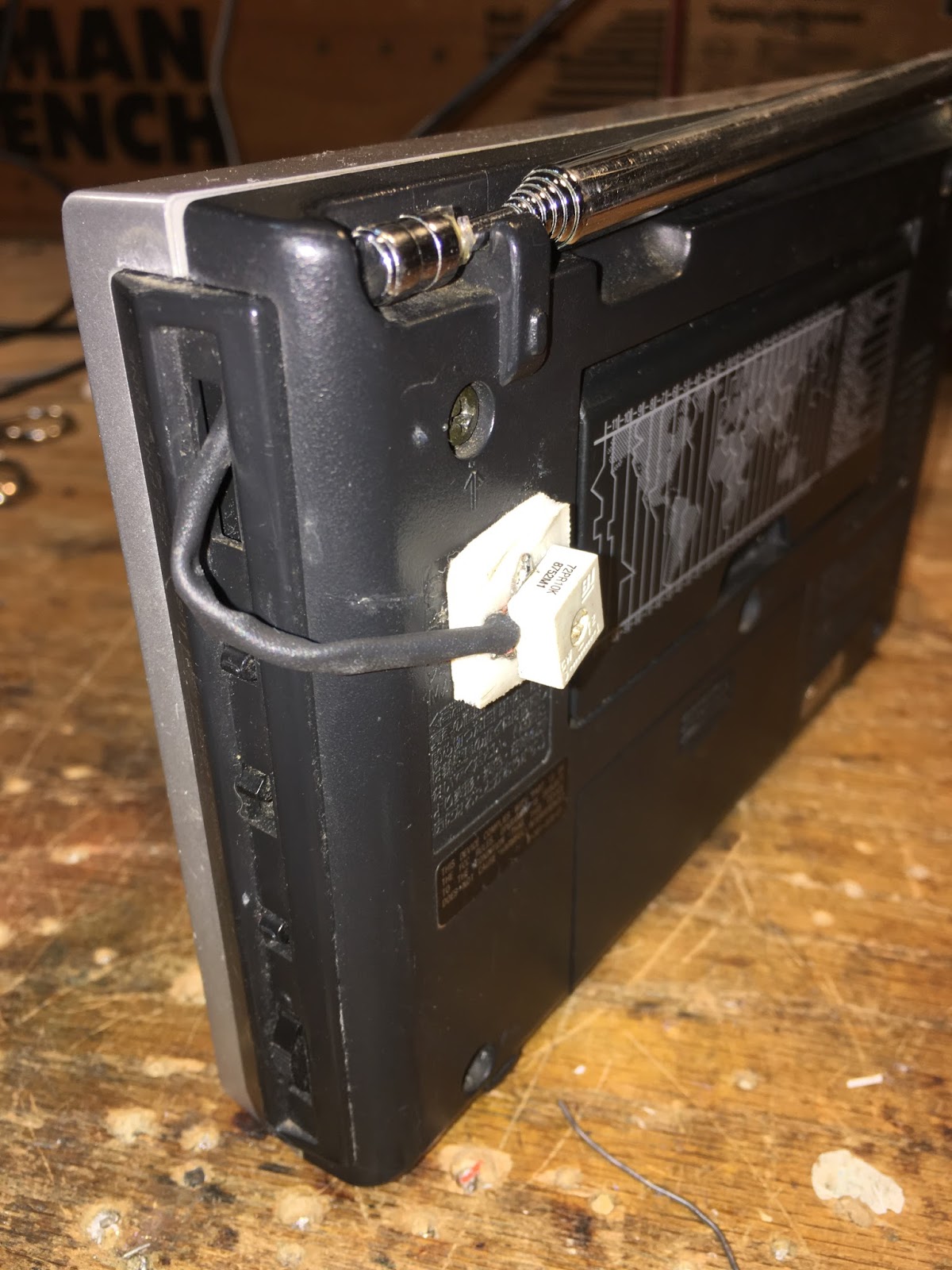
On the board I could see that the pot only connected at two places, so I figured it would be a varactor circuit on the BFO with one end of the pot to DC and the wiper to the varactor diode. I figured I’d try a 10K pot.

This seems to have been some good radio intuition. It works. I went with a small trimmer because it is less obtrusive and because once I set the BFO in the right spot, I think the de facto channelization of the 40 meter ham band will keep most of the SSB sigs in tune. And the Sony only tunes in 1 kHz increments. If necessary I can move the BFO a bit with a small screwdriver. I just glued the trimmer pot onto the back of the receiver — two wires covered by heat shrink run back into the circuitry.

10k might be a bit too small. Maybe 100k would be better? As it is, I can move the BFO above and below the “zero beat” point, and I don’t need more range. Mouser has a small trimmer pot with a tuning wheel that looks like it might fit, so I may try for a proper repair.

NYC’s Radio Row Survives (sort of) in the Bronx

Thanks to our friend (and official lexicographer) Steve Silverman KB3SII for alerting us to this important bit of radio news from the Big Apple. It seems that a part of old Radio Row was saved and moved — first to Brooklyn and now to the Bronx. I got a kick out of some of the comments in the New York Times article about the store: The insurance company determined that the contents of the store were “non-pilferable.” And one young audio enthusiast was quoted as saying that old American tubes “sound better” than Chinese tubes. I guess they have more presence. Or brightness. And less feathering. Or something.

Here is the 2011 NYT article:
http://www.nytimes.com/2011/11/20/nyregion/leeds-radio-is-a-haven-for-lovers-of-all-things-analog.html


To N2CQR

Dino’s FB W1FB Crystal Tester

A couple of weeks ago I noted that the complexity of DeMaw’s circuit caused many of us to wimp out on this test gear project. I joked that those who had built the device might be able to set up small businesses to do the testing for the rest of us. Perhaps our friend Dino can cut a deal with G7WKE to divide up the world market for crystal testing: Dino could have the Western Hemisphere while Rob covers Europe and points East.

Bill –

Enjoyed seeing someone else who has built Doug’s crystal tester on the blog. Here’s mine, built this back in early 2007. Anyone who wants to duplicate the tester can find the article in the January 1990 issue of QST or the updated article in the W1FB Design Notebook (page 192). Note that the QST article has a missing component value and a missing component (both corrected in the Design Notebook):


(1) R24 is missing its value – it’s marked in the Notebook as 56 ohms.

(2) There should be a 220 ohm resistor connected between the output pin of U2 the LM317T regulator and the top of R1 the voltage adjust pot that is connected between U2’s adjust pin and ground [corrected in the March 1990 QST Feedback column].

I built a FT-243 adapter to let me work with larger crystals.

73 – Dino KL0S


And Now For Something Completely Different: 70cm FM

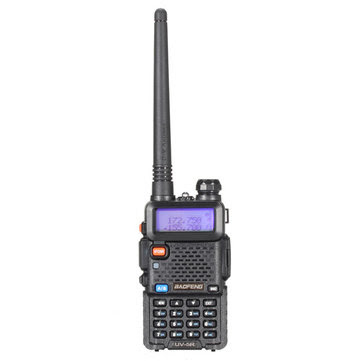
So there I was, talking to KE5FV on my scratch-built 17 meter BITX, when in walks my son Billy with this walkie talkie. “Hey Dad, I’m cleaning out my room — could you use this?” I’d seen it before but I thought it was some Family Radio Service device that he had picked up. But no! It is one of those very cheap Baofeng UV-5R FM transceivers. I soon found myself scrolling through menus, trying to figure out how to use the strange new appliance.

I got it on 70cm and soon established contact with a Bill W3HXF — that was my first ever UHF contact. We then switched to 2 meter simplex.

It works fine. I’ve been looking for something different. This could be fun. Any suggestions on how to make the most use of this thing?

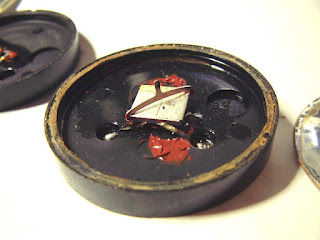
Have You Ever Seen What’s Inside a D-104 Crystal Element?

I had not seen this I must say, I am disappointed. I had visions a circular collection of shiny Rochelle salt crystals. But look at this thing. It is quite flimsy — not at all what you’d expect from the sturdy D-104 exterior. It has kind of a “Wizard of Oz” behind-the-curtain feel to it. Yuck. If I can’t find a D-104 element in good shape, I might reach for a dynamic element or — gasp — an electret.

Stop Me Before I Commit an Electronic Atrocity!

Sadly, not mine

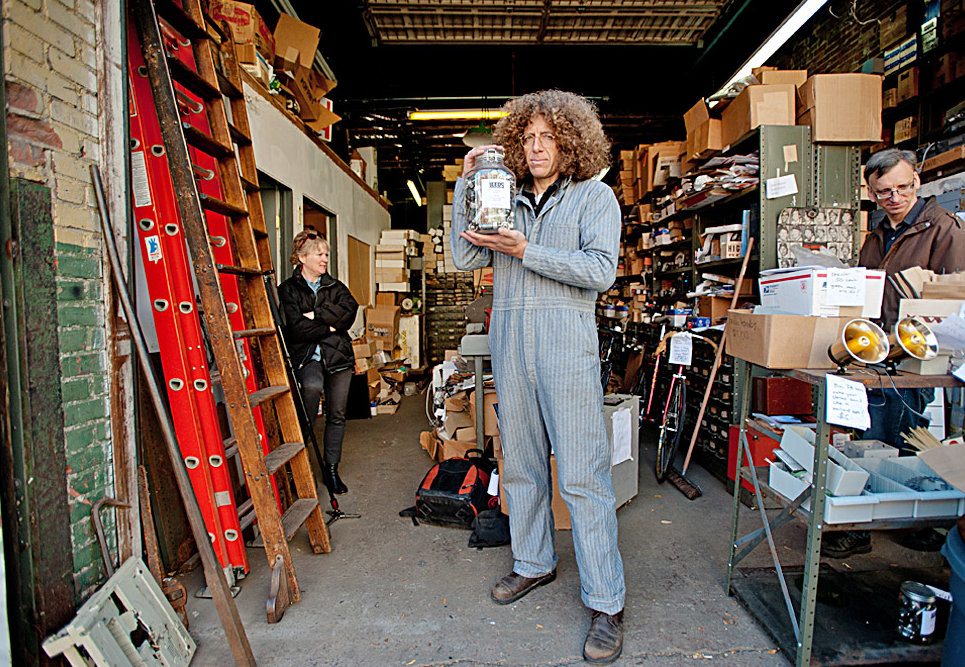
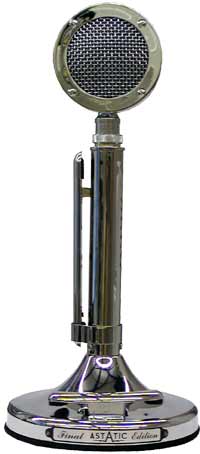
I like the D-104 mic. I bought one from Astatic shortly before they went under and it has provided good service with many different rigs for a long time.

I wanted another one, primarily for my DX-100/HQ-100 station. I saw one on e-bay and a few days later it was here. Unfortunately the seller was correct when they warned that it showed no output. I had hoped it was a problem with the amp in the base, but no, it seems that the crystal element is quite dead. It is an MC320 cartridge marked 7-77. There is an aluminum sheet at the front that is apparently supposed to be riding atop a center support that connects mechanically with the magic crystals. But it looks like a circular tent that has poked through the center support and collapsed around it.

Just a few years ago there were some options for replacement elements, but it seems that most of these are gone. Bob Heil does have a dynamic element replacement kit for about 68 bucks.

There are many schemes for putting electret elements in the old D-104 head… I was reaching for the junk box but I stopped myself. NO! I will try not to commit this kind of electronic barbarity. (I have already sinned by killing several QF-1 Q multipliers and a couple of Benton Harbor lunch boxes.) I will instead turn to the SolderSmoke brother/sisterhood and ask if anyone out there has a crystal element that could bring this old mic back to life. My DX-100 deserves nothing less.

Anyone have a D-104 crystal element in their junk box?

Steve N8NM Gets Modular — With Both Hardware and Software

Steve N8NM has an excellent article on his blog about the benefits of modularity. He breaks new ground by extending the concept into the software realm. Check it out:

https://n8nmsteve.blogspot.com/2017/07/sr-16-lets-get-modular.html

Subscribe to Steve’s blog, or link to it. Hopefully this will encourage him to post more great things like this.