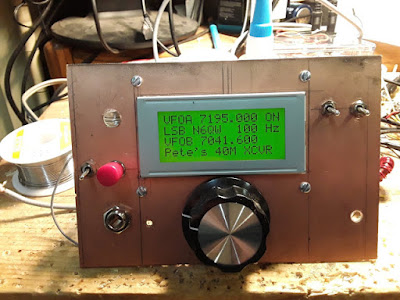
Don’t miss Pete’s latest blog post decribing his most recent SSB transceiver.
http://n6qw.blogspot.com/2019/02/2019-building-ssb-transceivers.html
SolderSmoke Daily News — Ham Radio Blog
Serving the worldwide community of radio-electronic homebrewers. Providing blog support to the SolderSmoke podcast: http://soldersmoke.com
Don’t miss Pete’s latest blog post decribing his most recent SSB transceiver.
http://n6qw.blogspot.com/2019/02/2019-building-ssb-transceivers.html
Thanks to Bob Scott for the alert on this. This new Indie film promises to be even better than the recent “First Man” movie (which was somewhat disappointing, with too much focus on family drama). Armstrong looks so young in this trailer.
I liked the groundhogs.
More info:
http://www.amrally.com/
We had this video on the blog before, but it was seven years ago, so it it time for a re-run.
http://www.eafa.org.uk/catalogue/5108
Thanks to Graham GW8RAK for reminding us of this.
Listening to it again, I was struck by the claim that the nationality of the operator could be discerned purely by his or her CW sending style. Is there really an Italian accent in Morse Code?
We had this video on the blog before, but it was seven years ago, so it it time for a re-run.
http://www.eafa.org.uk/catalogue/5108
Thanks to Graham GW8RAK for reminding us of this.
Listening to it again, I was struck by the claim that the nationality of the operator could be discerned purely by his or her CW sending style. Is there really an Italian accent in Morse Code?
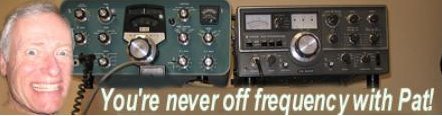

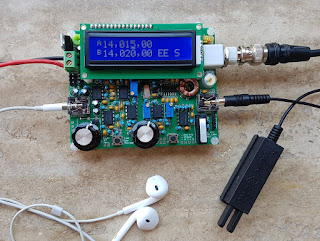


On January 23, 2019 on 20 meters I talked to Barry K6ZA. He is near San Francisco. I was running my Hallicrafters HT-37 with my Drake 2B. I was really pleased to discover that the guy I was talking to loves these two pieces of gear as much as I do.
Barry said he wished I could record his voice coming out of the HT-37. My iPhone came to the rescue.
We had this on fhe blog three years ago, but it is so good that it deserves a second posting.
Thanks to our old friend Stephen Walters for reminding us of this gem. There is so much soul in these old machines. Thanks Stephen.
We were in a restaurant last week and this trailer played on a TV that was all the way across the room. The SP-600 caught my eye. I once had one of those, but chickened out when I read about the horrors of black-beauty cap replacement. There is also a D-104 in the trailer (several of those are with me now). And the girl is transmitting with a Turner SSB+2 Transistorized mic — I have one of those also.
Thomas K4SWL over at The SWLing Post notes that the SP-600 Tuning Dial appears to have been modified. I’m thinking the wanted it to look like some sort of transmitter output meter.
I think I can also see some sort of Collins antenna tuner.
Any ideas on whose shack this all comes from? It looks like a real ham shack.
From the trailer, it appears that the ham gear somehow helped us establish contact with Godzilla, who then went on to save the planet. I hope. ONCE AGAIN, HAM RADIO SAVES THE DAY!
The ham radio stuff is in the first minute or so of the trailer.
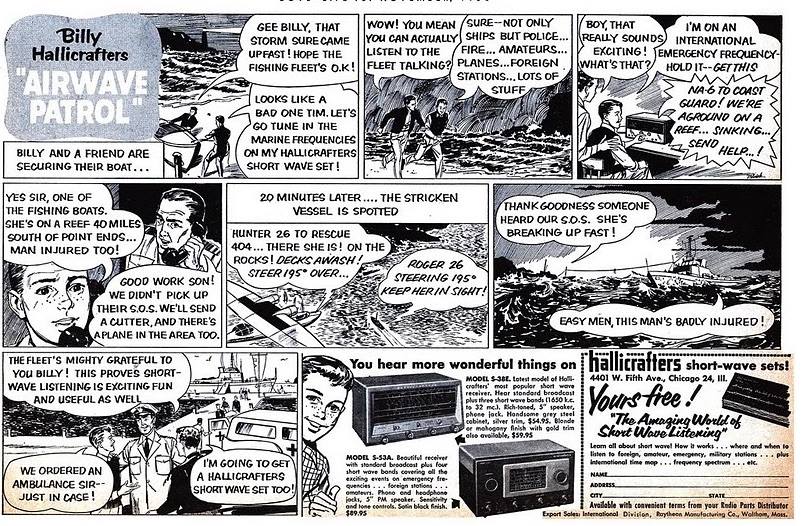
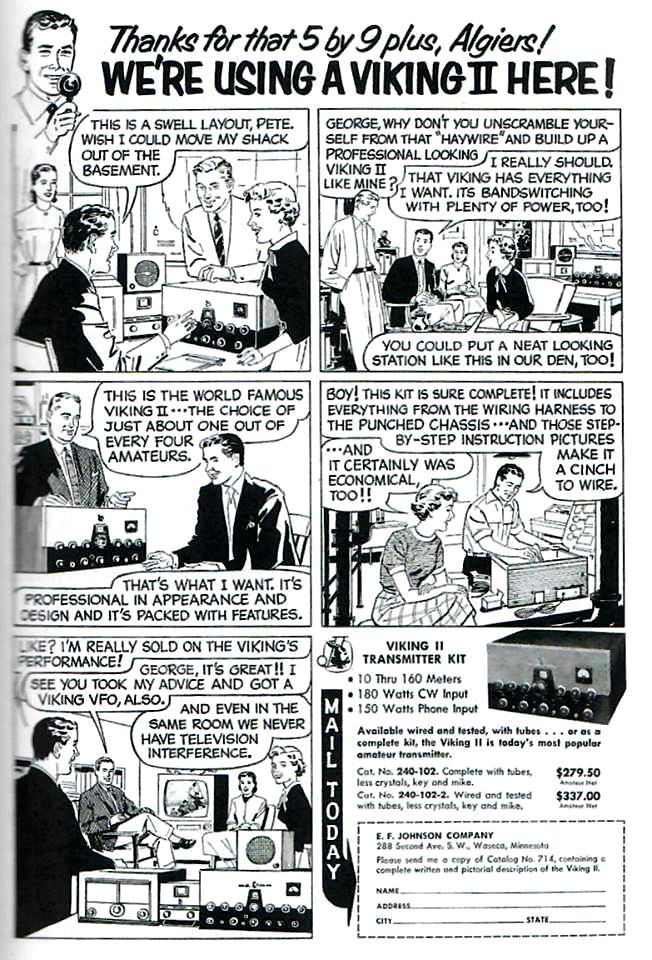
Jeff Murray K1NSS had this on his Facebook page. Great stuff. But I felt like yelling out, “Stay in the basement OM! Stick with your haywire rig!”
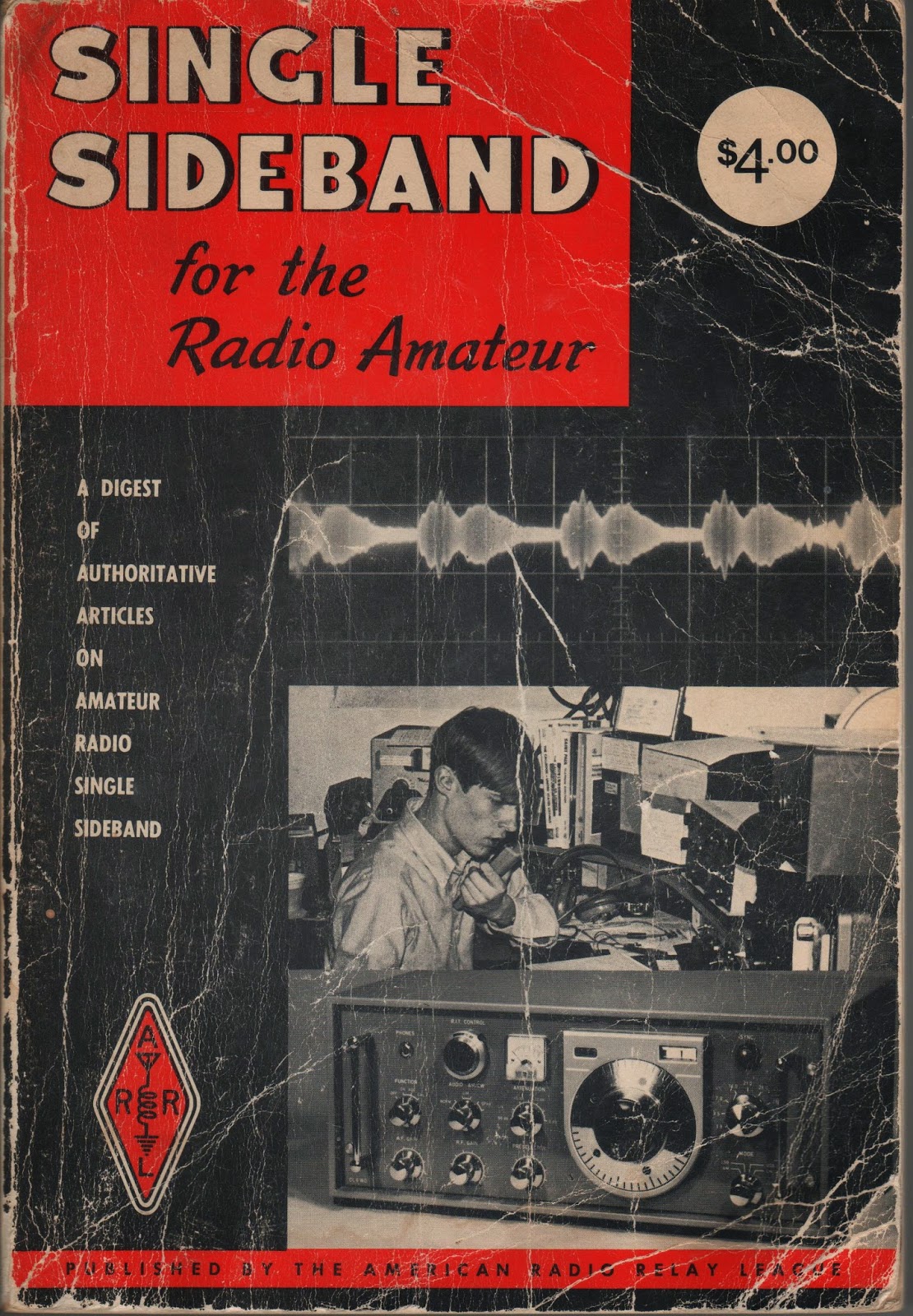
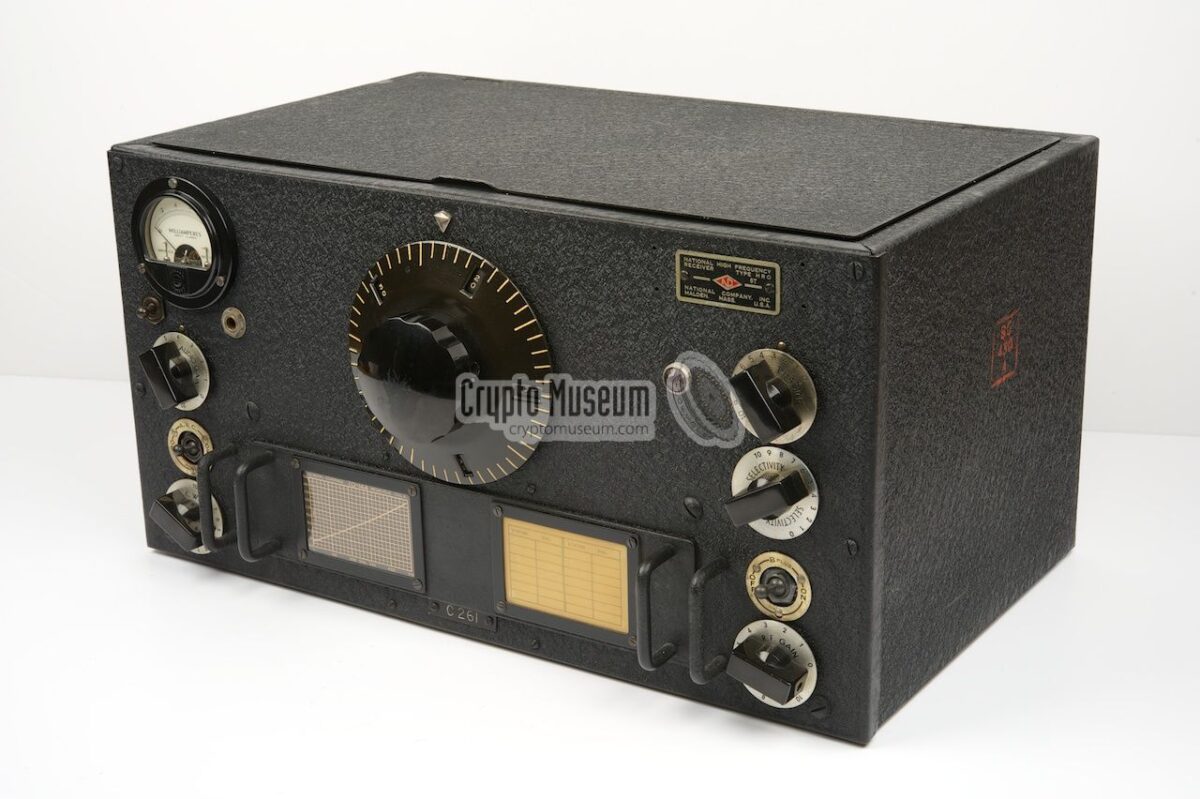
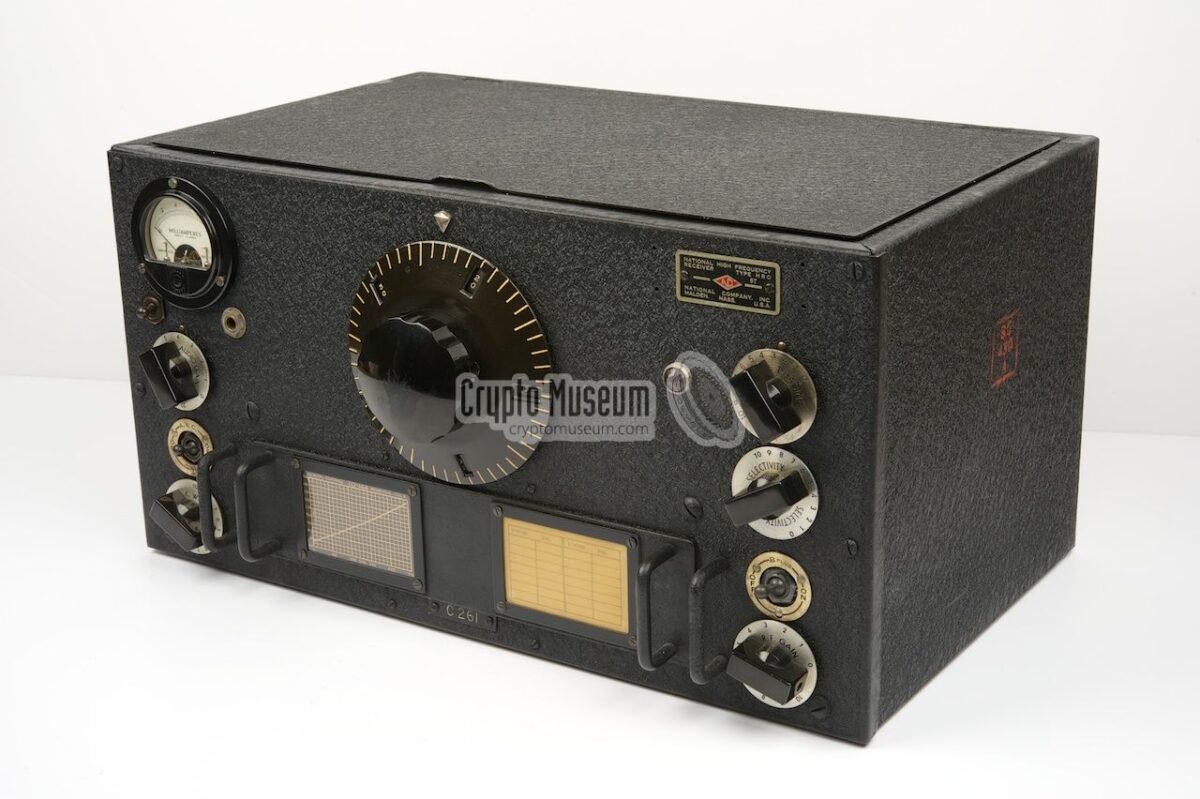
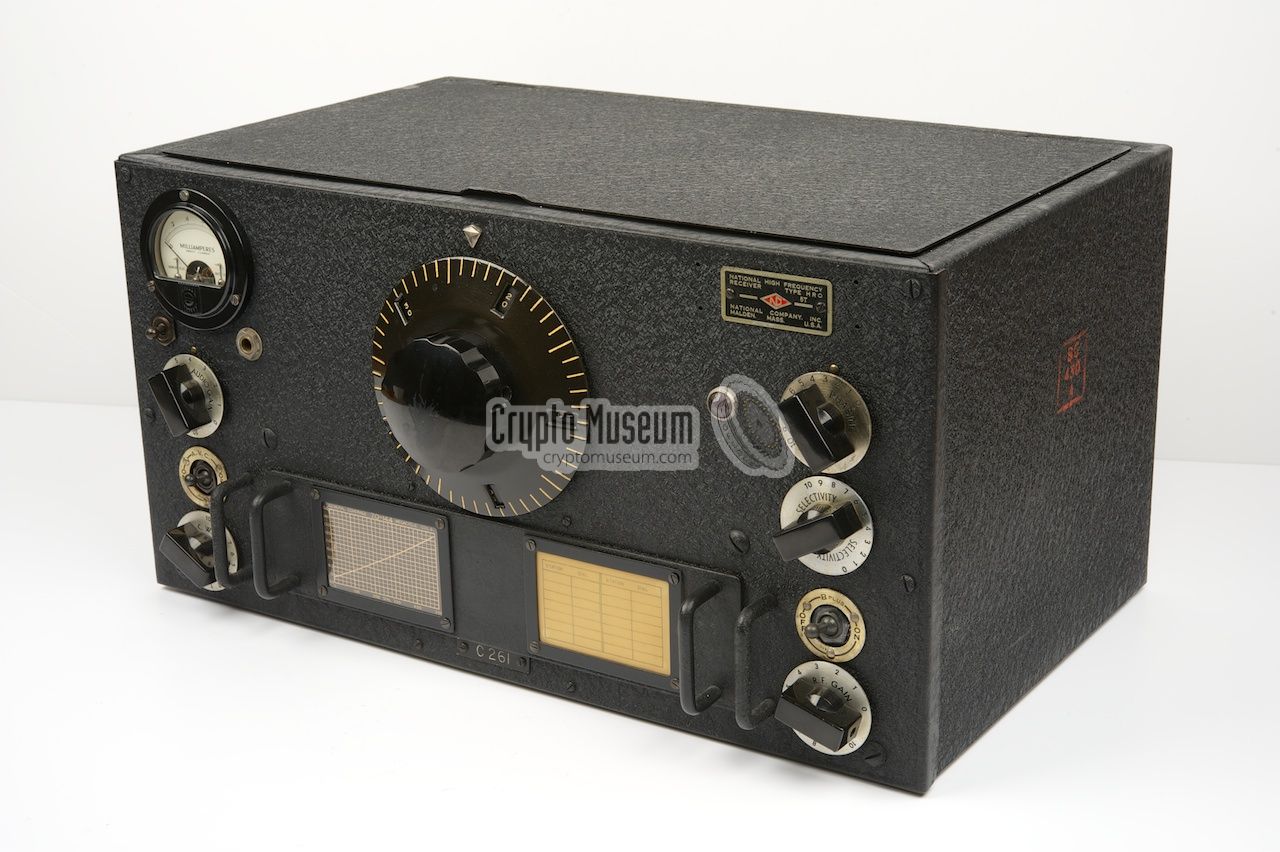
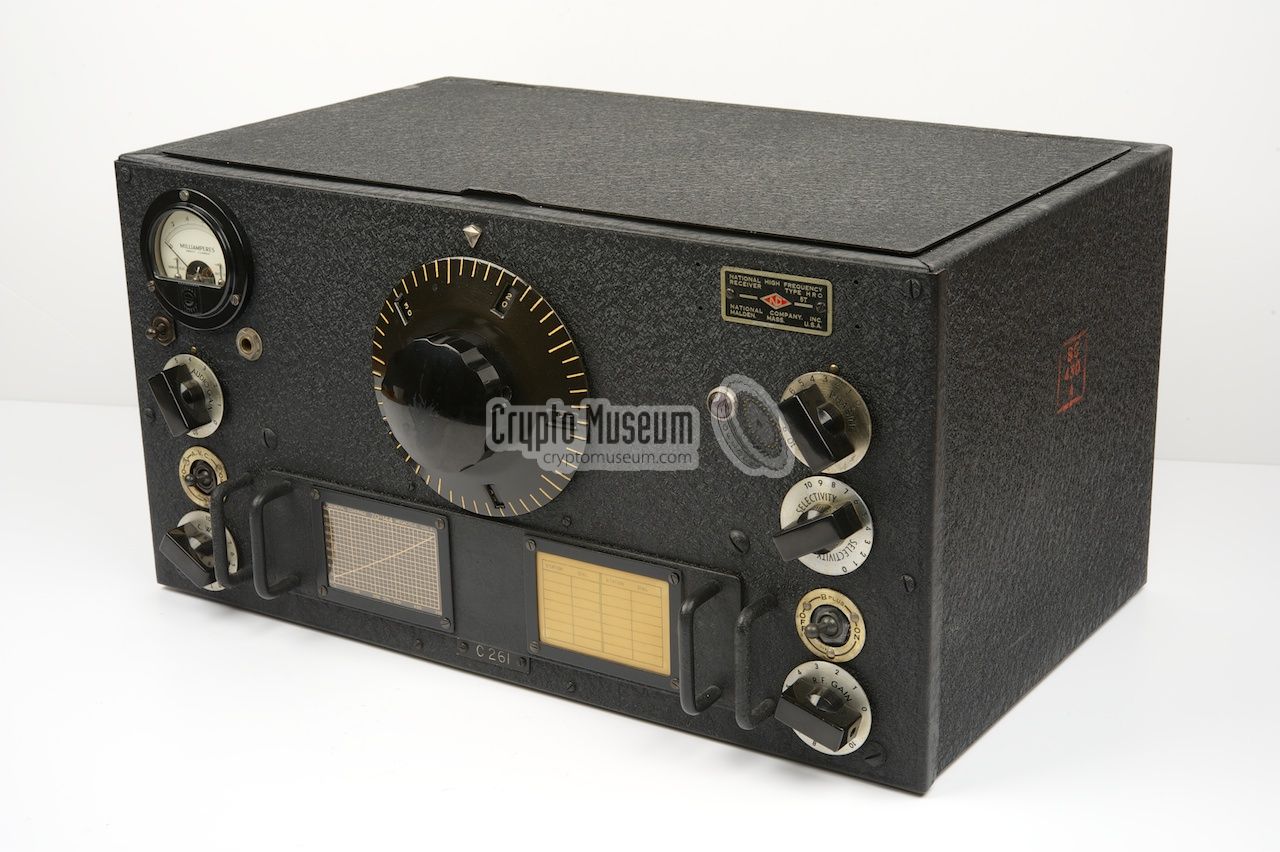
Take a look at that beautiful rig in the bottom of the cover pictures. (A closer shot appears below.) That is an HRO dial, right? Or is it?
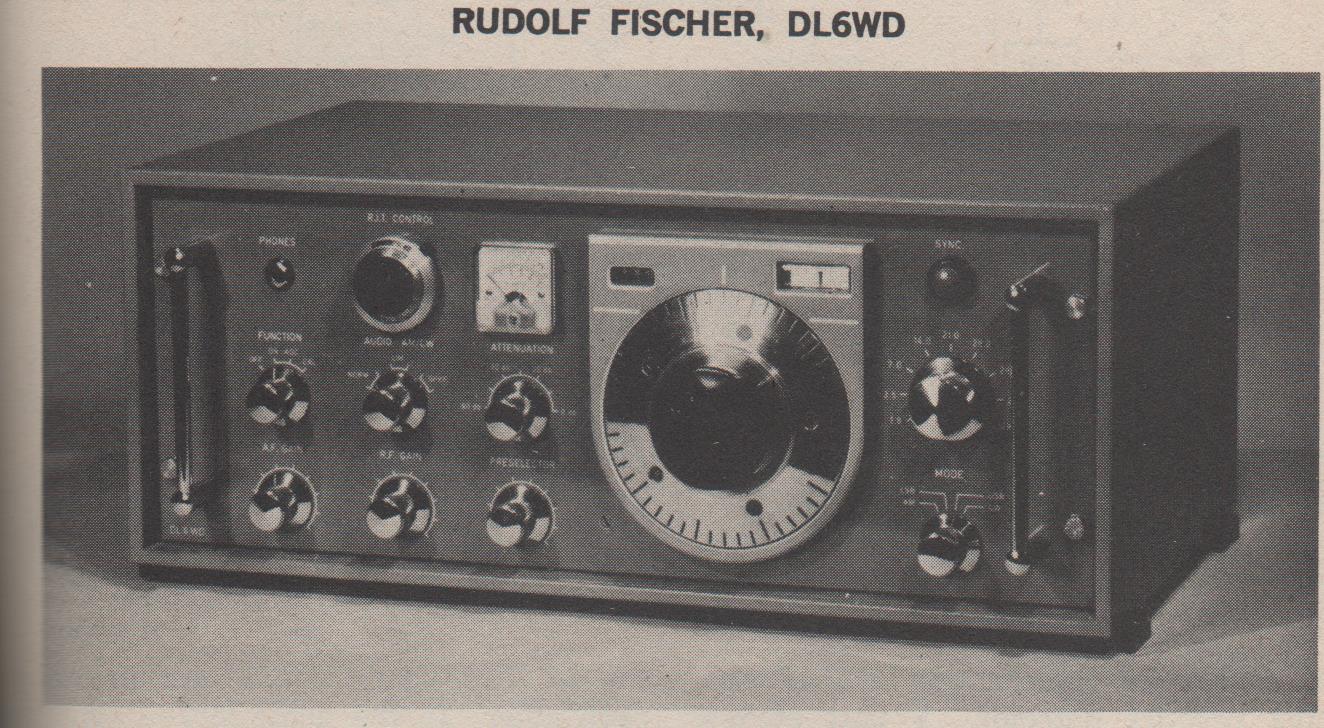
No, it is not. In the picture we see the homebrew receiver designed and built during the 1960s by Rudolf Fishcer, DL6WD. It is magnificent in every respect. Because I have been working with the HRO dial and gearbox given to me by Armand WA1UQO, the tuning dial on this receiver caught my attention.
Here is what DL6WD says about this part of his project: “The main tuning gear was built around a BC-221 tuning capacitor and reduction gear. The counter dial and tuning knob are the result of four weeks of labor, The counter dial reads in tens of kHz, where the main tuning knob has a calibration of 200 Hz per division, from an HRO inspiration.” The counter is in the little window to the upper left of the tuning knob. The window to the upper right is a phase-lock indicator. (See below.)
By the way, by the time DL6WD got finished with this all solid state receiver it weighed in at 52 pounds. Rudolf noted that “excessive shielding pays in electrical performance, but not in weight!”
DL6WD earns the title “Homebrew Hero.”
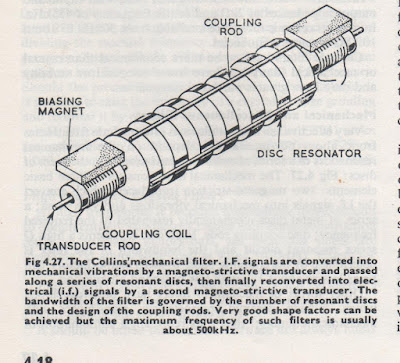 |
| From RSGB Handbook 1982 |
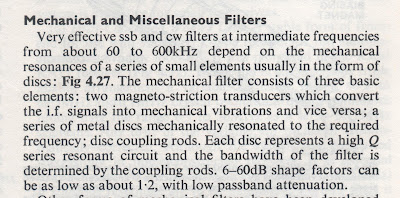
Having overcome the difficulties with the National NPW Dial and Gearbox, I turned my attention to the 455 kHz filter. I had been using this old Toyo CM – 455 kc filter (Date stamped August 1969). CM stands for “Crystal-Mechanical.” These filters are hybrid with some of the features of a crystal filter and some of the features of a mechanical filter. For more details go here:
https://soldersmoke.blogspot.com/2016/04/the-meaning-of-cm-in-toyo-cm-455-filter.html
I was disappointed by the CM filter. It seemed very lossey, and it just didn’t seem to be of sufficiently high Q — it seemed very broad. I could hear the other side of zero beat. It was barely a “single signal” receiver, and being “single signal” is the whole point of a superhet.
I remembered that Pete Juliano had sent me a Japanese-made 455 kc mechanical filter. Maybe this would do better. Last night I did a quick comparison test and — wow — Pete’s filter was much better. The Fifth Edition of the RSGB Handbook seems to agree with my assessment, noting that mechanical resonator filters were superior to the Crystal Mechanical hybrids (see pages 4.17 and 4.18)
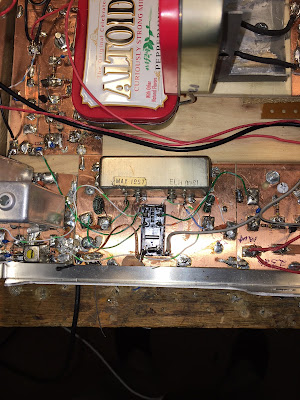
Pete’s filter is from the Kokusai Electric Company. Part# MF 455 ZL. (Date stamped May 1967). “ZL”indicates lower sideband. I checked and indeed the passband goes from just above 452 kc up to about 454.5 kc. This is a 40 meter receiver and SSB on 40 is LSB, so this filter would work perfectly right? Not so fast! Sideband inversion had to be considered.
I was running my VFO from about 7455 to 7755 kHz. This means that the modulated incoming signal would be SUBTRACTED FROM the VFO signal to get to the 455 kHZ IF. And when that knd of subtraction happens, we have sideband inversion. The LSB signal will look like a USB signal when it reaches the filter.
My BFO was running right at 455 kHz, using a ceramic resonator at that frequency. I briefly considered just shifting it down to 452 kHz, but this proved to be difficult. Then I got a better idea.
I could just shift the VFO down to 6545 to 6845 kHz. This would mean that the VFO frequency would be subtracted from the incoming modulated frequency. There would be no sideband inversion. I had been thinking about doing this frequency shift anyway, thinking that VFO stability gets better as you go lower in frequency.
REMEMBER THE RULE: If you are subtracting the modulated (signal) frequency from the frequency of the local oscillator or VFO, only then will you have sideband inversion. See:
https://soldersmoke.blogspot.com/2015/05/sideband-inversion.html
Moving the VFO was easy. I am using a variable capacitor with several variable caps on the same rotor. I just moved from the smallest variable cap to the middle variable cap — this added capacitance to the system and lowered the frequency. I also added three additional turns on the coil. This put me very close to where I needed the frequency to be. I added one additional 9 pf cap and this put the VFO freq right where I wanted it.
I was really glad to include Pete’s filter in this receiver. The mechanical resonator technology fits very well with the very mechanical old-tech theme of this project (it already had a gearbox — a mechanical filter seemed to fit right in). It is a fascinating device — it is almost like having a set of tuning forks all tuned to 455 kc (see above for the RSGB description of how it works). And having it from from Pete adds a TREMENDOUS amount of mojo, juju, and soul to the new machine.
Icing on the cake: As I type this, I am listening to Fred K3ZO converse in Spanish with hams all through South America. Fred preceded me by three decades at the U.S. Embassy in Santo Domingo, but when I got there the local hams were still talking about him — he was much loved and admired by the Dominican hams. TRGHS. See Fred’s story here (scroll down a bit): http://www.gadgeteer.us/DRDISP.HTM
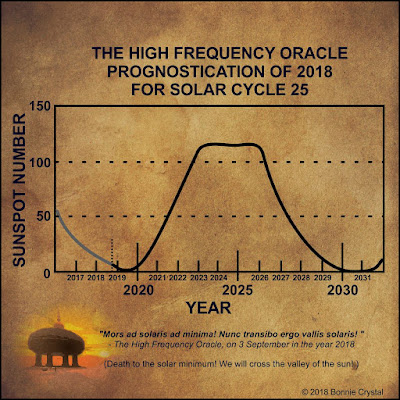
Not quite as authoritative as a spoken message from the The Radio Gods themselves (as in TRGHS), but the HF Oracle seems to be well connected. Time to start planning for Moxons and Hex Beams!
Read the full poetic report from the Oracle here:
https://forums.qrz.com/index.php?threads/the-hf-oracle-prognostication-for-solar-cycle-25.626433/
Thanks to all who offered advice and assistance. With help from you guys — and especially from Pete Juliano N6QW — I think I have this fixed.
Pete was right — the problem was really with the variable capacitor. The one I was using was kind of stiff and irregular in its motion. I found another one in the junk box that was easier to turn (it has one set of ball bearings). This fixed most of the problem.
I also spent more time making sure the shaft of the cap lined up perfectly with the shaft of the gear box. This also helped a lot.
I realize now that some of the “stickiness” that I occasionally feel while tuning may be coming from the dial — not from the gear box. It looks like my dial took a hit that slightly bent one portion of it. It seems that the numbers have a bit of trouble clicking over on that portion of the dial. Some lubricant may help there. But I can live with it.
The receiver now tunes very smoothly and I can go right back to a frequency and find the signal exactly where I left it. There does seem to be a very slight difference depending on whether I “approach from above” or “approach from below” — but this is not a big deal.
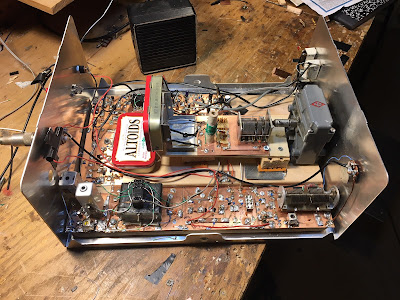
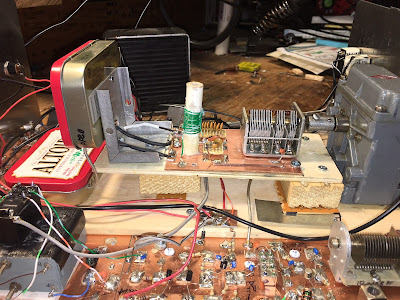
Check out the pictures of the receiver and the VFO. Note the “cardboard from a coat hanger” coil form. The winding is held in place with nail polish varnish. I had planned on having the variable cap, the coil , and the associated fixed caps all in a box for better thermal stability, but the VFO is very stable even without the box. I have the VFO running 455 kc ABOVE the signal frequency. It runs from about 7455 kc to about 7800 kc. I could have set it up to run 455 kc BELOW the signal freq. That would have made it a bit more stable (it is easier to attain VFO stability at lower frequencies) but VFO is so stable that I probably won’t mess with it. I followed DeMaw’s rules: Physical stability, NP0 caps. For the NP0 caps, put several of them in parallel to get the desired capacitance value. Keep heat-producing active components away from the coils and caps.
Thanks again to Armand WA1UQO for giving me this amazing piece of radio history. And thanks to Tim Sutton for the big box that holds this receiver.
James Millen knew what he was doing. See: http://www.isquare.com/millen/millen-page.htm
 |
| M0KOV’s BITX |