Author: Peter Marks
SolderSmoke Podcast #212 HDR, Boatanchors, SDR, Antuinos, Spurs, QSX, Mailbag
![]() |
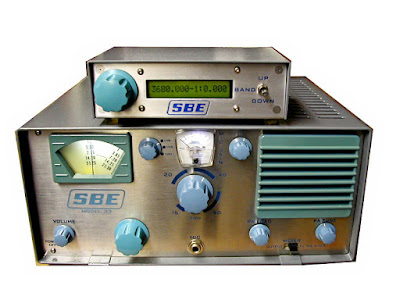
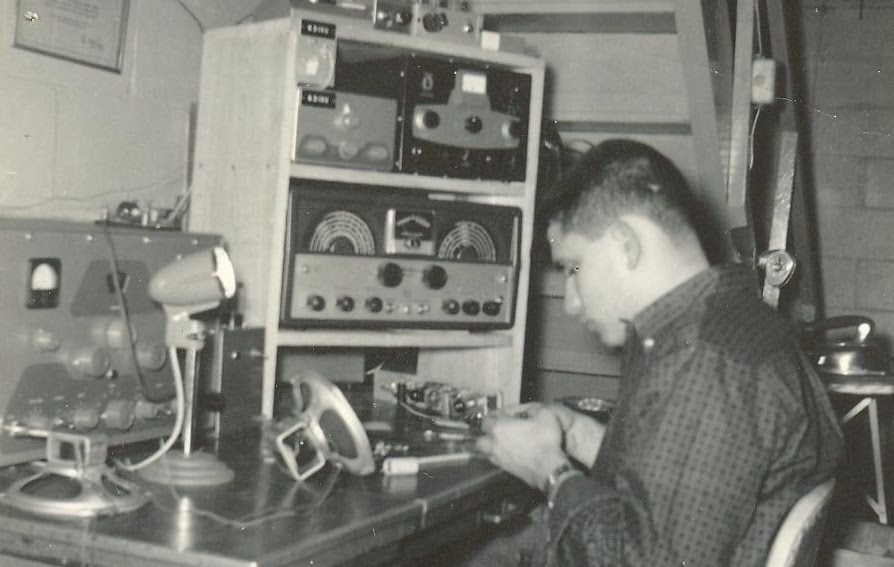
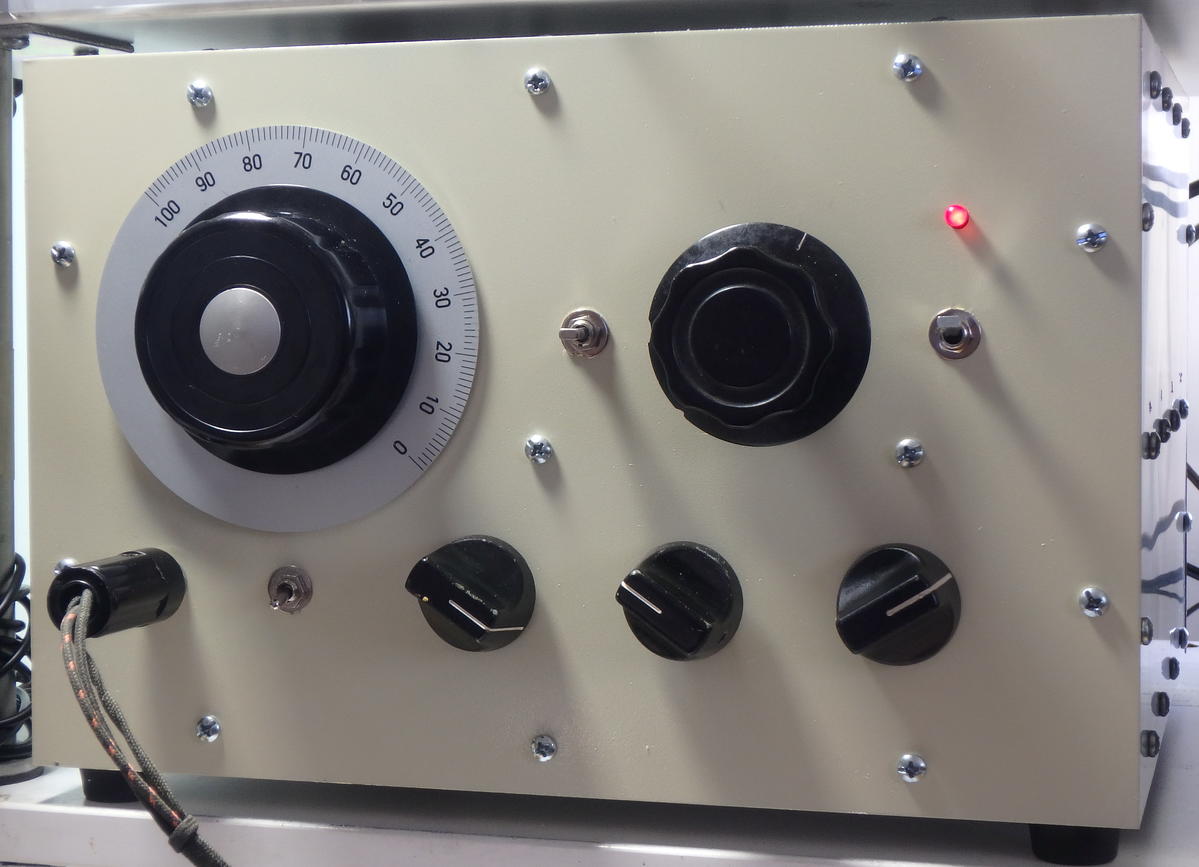
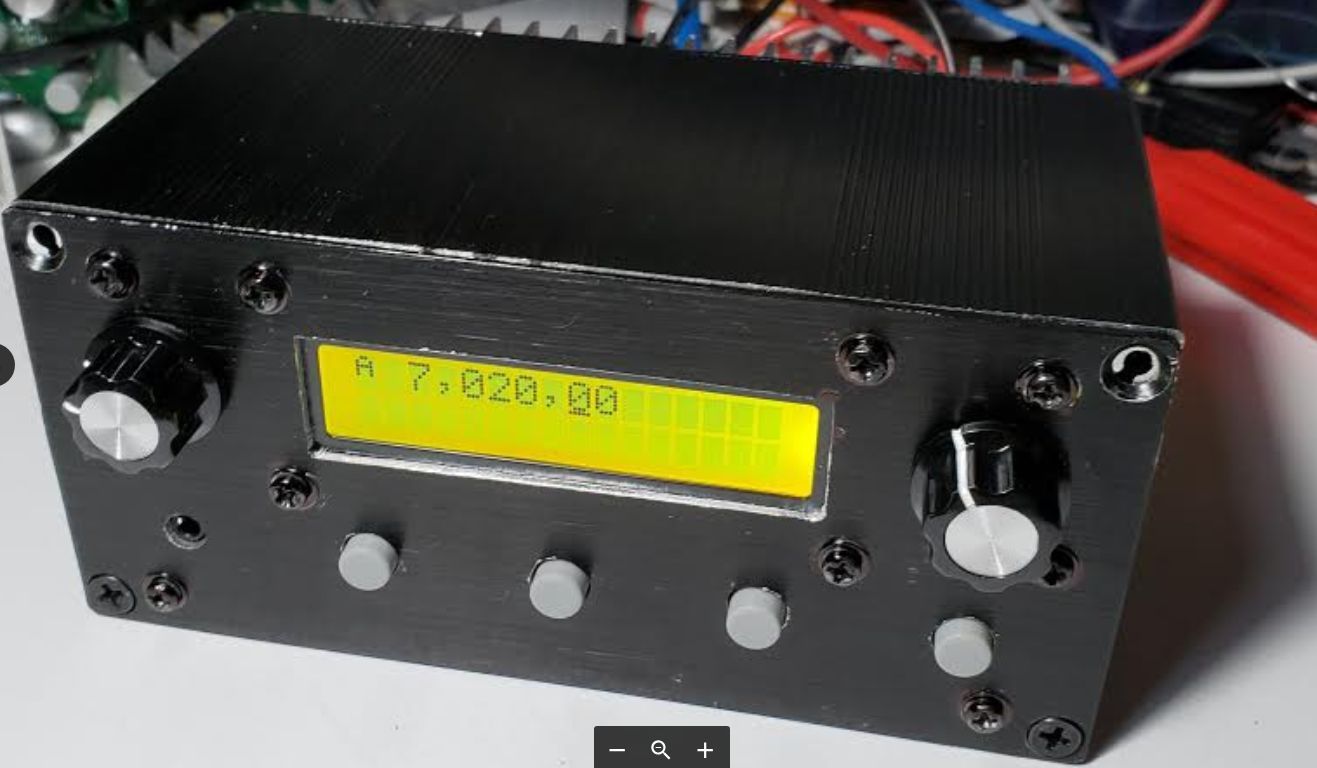
| Dale Parfitt W4OP’s SBE-33 with modern digi freq counter |
SolderSmoke Podcast #212 is available:
http://soldersmoke.com/soldersmoke212.mp3
22 June 2019
CONGRATULATIONS TO PETE: Licensed 60 years today
![]() |
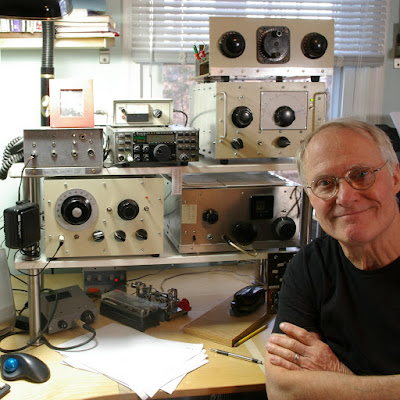
| Pete Juliano during Field Day, 1959 |
Sideband Engineers Models 33 and 34 — Thanks Pete!
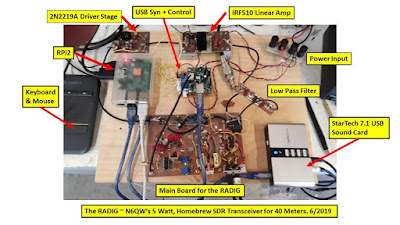
Hans’s QSX SDR Rig at Dayton-Xenia and FDIM
W8SX FDIM interviews
Pete’s SDR Projects — Update
The Peregrino SSB transceiver in the summer SPRAT
Why no rare earth cell phone speakers in ham projects?
My HDR “waterfall” project
Farhan’s Antuino
Cubesat origins
RF Lab in an box
SWR, PWR, SNA
Superhet receiver with ADE-1 at front, and log IC at the output
Adapters (SMA to BNC) help
DON’T BLOW UP THE INPUT RESISTORS (LIKE I DID!)
My dirty DIGITIA — Denial, then acceptance
FFT
Useful programs: SPURTUNE and ELSIE
A better bandpass filter for the DIGITIA
The importance of a good test set up with Antuino
Manassas Hamfest: WA1UQO, W4WIN, AI4OT
MAILBAG:
KG7SSB
WA3EIB
VK4PG
W3BBO
Jeff Tucker — Who owns Drake 2-B #4215?
KN4BXI
KC5RT
K3ASW
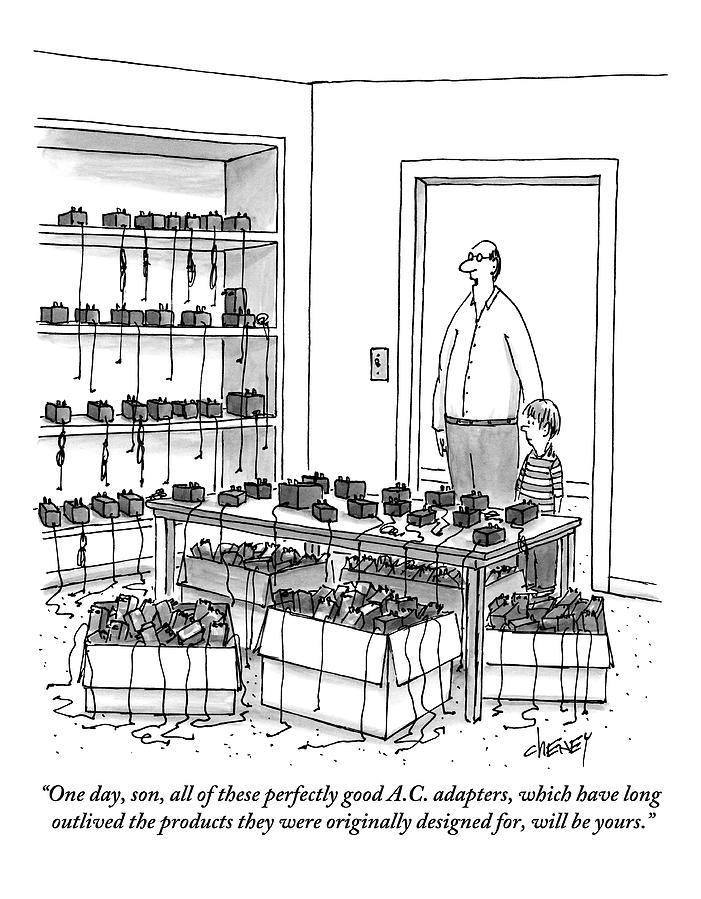
Wall Warts
Face the TRUTH! LOOK at Your Signal with an Antuino!
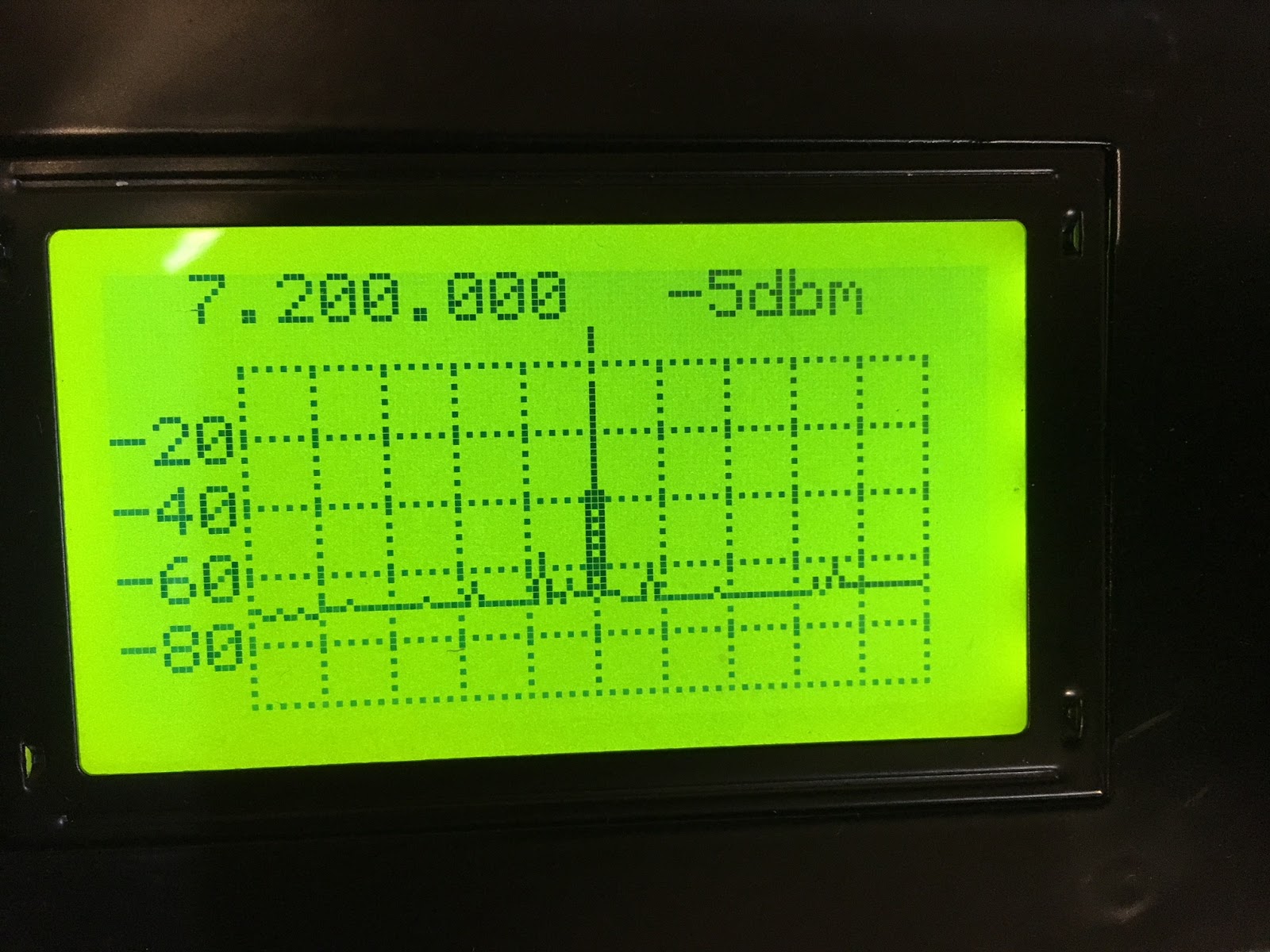
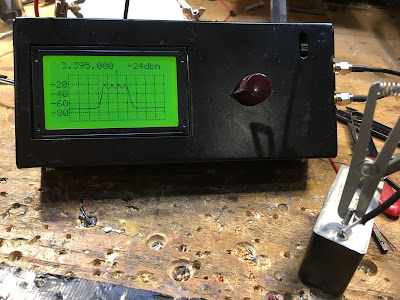
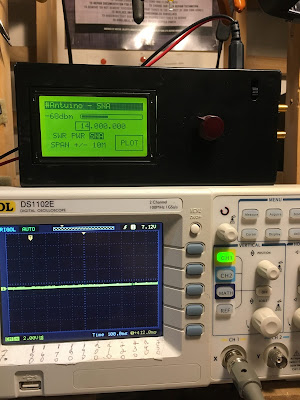
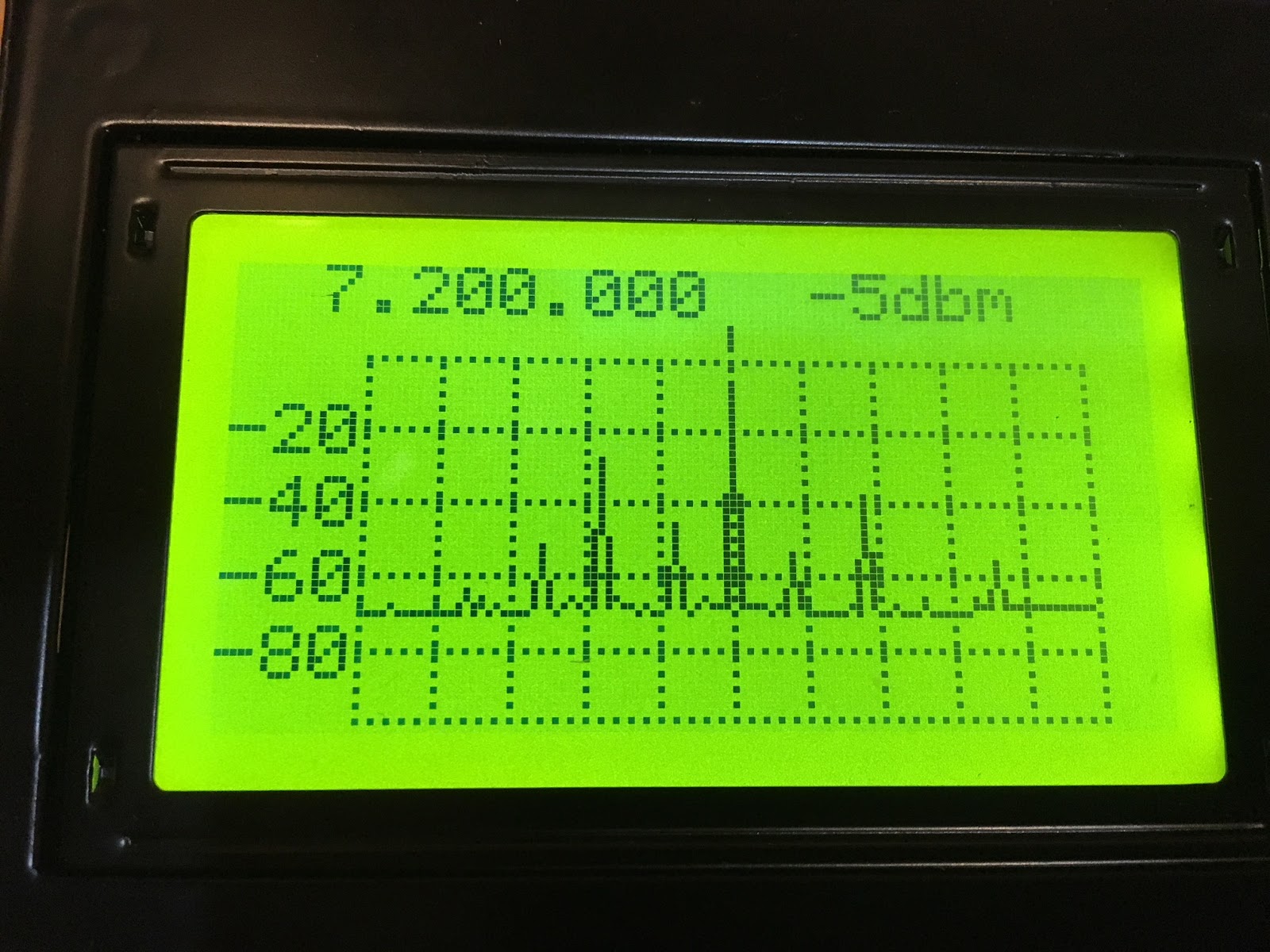
At first, I didn’t want to believe it. I was in denial. I wanted to shoot the messenger (in this case, the Antuino). How could my beloved HB 40 meter DIGITIA transciever have an output that was so…. so DIRTY! Everyone tells me it sounds great. But the little Antuino screen told a different story. Strong spurs up at 9 MHz and down at around 5.4. And lots of places in between. (In these display images, the center frequency is 7.2 MHz and each division to the left or right is 1 MHz.)
Farhan tried to get me to face the truth: “The frequency domain viewing of RF Signals is the opening of the third eye. Once you start seeing signals as a bunch of simultaneous sines, you will always be wary of the waveforms on the scope. In fact, time domain readings make little sense.”
At first I blamed strong VHF RFI and my somewhat hay-wire test set up. My homebrew Rube Goldberg 20 db attenuator was probably picking up some of the VHF RF. But as I looked more closely at the output of the transceiver in the frequency domain, I gradually accepted that it was true. There were a lot of spurs. I have a general coverage receiver in the shack, and with it I could hear the little devils. And after some adjustment I could see them in the FFT display on my Rigol o’scope. An exorcism was definitely needed.
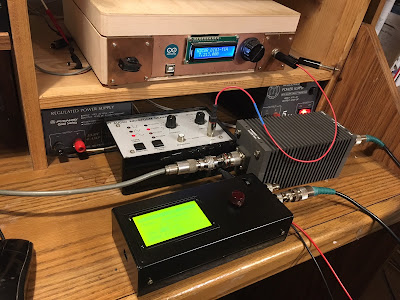
But first came a tightening up of the test setup. Pete advised me to do this. I had in the shack some really nice dummy load/attenuators from the HP8640B Signal Generator that Steve Silverman had given me (and that Dave Bamford had hauled across New York City for me). I ordered the necessary N connectors and adapters and soon my test setup improved a lot.
All this got me thinking about spurs. I consulted EMRFD and was reminded of a really great program in the LADPAC software pack that came with the book. The SPURTUNE program predicts spurs and tells you what to look out for. It is really illuminating. Try SPURTUNE.
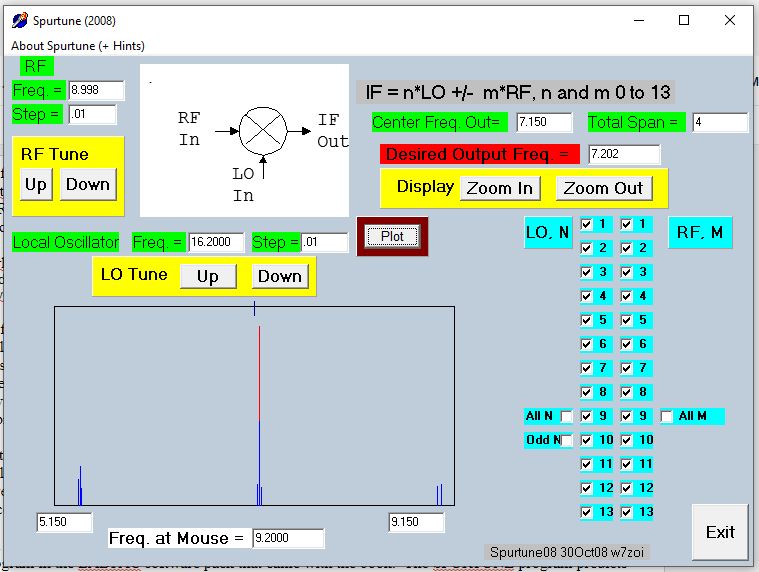
Through this, I gained a better appreciation of the importance of the bandpass filter in an SSB transceiver. I’d always thought of it as something that allowed the other mixing product to be eliminated while passing the one you want. But I came to realize that it does a lot more than that — it also helps get rid of spurs. If it is designed right. Mine was not. I had plucked it out of an old QST article and had not paid much attention to it. All it needed to do was knock down the unwanted mixing product, right? And in my transceiver (9 MHz IF, VFO running 16.0 – 16.3) MHz that unwanted product would be way up at 25 MHz. It wouldn’t take a lot of selectivity to knock that down. But I’d forgotten about the closer-in spurs. Antuino reminded me of them. And SPURTUNE explained where they came from.
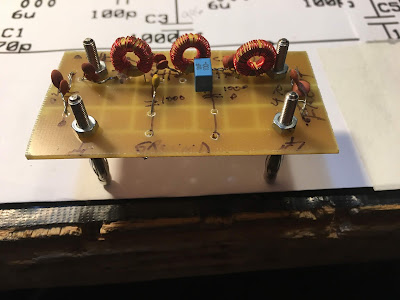
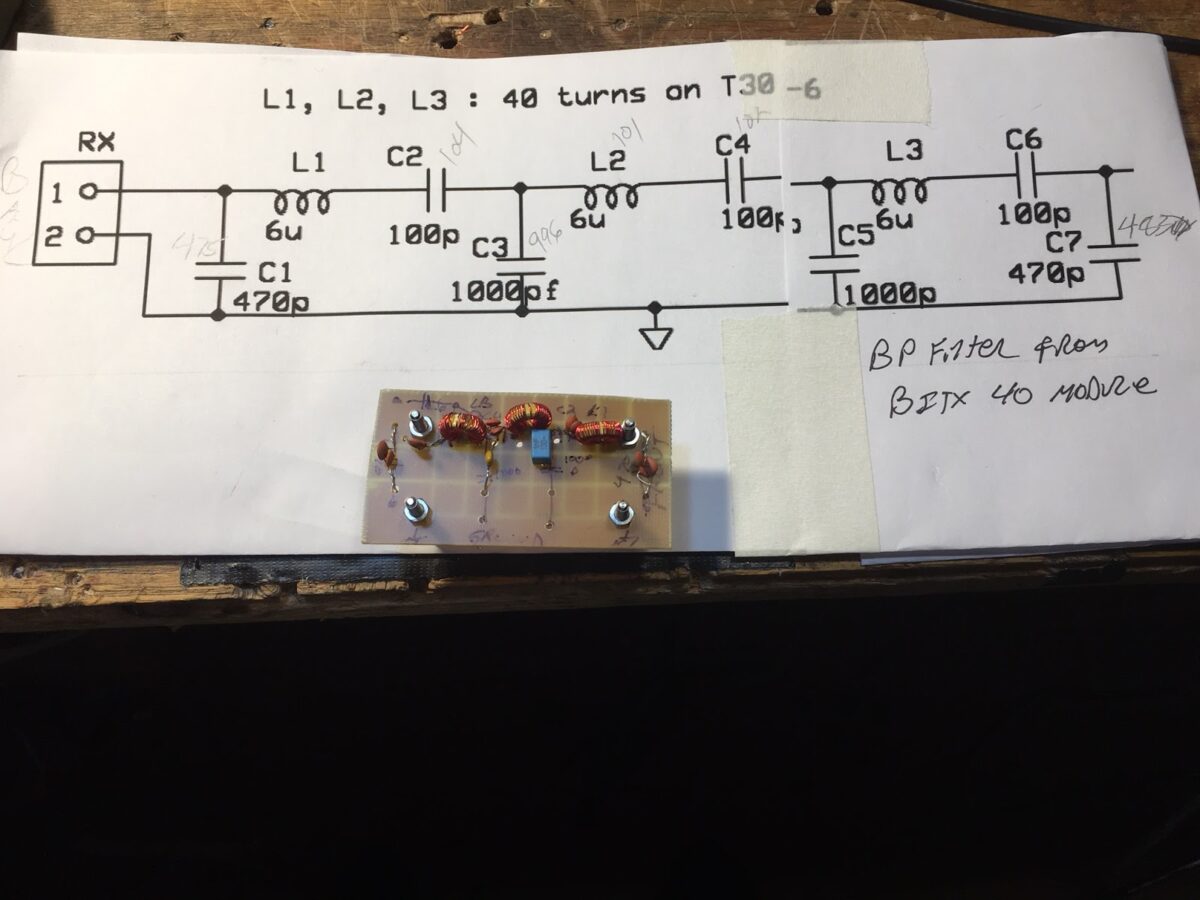
For the exorcism, I decided to use the bandpass filter design from Farhan’s BITX-40 Module. I had made the BP filter on this rig “plug-in” so it was easy to build a new filter.
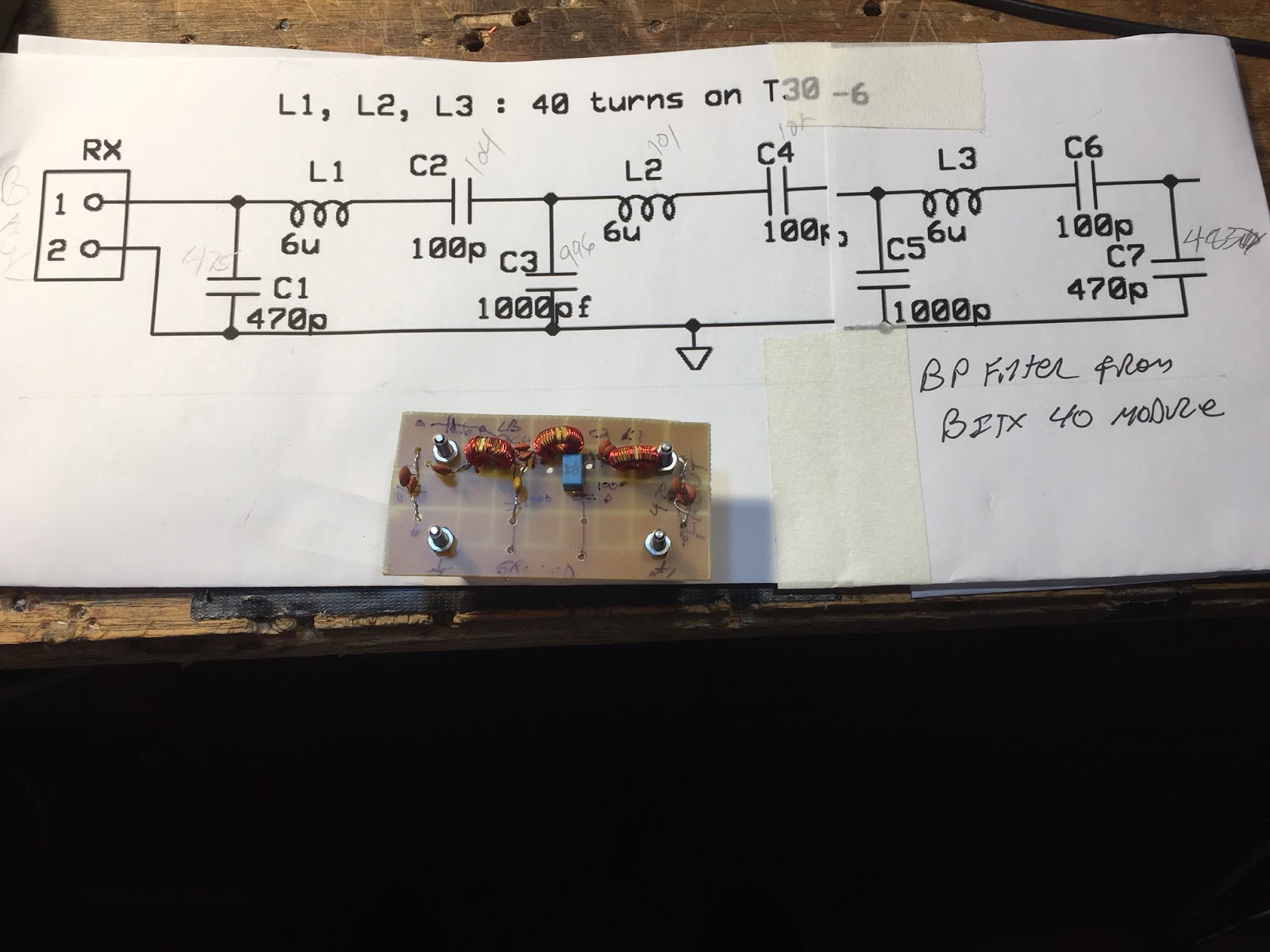
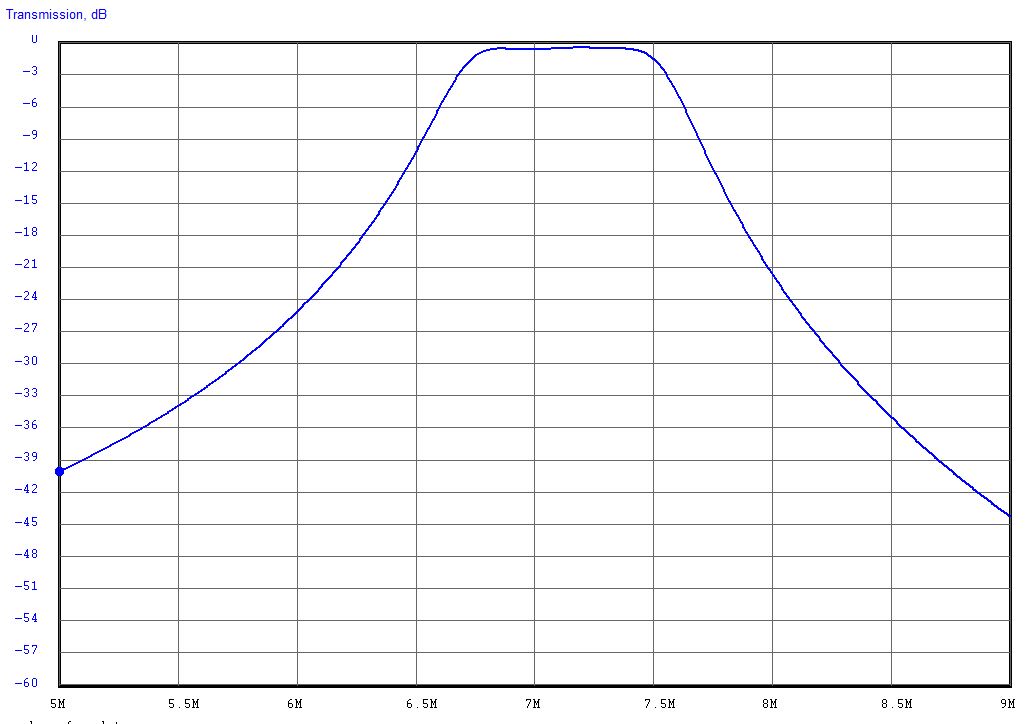
I even checked out the filter design in a simulator. For this I use ELSIE. Another very useful program. Here is what ELSIE predicted for Farhan’s BITX40 Module filter:
First Use of Farhan’s Antuino Scalar Network Analyzer
Ham Radio in Germany 1955 (video)
Don’t be deterred by the lack of English subtitles — radio amateurs around the world will be able to follow what is going on in this very interesting 1955 film. It is only about 14 minutes long.
This video takes us back to a time when hams were hams and rigs were RIGS!
Note the German OM who apparently slept fully dressed (with necktie) in order to be ready to spring into action on the ham bands in the middle of the night. That’s dedication my friends.
Also note the fellow sending out QSL cards that feature the schematic diagram of his rig. Lots of solder melted in 1955. Great stuff.
Thank God for the Heaviside Schicht!
FDIM Interview with Farhan VU2ESE
I didn’t realize that our correspondent in Dayton/Xenia had interviewed Farhan. There was a typo in the audio file name and I was wondering who this UV2ESE guy was. A Ukrainian QRPer? I was really pleased to find out that it was Farhan.
In Bob’s interview you will hear Farhan discuss the capabilities of his new Antuino (pictured above). Pete’s Antuino is in the mail, going transcontinental. It should arrive in the Newbury Park Laboratory later this week.
As for the spectrum analyzer that Farhan got me last year, I am waiting for retirement (soon!) to get that one going. But there is a danger that the Antuino will leave little room for the older tech…
In the interview you will hear Farhan talk about the Antuino circuitry, and about the roots of the three main devices in the Antuino box. Very cool.
Thanks again Farhan. And thanks Bob.
Here is the interview:
http://soldersmoke.com/VU2ESE FDIM 2019.m4a
Farhan’s Antuino page:
http://www.hfsignals.com/index.php/antuino/
FDIM Interview — NM0S on John Reinartz W1QP K6BJ — Scandal on an Arctic Expedition?
Bob Crane W8SX interviewed Dave Cripe NM0S about his FDIM presenation on radio pioneer John Reinartz 1QP and later K6BJ. Listen to the interview here:
http://soldersmoke.com/NM0S FDIM 2019.m4a
Here is Reinartz’s obit in the New York Times:
https://www.nytimes.com/1964/10/07/john-l-reinartz-pioneer-in-radio.html
Here is some background info on Reinartz:
http://k6bj.org/Club_History/WhoWasK6BJ.htm
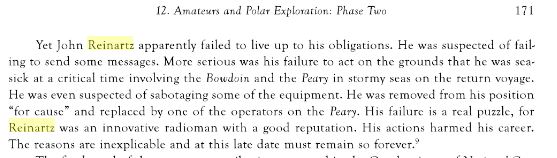
Dave Cripe’s interview left me wondering what the north pole scandal was all about. I found this passage from a book that seems to partially explain what happened. Can anyone else shed more light on this unfortunate event?
Antuino: Farhan’s Compact RF Lab In-a-Box
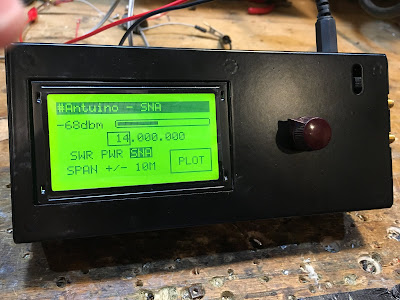
I now have Farhan’s latest invention, the Antuino. Pete will have his shortly. Very cool. SWR meter and antenna analyzer, power meter and scalar network analyzer all in one box. I put an old-school knob on the rotary encoder — it seemed like the right thing to do. Soon I will be able to find out if my rigs have spurs or are somehow non-compliant. I’m sure Farhan’s “RF Lab in a box” will be an important addition to my test gear arsenal. We will be talking about this in upcoming podcast episodes.
Mike N2HTT did a nice write up of the new device:
https://n2htt.radio/2019/05/26/hello-antuino/
And here is the info from the htsigs.com page:
http://www.hfsignals.com/index.php/antuino/
Thanks Farhan!
KG7SSB — Homebrew SSB in Tuscon — Learning from the BITX40 Module
Dale:
I was talking to Jim W9UD on 20 SSB today. When I told him I was running a homebrew transceiver he mentioned that he talked to another guy who is on the air with homebrew SSB gear — you!
There are so few of us Dale. I felt compelled to send you an e-mail.What are you running?After several years on DSB, I started building separate SSB receivers and transmitters, mostly for 17. Lately I am running versions of the Indian BITX transceiver.Please send info on your homebrew SSB projects.Thanks,Bill N2CQR
Hi Bill,
I have two radios that are completed to date. I started out building the BITX 40 transceiver from scratch and also a companion 60 watt solid state linear rf amplifier. Then I decided to construct the second transceiver for 20 meter using some of the BITX design concepts and mixed with the UBITX design for additional rf amplification. It too is amplified to about 25 watts output. The 20 meter rig is my favorite radio at this time but I am going to go a different direction on my next build. It’s presently just in the design stage but I’m thinking about using the MC1350 integrated circuits for the IF amplification and for the front end I may try using a FET rf amplifier. The beauty of the bitx design is the use of wide band amplifiers that don’t have a tendency to oscillate. But, the new design I’m working on will have more shielding between critical circuits and I will use a small amount of negative feedback in the high gain circuits. The reason for changing the radio to a higher impedance design is to simplify the design build. I will basically build a receiver that I can reverse the signal direction over to transmit using the same amplifiers and filters. This will cut in half the amount of circuit building however it will increase the switching circuit complication associated with this new design.
Workshop Tour — Good use of older test gear (video)
This fellow is making good use of older test gear. Very nice.
https://www.youtube.com/watch?v=2LPcLAkhdFE
http://gokarters.com/smf/index.php?topic=2549.0
DIY Waterfall — A Quick and Easy Panadaptor Using a Sig Gen and O’scope (video)
I’ve been getting waterfall envy. The panoramic frequency display is the one thing that could lure me to the dark side (SDR). Heck, they now have 3D waterfalls! What next? Holographic waterfalls? Virtual reality waterfalls? This is almost too much.
Anyway, in an effort to counteract all of this waterfall seduction and to show that us analog HDR guys can go panoramic too, I decided to try to create my own panoramic display without resort to SDR.
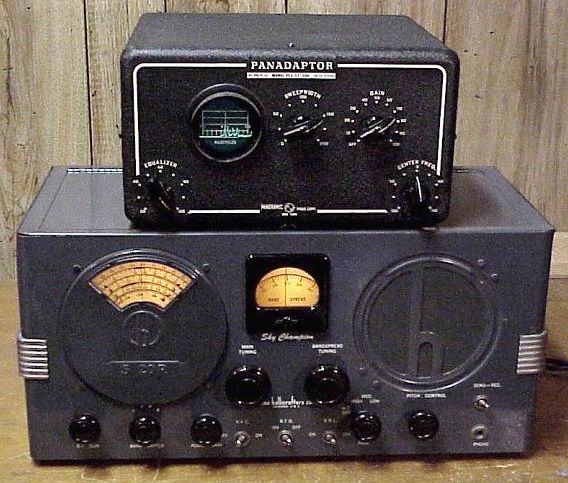
Of course, this is a very old technique. It was invented in the 1930s by Marcel Wallace, F3HM. He was the inventor of the Panadaptor which was the forerunner of today’s waterfall. Panoramic reception was used by the armed forces during WWII. In 1946 Hallicrafters marketed a Panadaptor for its ham radio receivers (see below).
In figuring out how to do this, I thought back to my use of my Feeltech signal generator to scan the response of a crystal filter. The Feeltech has a very handy sweep feature.
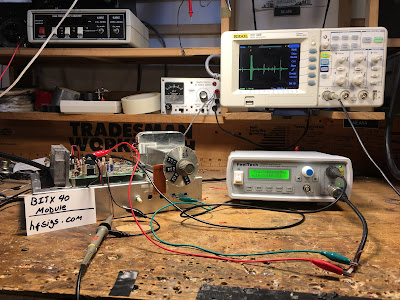
In this case I set up the Feeltech to sweep from 4.85 MHz to 4.75 MHz in one second. With the 12 MHz IF of the BITX40 module, this would result in a sweep from 7.150 to 7.250 MHz.
The sweeping Feeltech just replaced the VFO on my BITX. I hooked up the Rigol oscilloscope to the audio output of the BITX. I set the horizontal scan rate at 100 ms per cm. This would have the trace go across the whole screen in 1.2 seconds.
After a bit of fiddling, I could see signals on the 40 meter phone band. But my display would kind of drift along the screen making it hard to know the frequency of the signals I was seeing.
Alan Wolke W2AEW provided the solution. He advised me to put a big stable signal at 7.150 MHz near the input of the BITX, then use this strong signal to trigger the ‘scope scan. The HP8640B signal generator that Steve Silverman gave me (and that Dave W2DAB picked up for me in NYC) provided the triggering signal.
I put a piece of tape across the bottom of the scope display to calibrate the display. See video above.
It works! It is not as cool as the SDR waterfalls, and it does not convey nearly as much information, but it was a fun project.
KJ5VW’s Cool uBITX Mods (Video)
Beautiful work Gary, and great to see that you are putting ideas from Pete and from Don Cantrell in your rig.
Gary wrote:
Nigerian Knack: Hope Emmanuel Frank
I hope this kid has a lot of success. He definitely has The Knack.
FDIM Interview with KI4IO — Homebrew Direct Conversion Transceiver
I‘ve been a big fan of Jerry’s for several years. He is the homebrew wizard of Warrenton, Va. Warrention is just about 25 miles west of us. Cappuccio the wonder-dog was born on a farm in Warrenton.
I’m really glad that our ace correspondent Bob Crane W8SX caught up with Jerry at FDIM. I liked his description of the joy of using a homebrew rig, and of the advantages of direct conversion. Inspiring stuff! Listen to the interview here:
http://soldersmoke.com/KI4IO FDIM 2019.m4a
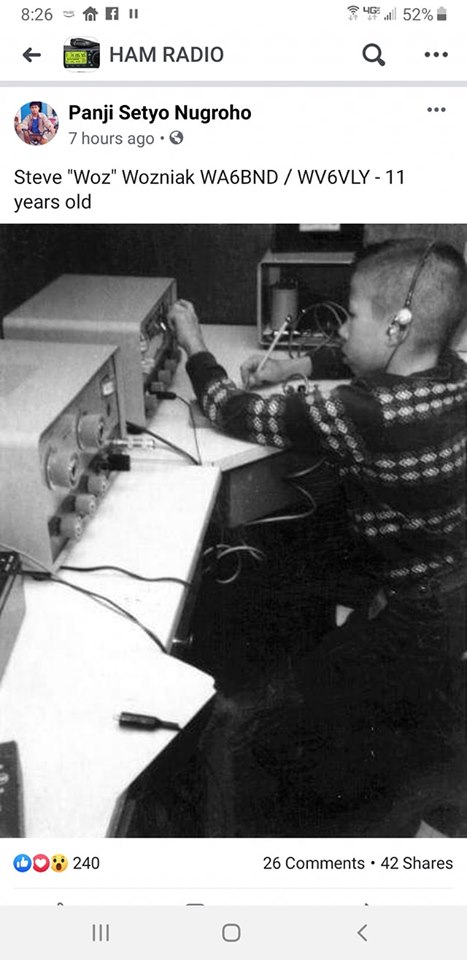
Woz on the air — Age 11
We discussed Steve Wozniak’s early involvment in ham radio here:
https://soldersmoke.blogspot.com/2011/12/wozs-early-exposure-to-electronics.html
Thanks to the K9YA Telegraph for relaying this great picture.
FDIM Interview with Hans Summers G0UPL on QSX SDR Rig, Probable Price, Features
Wow, our ace correspondent in Dayton/Xenia Ohio, Bob Crane W8SX, did a great interview with homebrew hero Hans Summers G0UPL.
Hans discusses the success of the QCX CW phasing rig — more than 7,300 sold. That’s amazing. I didn’t think there were that many solder melters in the world.
Even more amazing is his description of his QSX SSB SDR rig, which is currently in development. Click on the link below to listen to Bob’s 6 minute interview. You will be blown away by the features and the price of the QSX. Go Hans!
http://soldersmoke.com/G0UPL FDIM 2019.m4a
Thanks Bob!
Pete sent me his SBE-34
Pete is such a great guy, and such a great ham. Earlier this week I came home to find a box in the living room. In it was the SBE-34 that you see in the video. Pete had been talking about this rig about 18 months ago.
So many cool features: The main tuning dial is dual-speed. There is the “Geneva” band switching method. Hybrid, with sweep tubes in the final. All analog. A power supply that will take 110V AC or 12V DC (internal inverter). Collins mechanical filter at 455 kc. Bilateral amplifier stages. PNP Germanium transistors.
Pete suggested that I might want to use this rig for parts. No way! There is real radio history and amazing innovation in this rig. Plus, it has been worked on by Pete Juliano, N6QW.
Here is the write up from Pete’s YouTube page. Note the part about how they get the BFO signal.
Here is an example of what an IC7300 might look like some 50 years ago. It is a hybrid rig using Germanium (mostly PNP) transistors in the low level stages. So OK a couple of NPN (2N706) in several key locations such as the VFO. The driver uses a tube similar to a 12BY7 and the finals are a pair of sweep tubes, the 6GB5’s. The rig operated on four bands (mostly the then phone portions) 80, 40, 20 and 15 Meters. The power out on 80-20 was 60 Watts PEP and dropped down to 50 Watts on 15 Meters. That was a real stretch. The AGC sucked as you will see in the movie and the receiver gain was a compromise –too much on the low bands and weak on the higher. This was a bilateral design — which predates the Bitx series by some 40 years–but not the 1st.The first bilateral design was the Cosmophone – Google that one. The major selling point –a Collins mechanical filter. Also an innovation was how LSB / USB was achieved using a single crystal. It was pure magic and innovation. The basic BFO frequency of 456.38 was doubled and then doubled and tripled again. The first 2X gave you 912.76 KHz and the 2nd 2X gave you1825.52 KHz and a tripling gave you 2738.28 KHz. Mixing that back with 456.38KHz gave you 2281.9 KHz USB or LSB. The VFO operated in the 5.5 MHz range and there were heterodyne crystals to put you on the proper bands. Now that was some clever math! You can download the maintenance manual at BAMA manuals. There were some smart guys leading our ham radio efforts back in the day.
Stop what you are doing! Go to the Radio Garden!
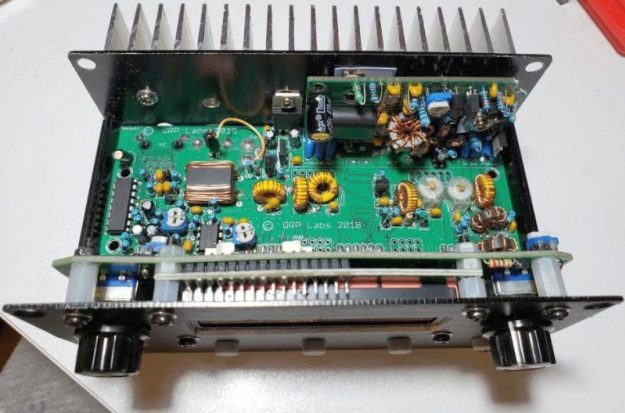
Another Amazing SSB Rig: VK3HN’s “Summit Prowler 6”
Here is another truly amazing compact SSB rig. Paul Taylor VK3HN is a true homebrew wizard. So many great homebrew rigs come out of Australia.
More details:
https://vk3hn.wordpress.com/2019/05/01/summit-prowler-6-a-pocket-sized-ssb-cw-transceiver-for-80-40-30-and-20m/
Paul’s QRZ.com page:
https://www.qrz.com/db/vk3hn