Kostas Giannopoulos has a lot of really great homebrew information on his QRP web site. It is reminiscent of the JF1OZL site. Check it out: http://www.qrp.gr/index.htm
For an example that his apropos of recent ET-2 discussions, Kostas has an extensive page with many, many versions of his hyper-minimalist rig:
Author: Peter Marks
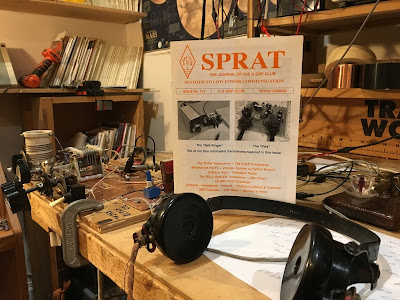
SPRAT, the FETer, DLR headphones, and recent QSOs on the ET-2
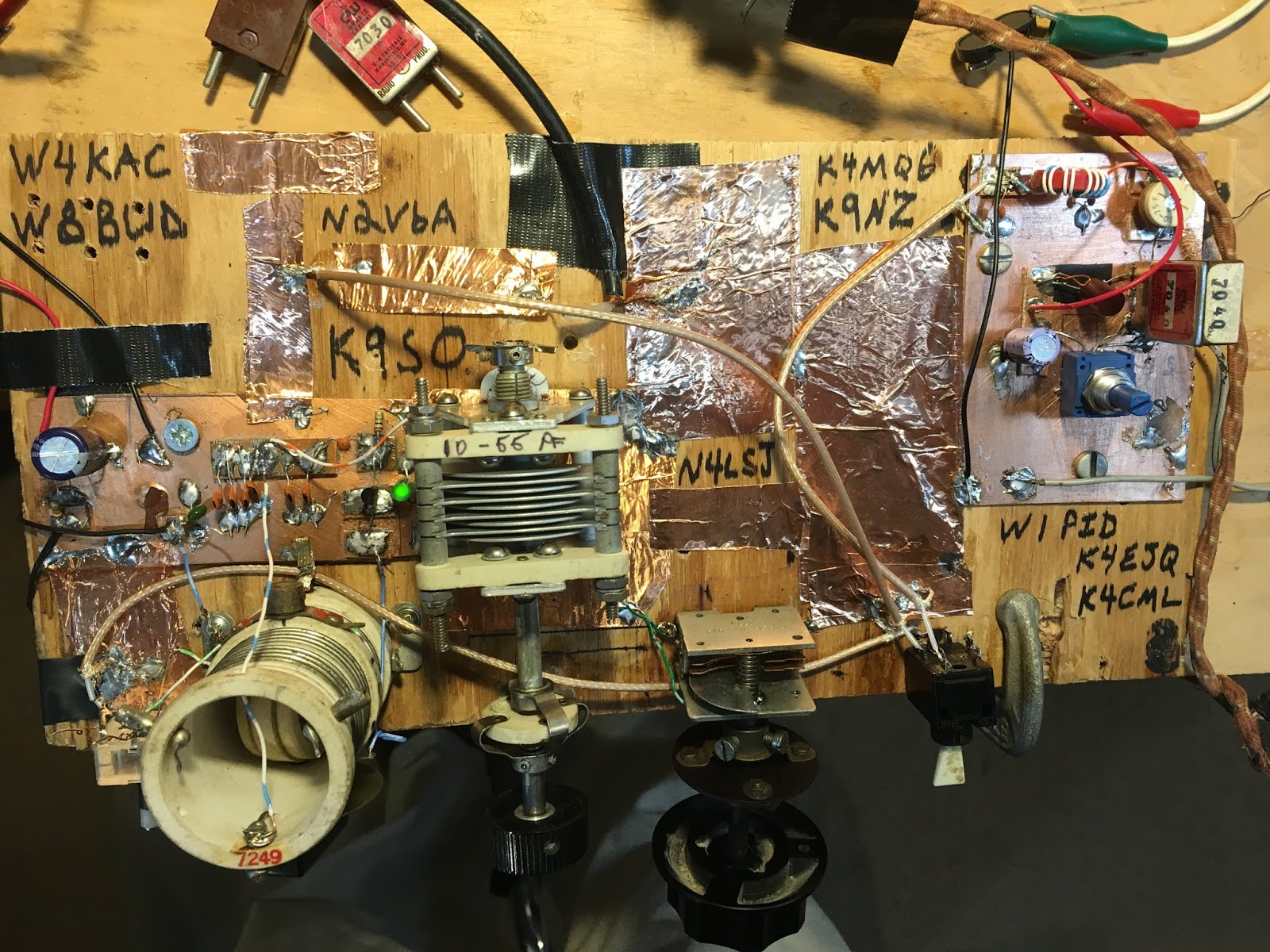
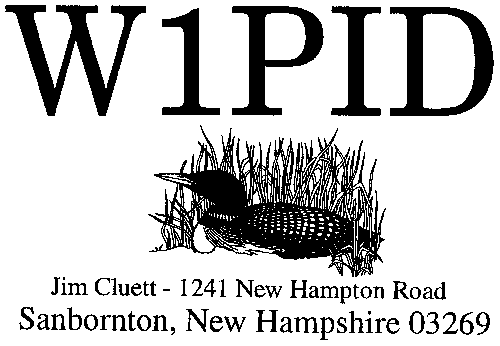
Yesterday we had QSO #13 on the ET-2. This was with Jim W1PID. In an earlier contact Jim told me I had some chirp. I fiddled with the coupling cap and the bias pot and am now T9! These days, chirp is an endearing, nostalgic problem to have. Thanks for the report and QSOs Jim!
Contact #9 was with Fred K9SO. He is in Wisconsin and QRZ.com put our distance at 633 miles. That is our DX record so far. Not bad for 92 milliwatts to a dipole on 40 meters.
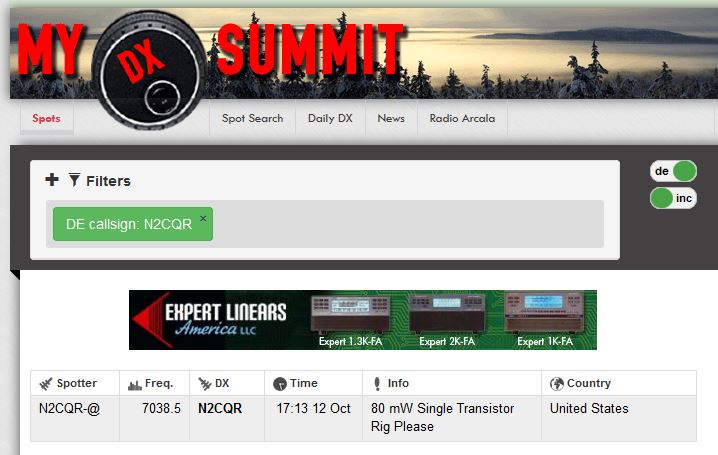
Most of my contacts come as a result of pleas for assistance on DX Summit or the SKCC Sked page. But I did make one “random” contact: Contact #6 with N2VGA. He just heard my CQ and gave me a call. FB.
I checked to see if OM Glen Yingling W2UW — the guy who started all this with his ET-1 — is still around. He became a silent key in 2012. But his ideas live on…
SPRAT 137 (Winter 2008/09) has a great article by QRP hero G3XBM. Roger built a version of the ET-1. His was for 80 meters and he called it the FETer. FB. I was struck by his estimate of the sensitivity of the ET-1 receiver: -100 dbm. I measured the N0WVA receiver (the one that I am using) has having a minimum discernible signal of -93 dbm. Pretty close. We may be at the limit of what you can expect from a single transistor receiver.
SPRAT 137 had something else that really resonated with me. G3YVF had an article on a minimalist rig using only one 6V6 tube. Geoff opened the article with this warning “Don’t try this unless you have a set of balanced armature type DLR ‘phones as they are really sensitive.” I have a collection of old headphones that I picked up at hamfests in London years ago. When building the ET-2, I checked all the old phones for sensitivity. A set marked DLR was the most sensitive. So Geoff’s observation had been independently confirmed. QRP Quarterly had an article comparing the sensitivities of old headphones — we should dig that article up.
SPRAT #137 is a reminder of what a great resource SPRAT — The Journal of the GQRP Club — really is. As we say on SolderSmoke, if you are not a SPRAT subscriber you are just wrong! Here is how to join GQRP and subscribe to SPRAT: http://www.gqrp.com/join.htm
The ET-2 with Callsign Tattoos
Contact #10 with the ET-2 — Perry K9NZ
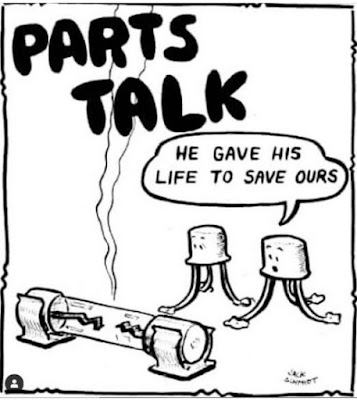
For All You Guys Who DON’T Use the Proper Fuse Value
Melbourne Australia — QRP By the Bay 2019
Each November, Peter Parker VK3YE and his ham colleagues from Melbourne share with us reports on Peter’s annual “QRP by the Bay” event.
I think VK3HN should seek a trademark for that hat. As soon as I saw it on the table in the video above, I knew these were Paul Taylor’s rigs. FB Paul. Here is Paul’s report:
https://vk3hn.wordpress.com/2019/11/02/qrp-by-the-bay-chelsea-beach-melbourne-2nd-nov-2019/
Great work guys. Thanks a lot. 73
SolderSmoke Podcast #214 is FINALLY out!
WE ARE WORKING TO IMPROVE THE AUDIO QUALITY. IN THE FIRST RELEASE OF THIS PODCAST SOME OF THE AUDIO WAS KIND OF MUFFLED. I TRIED TO FIX IT THIS MORNING AND I THINK I MADE SOME IMPROVEMENTS. THE IMPROVED AUDIO IS NOW AT THE LINK BELOW.
4 November 2019 (shockingly late!)
http://soldersmoke.com/soldersmoke214.mp3
The visit of Farhan to Northern Virginia
“I heard this guy from Southern California on 20…”
Fire Report from Pete
Pete’s Bench Report
“When you know stuff, you can do stuff!”
The CRAP rigs
Old Boatanchors — the Swan 120 with SUPER STABLE ANALOG VFO!
Ten Tec rigs dial cord replaced with Chinese digi sig counter
Pete’s 500 mW encounter with a QRO curmudgeon
The ZL2BMI Challenge has Pete building crystal filters
The Left Coast Loafer CW rig
Bill’s Bench Report
ET-2 Refinements
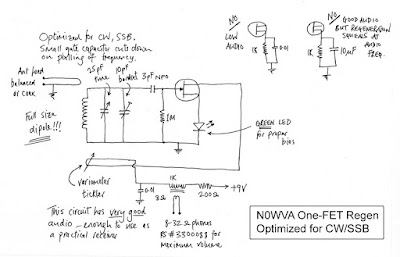
N0WVA’s Regen Receiver
Going from ET-1 to ET-2
J-310s vice MPF-102
100 mW from a single J-310
Receiver kind of deaf -103 dbm MDS
10 contacts so far in 9 states
THREE contacts yesterday.
Worked Wisconsin – 633 miles on 92 mW
We are at sunspot minimum.
“Rage, rage against the dying of the light.”
Simplicity is the real reason for CW
IDEA: Get those Michigan Might Mites on the air!
Use Reverse Beacon Network to see if you are getting out
Use SDR receivers to make contacts
MAILBAG
DL1AJG
KC6SAX
W9VNE
KA4KXX
N0WVA
Zl2BMI
AJ6BD
Don’t do this yourself…
Direct Conversion (videos)
Here are a couple of videos from 2017 (never posted before). I built a little 40 meter Direct Conversion receiver for my nephew John Henry.
Whenever we work on circuitry like this, we should be be grateful for Wes Hayward W7ZOI who, in a 1968 QST article, reminded us of this important but until-then forgotten technique.
More information on this project appears in these links:
https://soldersmoke.blogspot.com/2017/10/a-direct-conversion-iphone.html
https://soldersmoke.blogspot.com/2017/11/iphone-direct-conversion-receiver-with.html
Minimalist Masochism at Solar Minima — But More Contacts with the ET-2
![]() |
| Dylan Thoams |
“Rage, rage against the dying of the light”
I thought of that line from Dylan Thomas’s poem when I read on G3XBM’s web site that we are kind of at the very bottom of the solar cycle. Roger wrote on 22 October: “Solar flux is 64 and the SSN 0. A=5 and K=0. As far as I am aware this is the lowest solar flux this solar minimum.”
I also thought of this as I pounded brass (Indian brass!) in an effort to make a few more contacts with my ET-2 two transistor rig. Obviously venturing forth on 40 meters with just TWO transistors (one for transmit and one for receive) and crystal control AT SOLAR MINIMA is not for the faint of heart. It is almost a Dylan-esque act of defiance.
I have had to resort to pleas for help on the DX Summit, the SolderSmoke blog, and the SKCC Schedule page. Fortunately for me, the brotherhood has sprung to my support.
W1PID (who gave me contact #3) also gave me contact #4 on 21 October.
W4KAC in Hickory NC was contact #5. This was on 22 October. This was the only marginal contact so far. He was running 5 W into an end fed half wave.
Yesterday was a big day for the ET-2. I had two solid contacts:
#6 was N2VGA in New York UPDATE: Larry N2VGA confirmed by e-mail that this was a “random” contact — not the result of my on-line pleas for assistance. He just heard my CQ and responded. FB.
#7 was K4CML in Newport News, Va. He switched to QRP himself at 2.5 watts for a nice 2X QRP contact.
Looking at my Rigol ‘scope, I now think I’m putting out about 150 milliwatts. Not bad for a single J310. I may have to invest in a heat sink.
40 seems most cooperative in the morning (around 0930 local) and again in the afternoon (around 1630 local).
Thanks to all who have helped. I will try to make a few more.
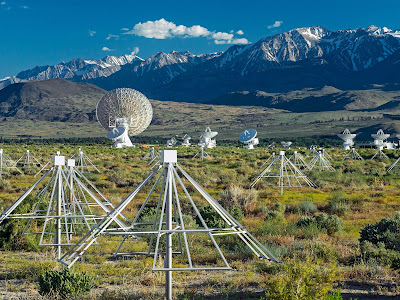
Radio Telescope Homebrewed from Cake Pans and Chicken Wire
Revamped SolderSmoke YouTube Channel — Please Subscribe
Farhan Visits Northern Virginia and SolderSmoke HQ
QSO #3 with the ET-2 Minimalist Transceiver
Please Listen for My 80 Milliwatt CQ Tomorrow, Wednesday 16 Octoberr
I will be calling CQ from Northern Virginia starting at 1330Z (0930 Eastern) on Wednesday 16 October 2019 on 7038.6 kHz with my ET-2 QRPpp rig. I have made two contacts so far — both contacts were at a range of about 300 miles. I’d like to be able to make at least one per day. If you are within range please listen for my CQ tomorrow and give me a call.
Thanks and 73 Bill N2CQR
The First Sunspots of Cycle 25 — Explained by Space Weather Woman (Video)
Dr. Tamitha Skov explains how Cycle 25 has begun while Cycle 24 is not quite finished.
She has a very clear way of presenting the space weather. Very useful.
YouTube site: https://www.youtube.com/channel/UCkXjdDQ-db0xz8f4PKgKsag
More on the ET-2 : Better Pictures and More Circuit Description. Some Thoughts on Simplicity
|
|||
Fort Mill, SC
|
|
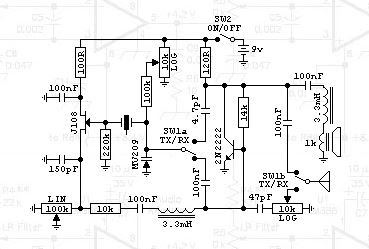
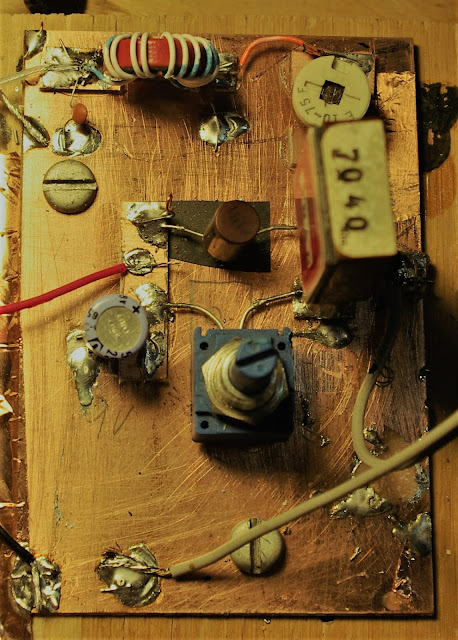
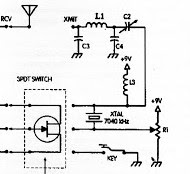
The transmitter is VERY simple. Nine parts, including the low-pass filter. You can barely see the J310 FET to the right of the crystal.
Here is the receiver:
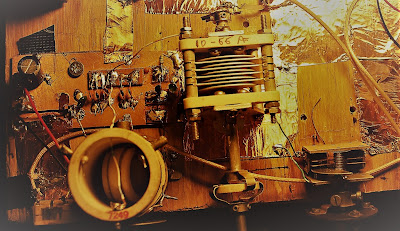
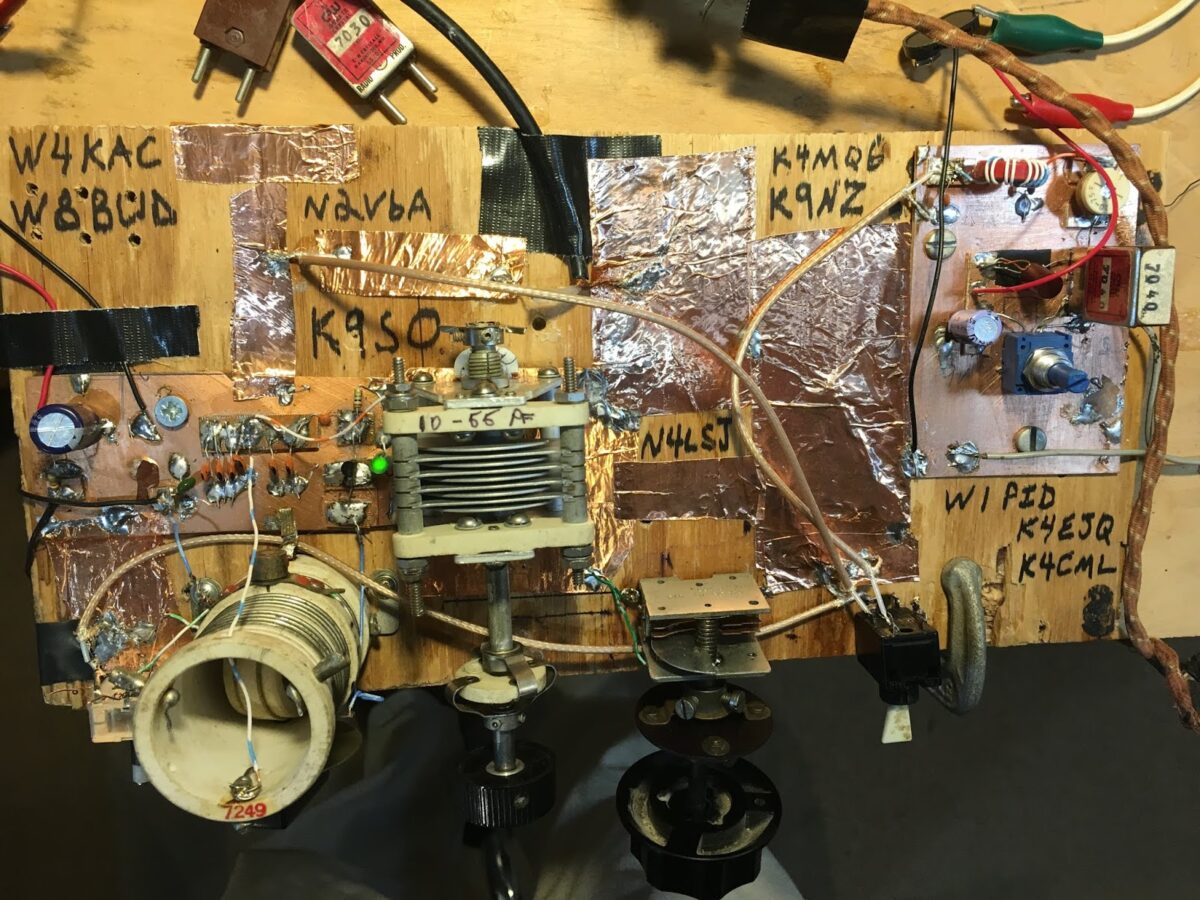
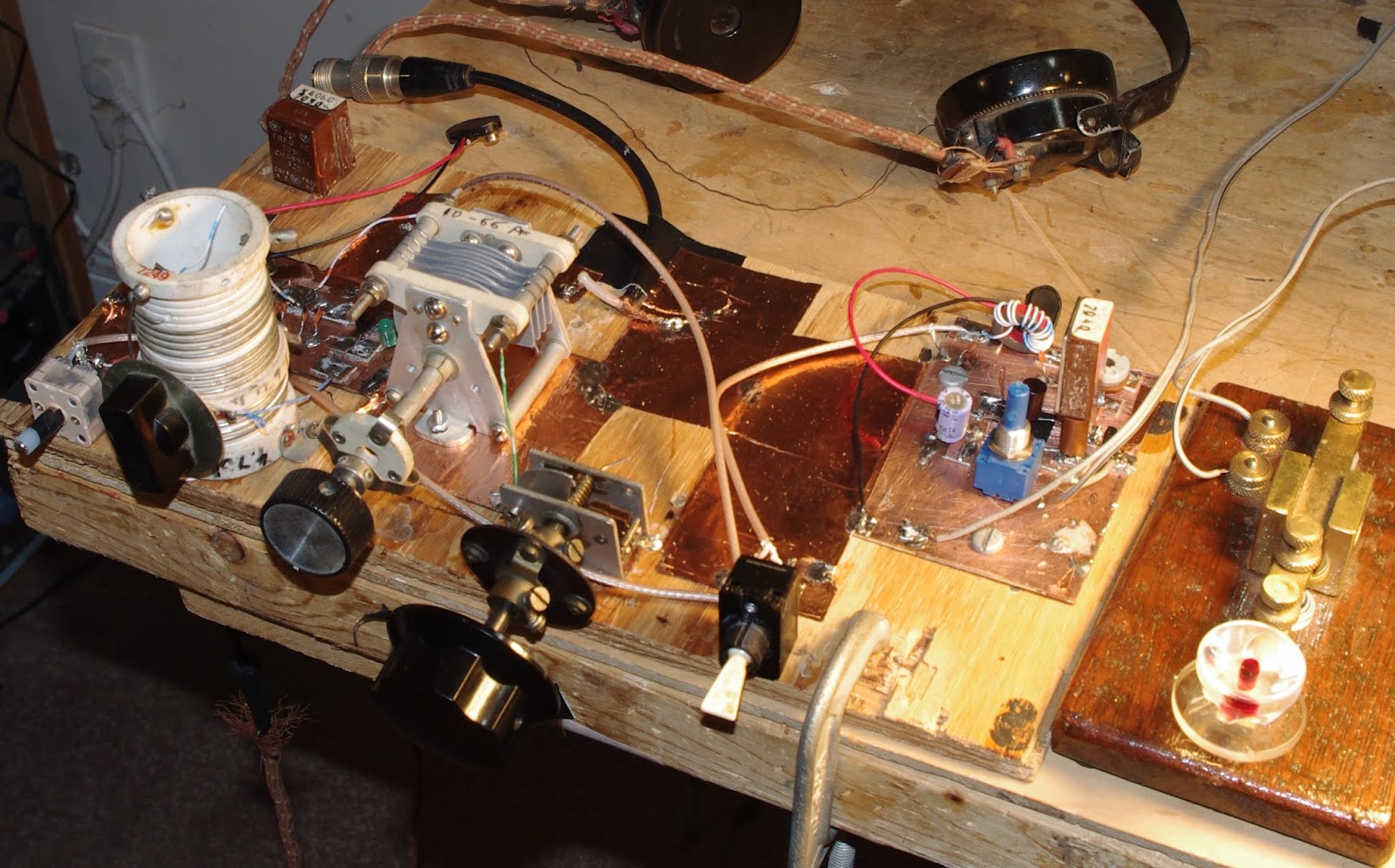
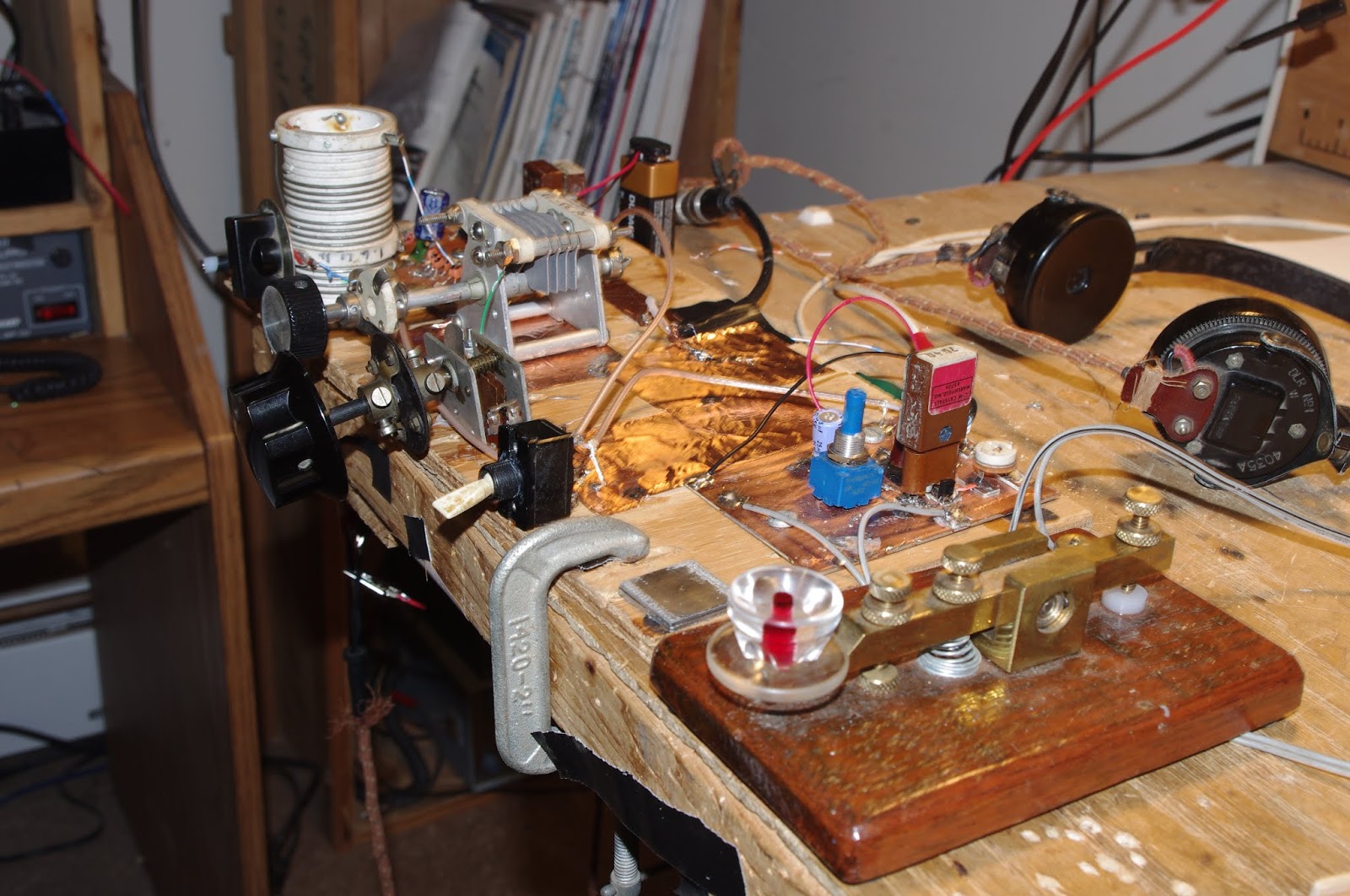
I really like N0WVA’s regen. The green diode in the source circuit is the key. This one does not squeal when you go into excessive regeneration (when you think about it, regens should NOT squeal at audio frequencies — but most do). Also, the green diode dims a bit when you are at the right amount of regeneration. In the picture you can look down the tube of the variometer that Pericles HI8P gave me many years ago. The big variable cap is from the junk box — I think it may be from a Johnson Viking transmitter. Note the long shaft with the insulating connector — this is to reduce the hand capacity effect. On the right you see a smaller cap with just one vane — this is my fine tuning control — with the smaller cap at mid range, I would just set the big capacitor to put the receiver at 7040 — with the smaller cap I could tune +/- 12 kc. I also used an insulating shaft on the smaller cap — the connector for this one is from an old 1930s era regen that I picked up at the Kempton Part rally in London.
Instead of the audio transformer and Radio Shack headphones, I just used some old DLR-1 WWII Headphones. They are very sensitive and work well.
Lots of soul in this new machine: The variometer from Pericles. The WWII headphones. The 1930s era shaft connector. The circuit idea from the Autumn 2001 SPRAT. Farhan’s key.
I recently read on Hack-a-Day of a new FPGA chip that has on it 35 BILLION transistors. I’m sure that thing can produce some fascinating results, but can anyone really understand it, or feel that they really BUILT something that has that kind of chip at its center? On the other hand, I did rely on a lot of modern digi technology in this project: The Reverse Beacon Network reported back that my unanswered CQs were in fact getting out (one as far as Kansas to K9PA). And in the end I had to ask — via the DX Summit Spotting cluster — for someone to listen for me. So I can’t go full Luddite here. And I wouldn’t want to have to use a rig this simple every day. No way. It is just too hard to use. But there is a beauty and a challenge in simplicity. There is some virtue in using just two transistors instead of 35 billion.
Thanks to N0WVA, W2UW, VU2ESE, HI8P, K4MQG, The G-QRP club and their inspirational journal SPRAT, the RBN and the DX Summit.
Success with my ET-2 –TWO TRANSISTOR RIG
| To K4MQG from N2CQR: |
|
|||
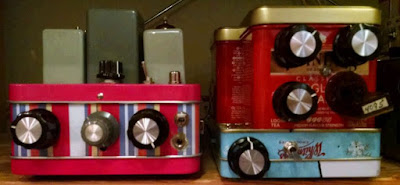
The BGCD: A Regenerodyne Receiver built on Pencil, Candy, and Tea Tins. Circuit from 1937 QST
David Newkirk recently put up a nice website on ham radio. The page below provides details on the amazing creation pictured above: The BGCD: “The Byron Goodman — Clinton DeSoto Regenerodyne.” It is a beautiful piece of work, made more beautiful by the metal containers used in construction: pencil, candy and tea tins. The circuit is based on a 1937 QST article.
David’s site reminded me of the wonderful writing of his father, Rod Newkirk of “How’s DX” fame. More on him in due course.
More on the BGCD here:
http://dpnwritings.nfshost.com/ej/pictures/pictures1.htm?fbclid=IwAR2-lmJ8E1kEBT_jsB3Q8UnPaN0vc472dP783ifABK7eSxgpe5M1Pl0N77g
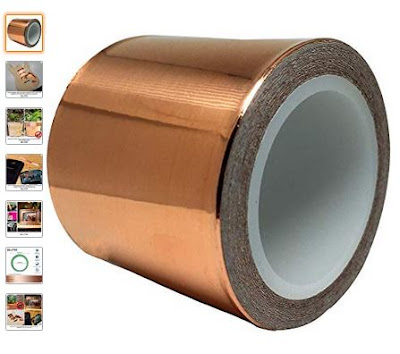
Very Useful: Copper Tape with Conductive Adhesive

This copper tape is really useful, especially when doing “free style” homebrew. At first I didn’t even realize the adhesive is conductive. This tape is great for creating a common ground among several printed circuit boards, especially when you are using a wood board as the base. You can solder to it very easily. You could even use it (with a wood or plastic base) in lieu of a copper clad board. Lots of possible applications for homebrewers. This stuff deserves a place on the workbench shelf right next to the Gorilla Tape and the Crazy Glue. I’m using it in my Single Transistor Rig project.
You can get it from Amazon — there are many varieties and vendors. This one is similar to the one I am using.