Author: Peter Marks
Mr. Carlson’s Lab Attacked by Dangerous Canadian Snow Static! (Video)
Even when describing something as simple and basic as snow, Mr. Carlson is electronically awesome. This video made me realize that in the event of an EMP, his will probably be the only lab to survive.
The SolderSmoke Daily News took up the topic of snow static back in 2011. Be sure to read the comments, especially the one from KC7IT about the QUARTER INCH ARCS that woke him up in the dorm at MIT. Check it out:
https://soldersmoke.blogspot.com/2011/10/snow-static.html#comment-form
I’ve got to get one of Mr. Carlson’s 2020 calendars!
Mr. Carlson’s Lab Attacked by Dangerous Canadian Snow Static! (Video)
Even when describing something as simple and basic as snow, Mr. Carlson is electronically awesome. This video made me realize that in the event of an EMP, his will probably be the only lab to survive.
The SolderSmoke Daily News took up the topic of snow static back in 2011. Be sure to read the comments, especially the one from KC7IT about the QUARTER INCH ARCS that woke him up in the dorm at MIT. Check it out:
https://soldersmoke.blogspot.com/2011/10/snow-static.html#comment-form
I’ve got to get one of Mr. Carlson’s 2020 calendars!
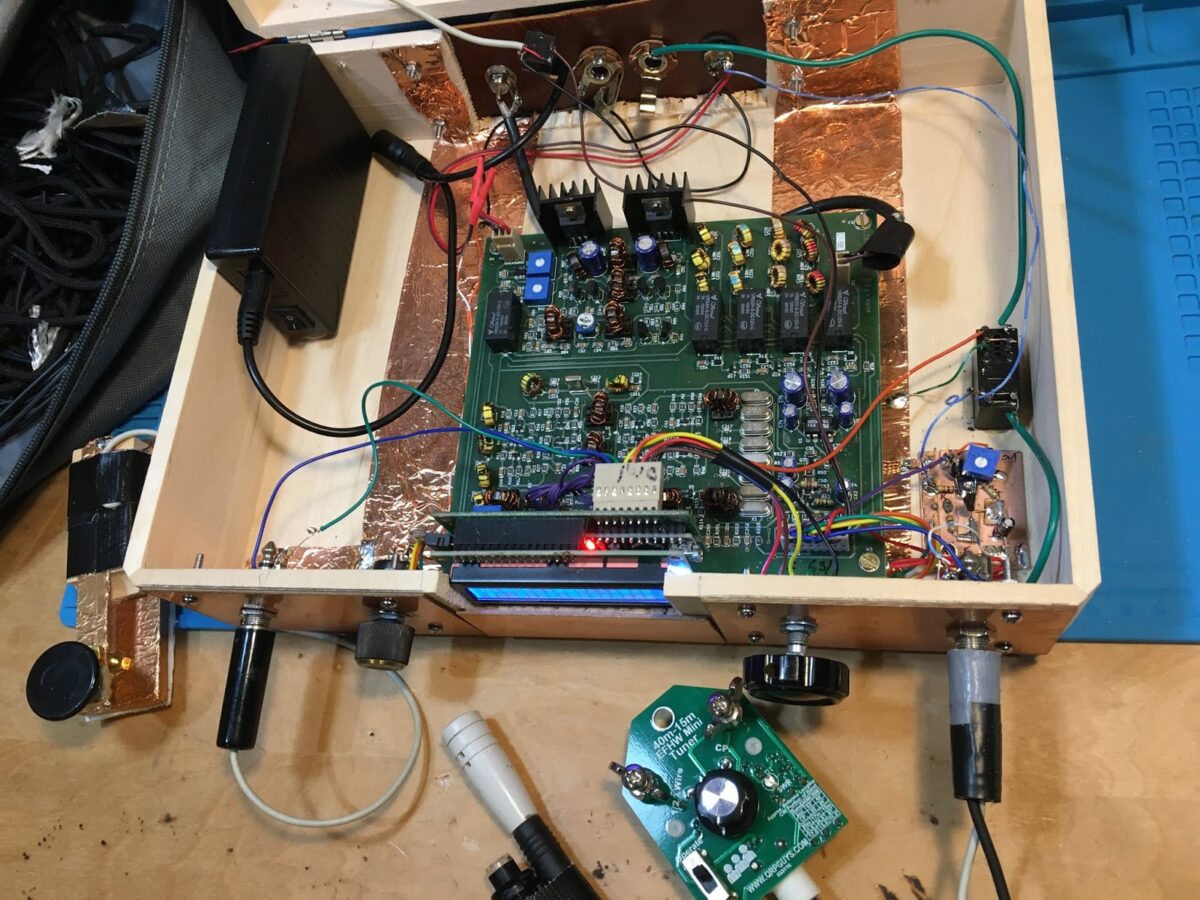
Hack-A-Day and Copper Tape
The End Fed Half Wave Antenna and EFHW Tuners
In the SPRAT 179 (Summer 2019) article describing their Peregrino (Pilgrim) transceiver, Joan EA3FXF and Eduardo EA3GHS recommend the use of an End Fed Half Wave (EFHW) antenna. Their circuit incorporates an EFHW tuner and an SWR indicator. As I planned my trip to the Dominican Republic with a uBITX, I had this antenna system idea in mind. I was attracted by the possibility of avoiding having to carry coax with me. And it seemed that an EFHW antenna would be easier to get up in the air than a coax-fed dipole.
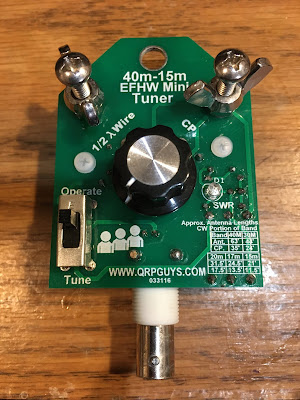
When searching for schematics for EFHW tuners I came across the QRPguys tuner kits.
https://qrpguys.com/end-fed-half-wave-sota-antenna-tuner
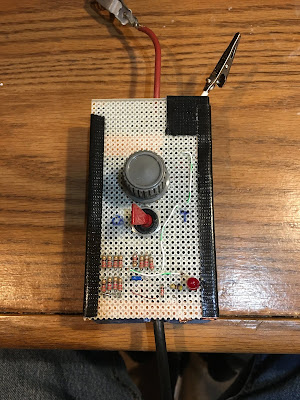
This looked like just what I needed, so I ordered one. But I placed my order kind of late, and I started to worry that I might not get the tuner kit in time. So I decided to homebrew my own (just in case!)
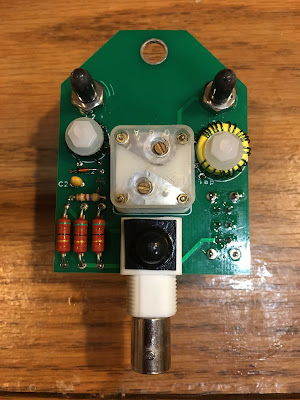
As it turned out, QRPguys got the kit to me in plenty of time. It went together very quickly and is a really useful piece of gear. My homebrew version works fine, but I prefer the QRPguys device.
You can check out the manual here:
https://qrpguys.com/wp-content/uploads/2019/09/efhw_40m_tuner_assy_090119.pdf
The circuits are interesting. The EFHW antennas present an impedance not of 50-70 ohms, but of 3000-5000 ohms. The Peregrino and the the QRPguys circuits use a matching transformer to change the high impedance to 50 ohms. In both circuits polivaricon capacitors are used to tune for resonance. The QRPguys circuit uses an N7VE LED absorption bridge — I found it very satisfying to put the circuit into “tune” mode and then just adjust the capacitor until the LED went out. That means the antenna system is presenting 50 ohms to the transmitter.
SOTA beams has a good explanation of the EFHW antenna here: http://sotabeams.co.uk/efhw/
I did use a counterpoise.
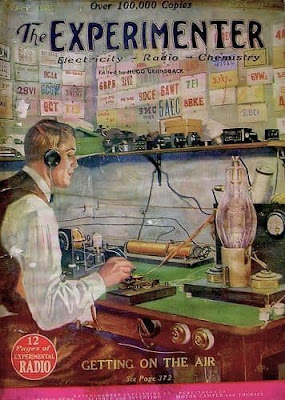
The Experimenter
Mike WU2D on QSO Today with Eric Guth 4Z1UG
Eric Guth has a great interview with homebrew and boatanchor guru Mike WU2D.
Listen here:
https://www.qsotoday.com/podcasts/WU2D
Wow: “My receiver was from a Sherman tank.”
His story about getting in trouble after “borrowing” his friend’s callsign was really great.
I also liked his wise comment about how anyone who homebrews simple gear will collect some “wallpaper” from official observers and the FCC. Mike is right: we shouldn’t get too concerned about minor transgressions. If we do, we run the risk of becoming so careful, cautious, and fearful that we never BUILD anything.
There is a wonderful discussion of the Paraset.
Mike coins a term that we might want to add to the SolderSmoke lexicon: RetroQRP. (Over to you Steve Silverman. Your call OM.)
Mike WU2D on QSO Today with Eric Guth 4Z1UG
Eric Guth has a great interview with homebrew and boatanchor guru Mike WU2D.
Listen here:
https://www.qsotoday.com/podcasts/WU2D
Wow: “My receiver was from a Sherman tank.”
His story about getting in trouble after “borrowing” his friend’s callsign was really great.
I also liked his wise comment about how anyone who homebrews simple gear will collect some “wallpaper” from official observers and the FCC. Mike is right: we shouldn’t get too concerned about minor transgressions. If we do, we run the risk of becoming so careful, cautious, and fearful that we never BUILD anything.
There is a wonderful discussion of the Paraset.
Mike coins a term that we might want to add to the SolderSmoke lexicon: RetroQRP. (Over to you Steve Silverman. Your call OM.)
Notes From the Dominican Republic on possible uBITX mods
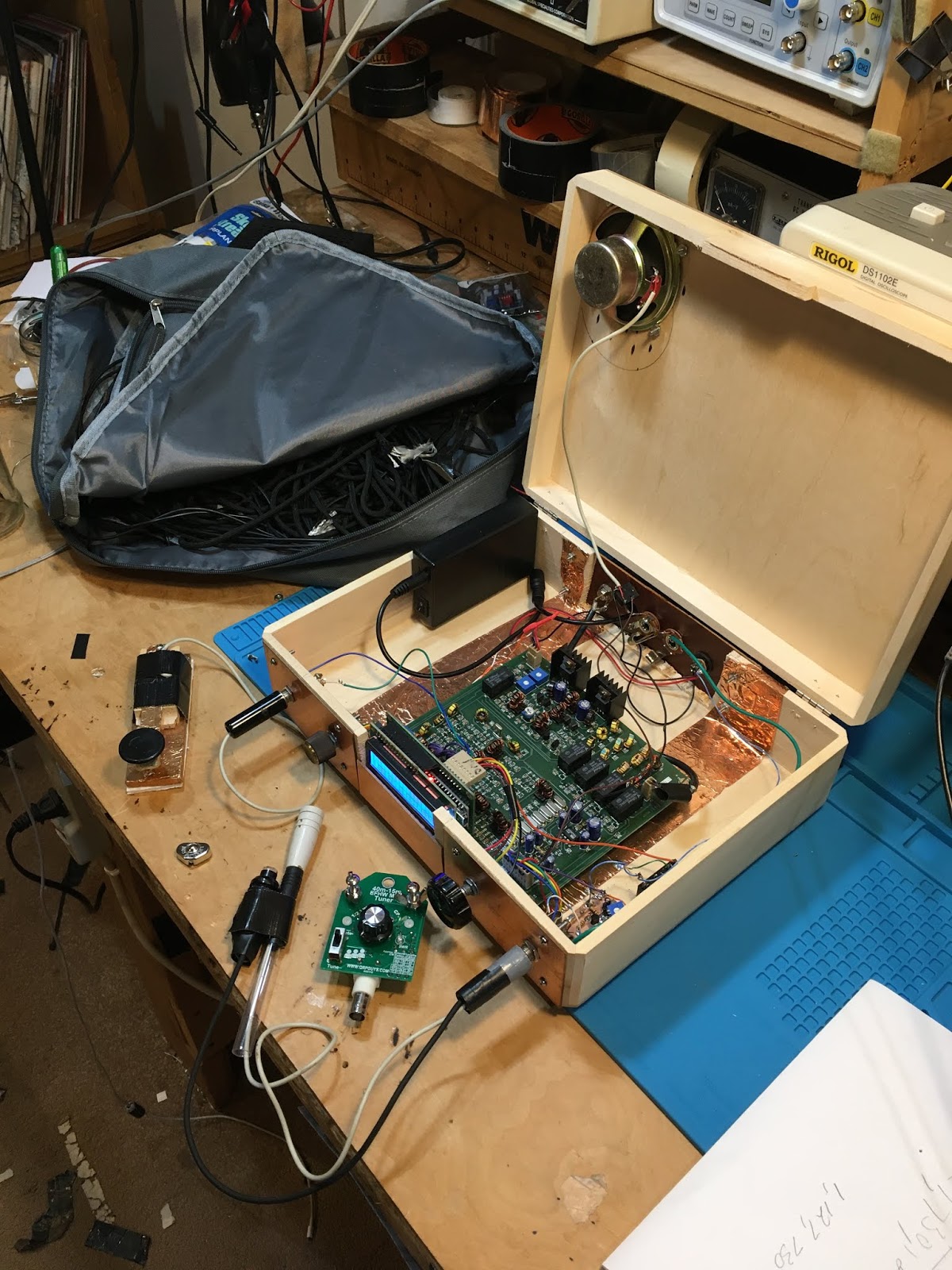
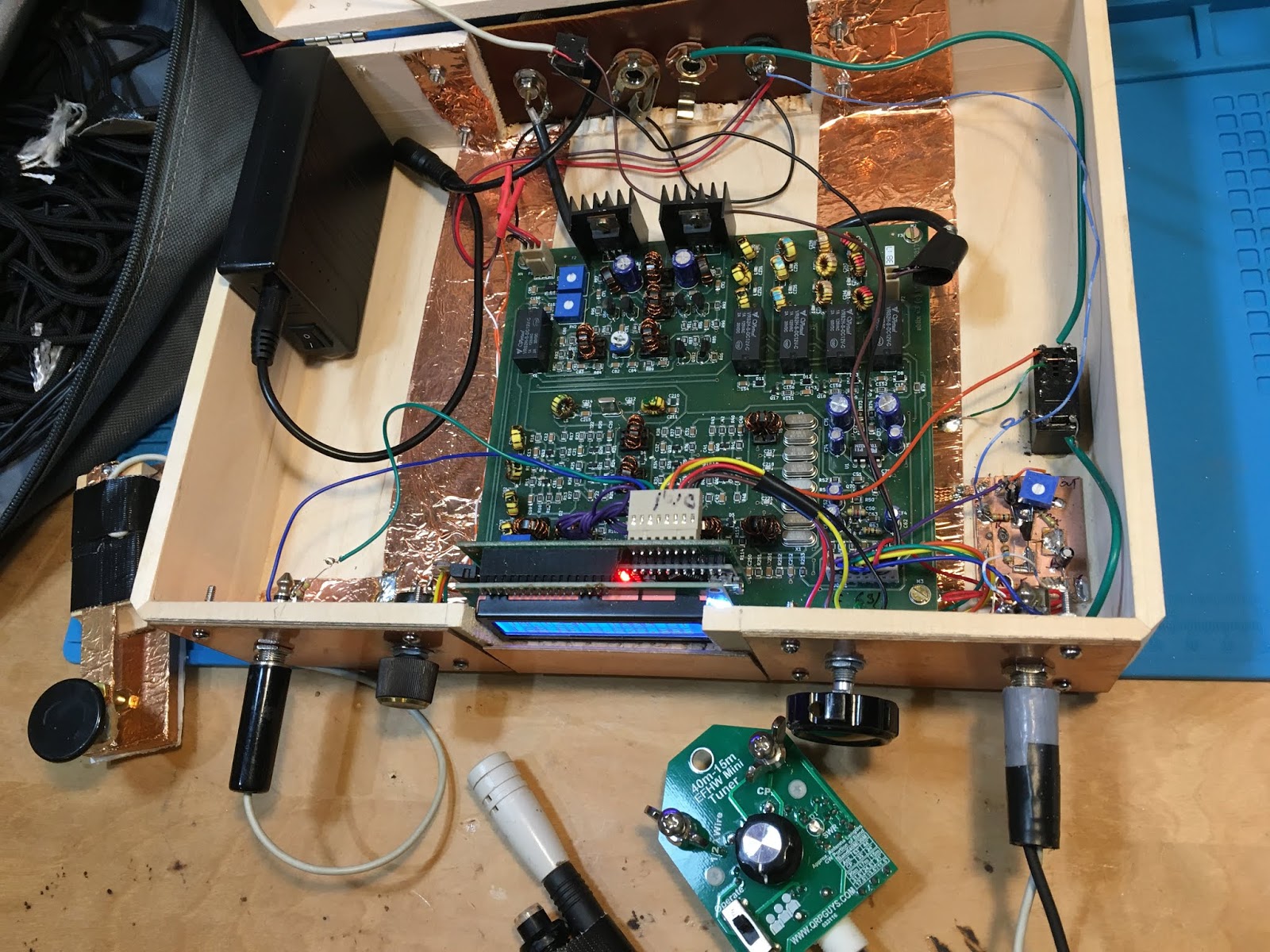
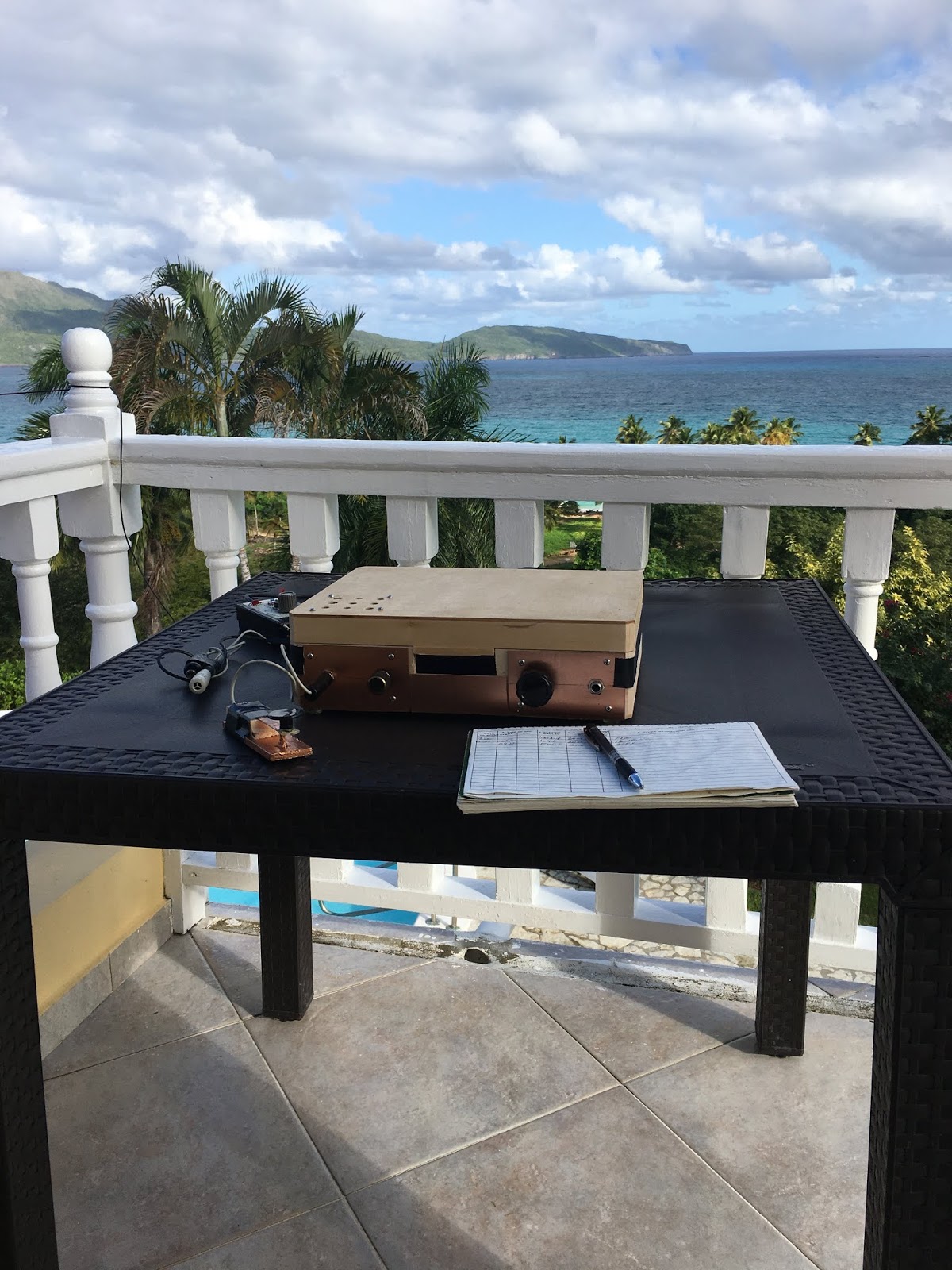
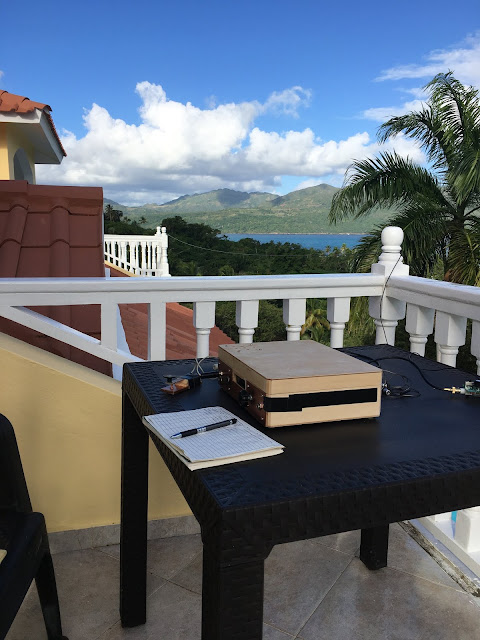
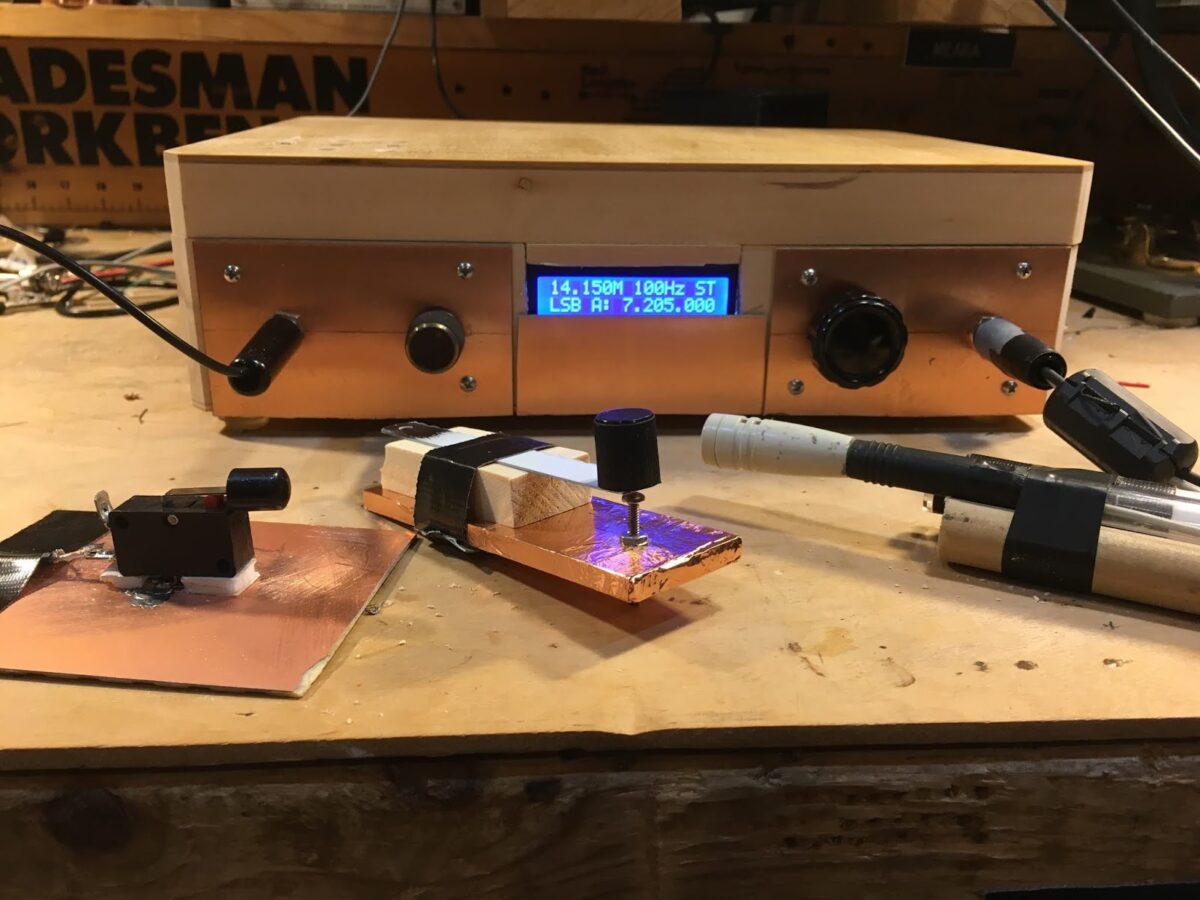
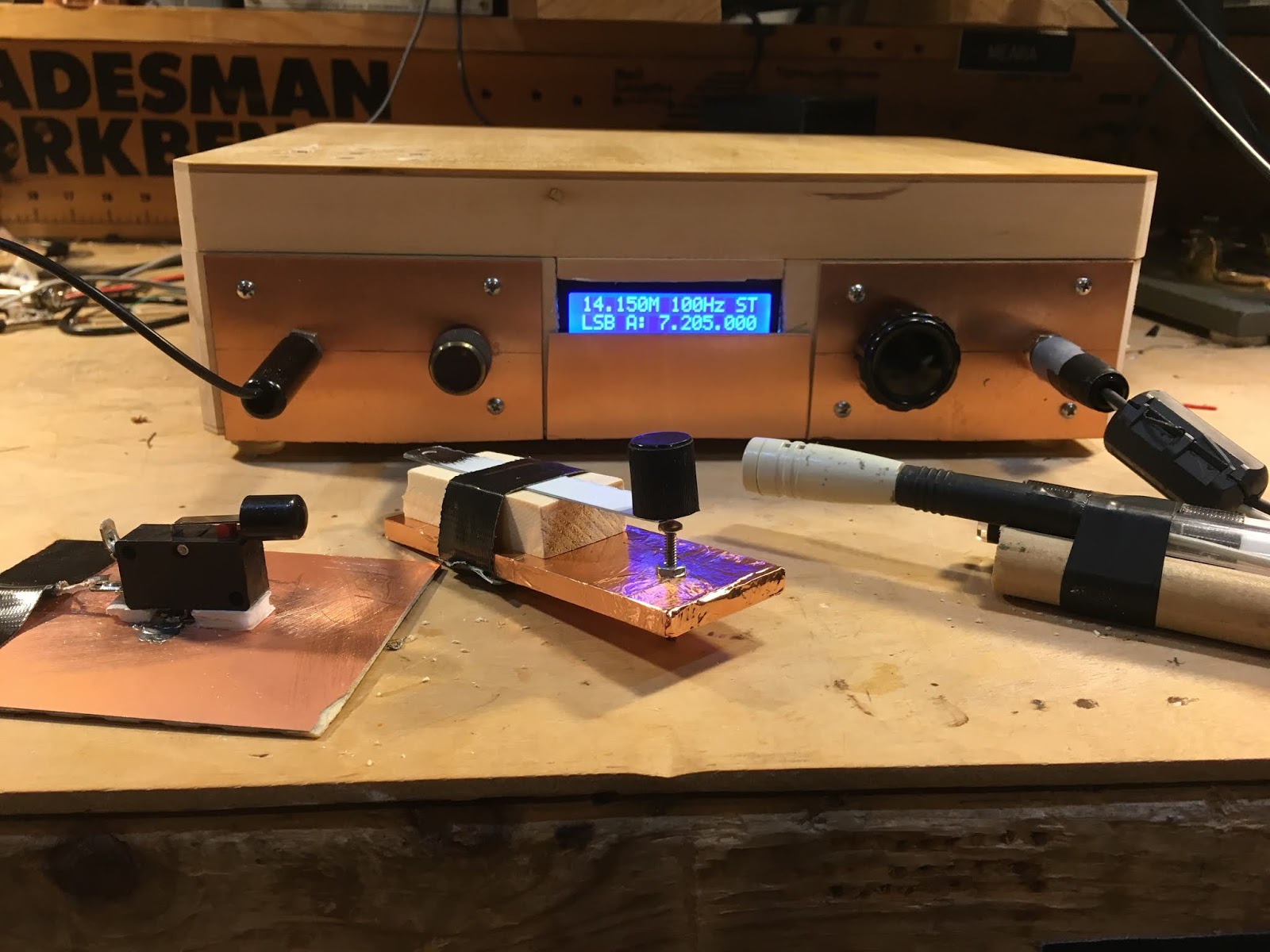
It was really great to have the multiband and CW/SSB capabilities of the uBITX with me in the Dominican Republic. And even with my large wooden box, the rig and all its accouterments fit into my carry on baggage (and there were no problems with airport security). (In the picture above you can see the cloth case that held the whole station, including the antenna.)
As I used the rig, I thought about possible mods for future operations. Here are some ideas:
— Filter for CW? Definitely. Farhan suggested switching in a more narrow 12 MHz IF filter for CW operations, but that seems like a bit too much work. I am going to try to use an audio frequency filter. I’ve ordered the active CW filter from QRPguys. I’ve long been intrigued by these kinds of filters, but they didn’t seem very wirthwhile with a DC receiver. With a superhet like the uBITX they make a whole lot more sense.
— Sidetone volume control. Need it, especially with fellow vacationers trying to sleep nearby. Should be easy — just a pot on the side-tone line.
— Low impedance mono headphones. Need them.
— An LED light for logging. Would help.
— Switch to turn off the 16X2 display to save power? I thought about this but I checked after we got back and the whole display pulls only about 20 ma. So it probably isn’t worth it to put in a switch.
— Internal protective cover for the uBITX board. I used the extra space in my big wooden box to store the key, the mic, the battery, the tuner, etc. They all bounce around a bit and could damage the uBITX board. So I will try to build in some internal physical shielding, perhaps from a BITX plastic box.
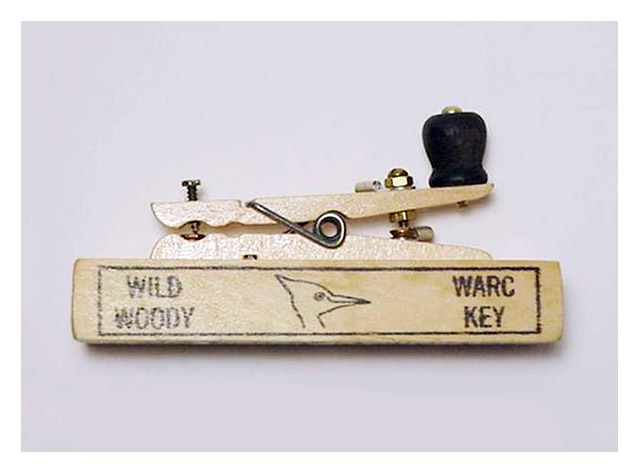
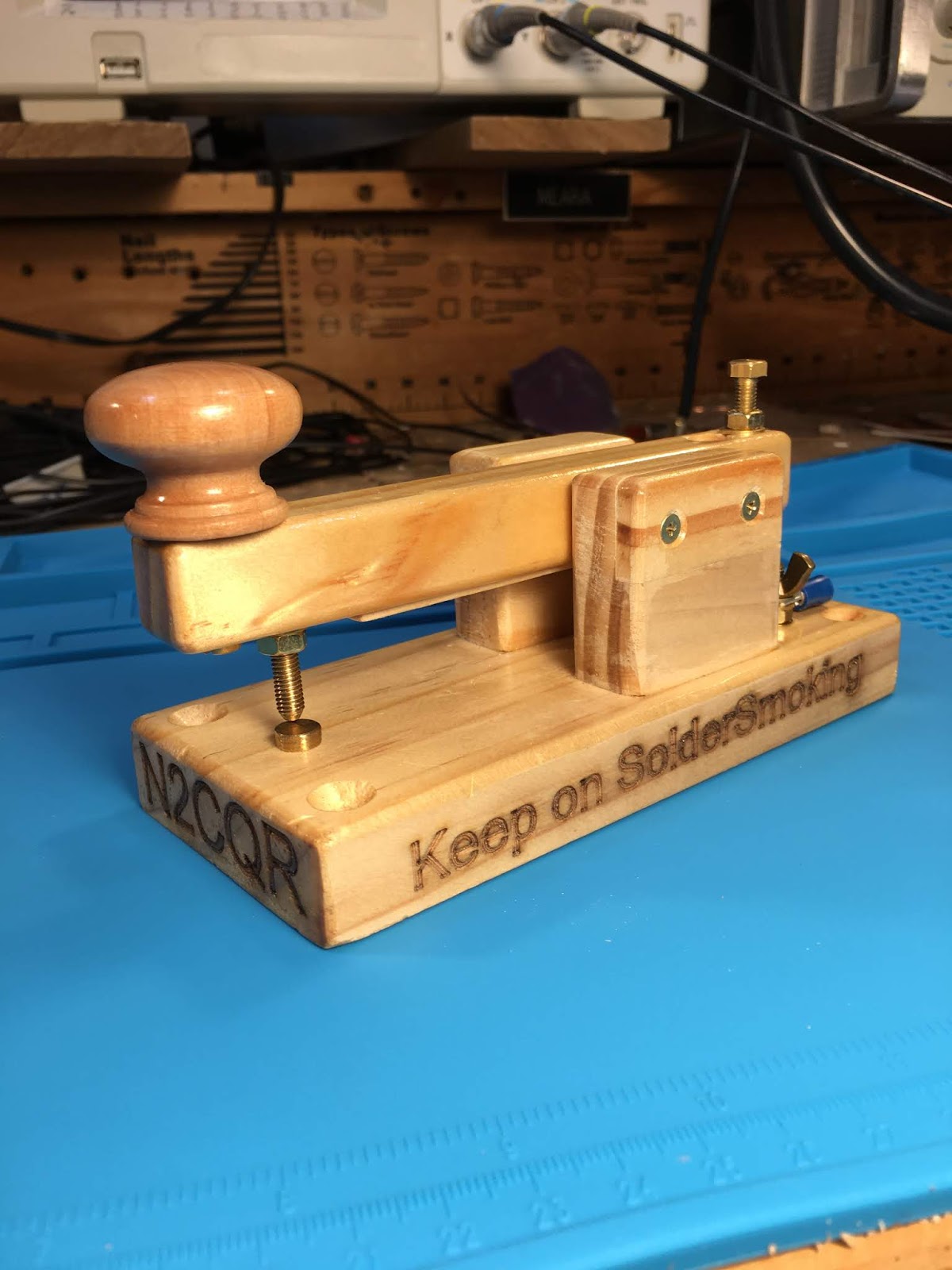
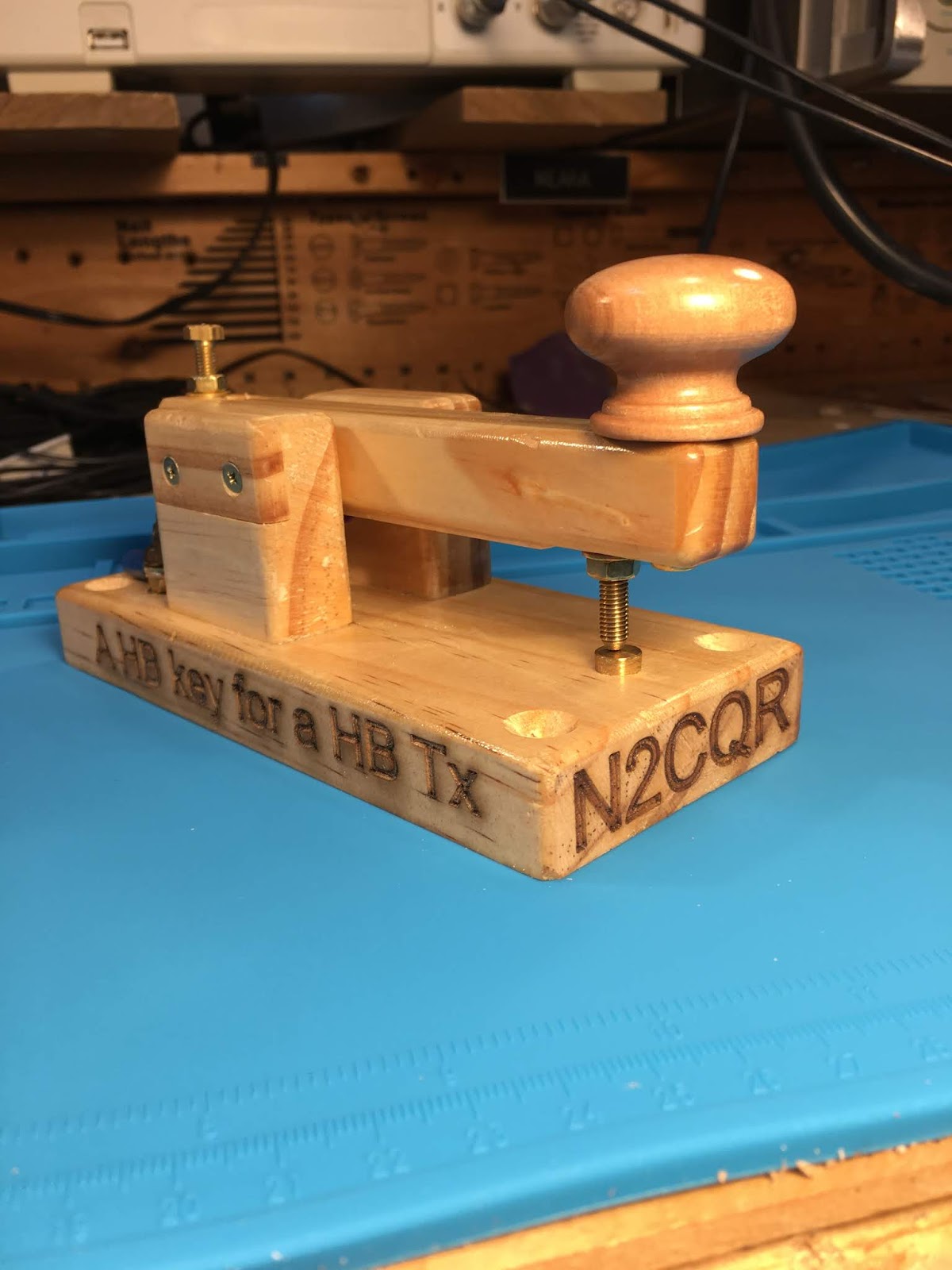
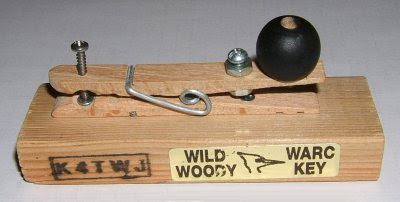
— Brass contacts for my homebrew CW key. I think brass is better than the copper foil I am currently using. I already did this with some brass bolts from the local hardware store. Mush improved. Pounding brass is better than pounding copper tape.
— I installed an additional stage of microphone amplification but I have this stage running even on receive. But I checked and the amount of current pulled by this stag is so small that it is not even worth changing the power supply line.
— Reduce output to below 5 watts on CW. To make the rig “QRP Compliant.”
Aeronautical Mobile Contact from the Dominican Republic
![]() |
| 767 |
On the morning of January 9, 2020, I was up early, sitting alone out in my open-air tropical hamshack on Bahia Rincon on the Samana peninsula of the Dominican Republic. I had been looking at the stars. As the sky brightened I was listening to band noise from a still-dead 20 meter band on my uBITX.
Skies were partly cloudy. The Big Dipper hung upside down in front of me. I had also seen Corvus, Scorpio, Andromeda, and Leo. There were a few meteors and one bright satellite.
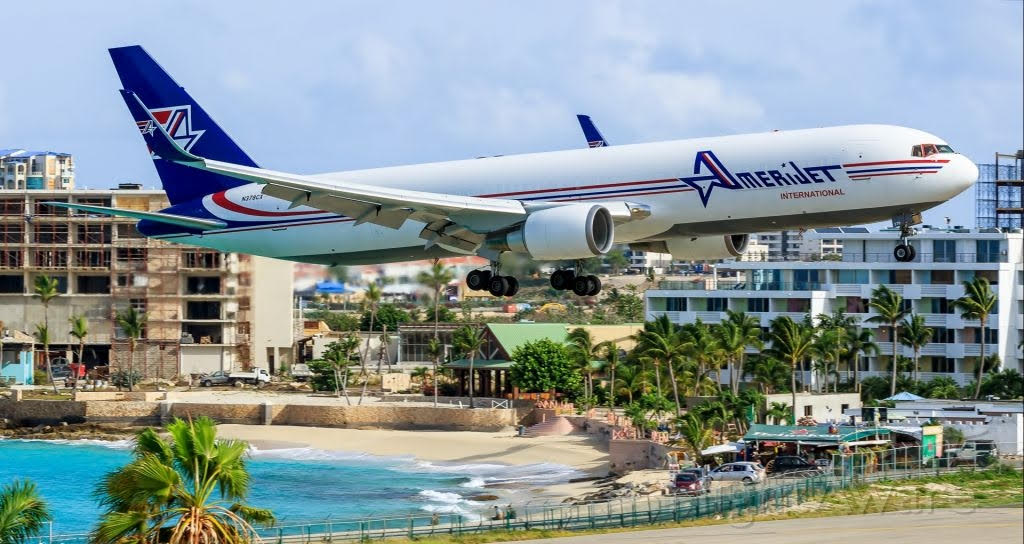
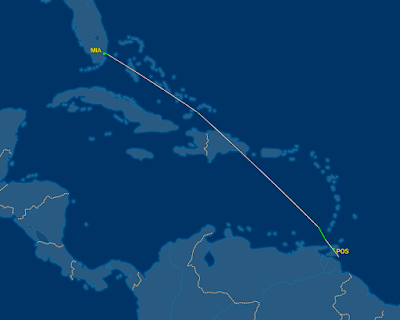
But 20 was quiet… until, suddenly, BOOM! A very loud and clear SSB signal came through. It was KX4WE/Aeronautical Mobile. Mike was in a 767. I called him and he came back right away, giving me a 57 report. He gave his position as 170 miles Northwest of San Juan, Puerto Rico. He was heading to Port-o-Spain, Trinidad from Miami. We had a quick QSO — it reminded me a lot of my contacts with the MIR space station from Santo Domingo in the mid-1990s. Suddenly Mike’s signal dropped very significantly. I figured that he had moved further south and was no longer line-of-site with me. I had some hills to my south and they were now attenuating Mike’s signal. I could hear him working M0NKL. We were Mike’s only two contacts on 20.
I realized later that had I looked up, I might have seen the lights of the plane. Below is the track of the aircraft. He was at 35,000 feet when he passed over the DR.
Contacts from the Dominican Republic
AE7KI’s was a famiiar voice. Terry transmits from Tennessee but his voice is from down under. I recognized him before I heard the callsign.
F6HKA was a familiar call. I checked — he was a Straight Key Night contact from one year ago. Great to meet up with Bert again.
The Aeronautical Mobile contact was icing on the cake. More on this tomorrow…
Thanks to all who contacted me or tried.
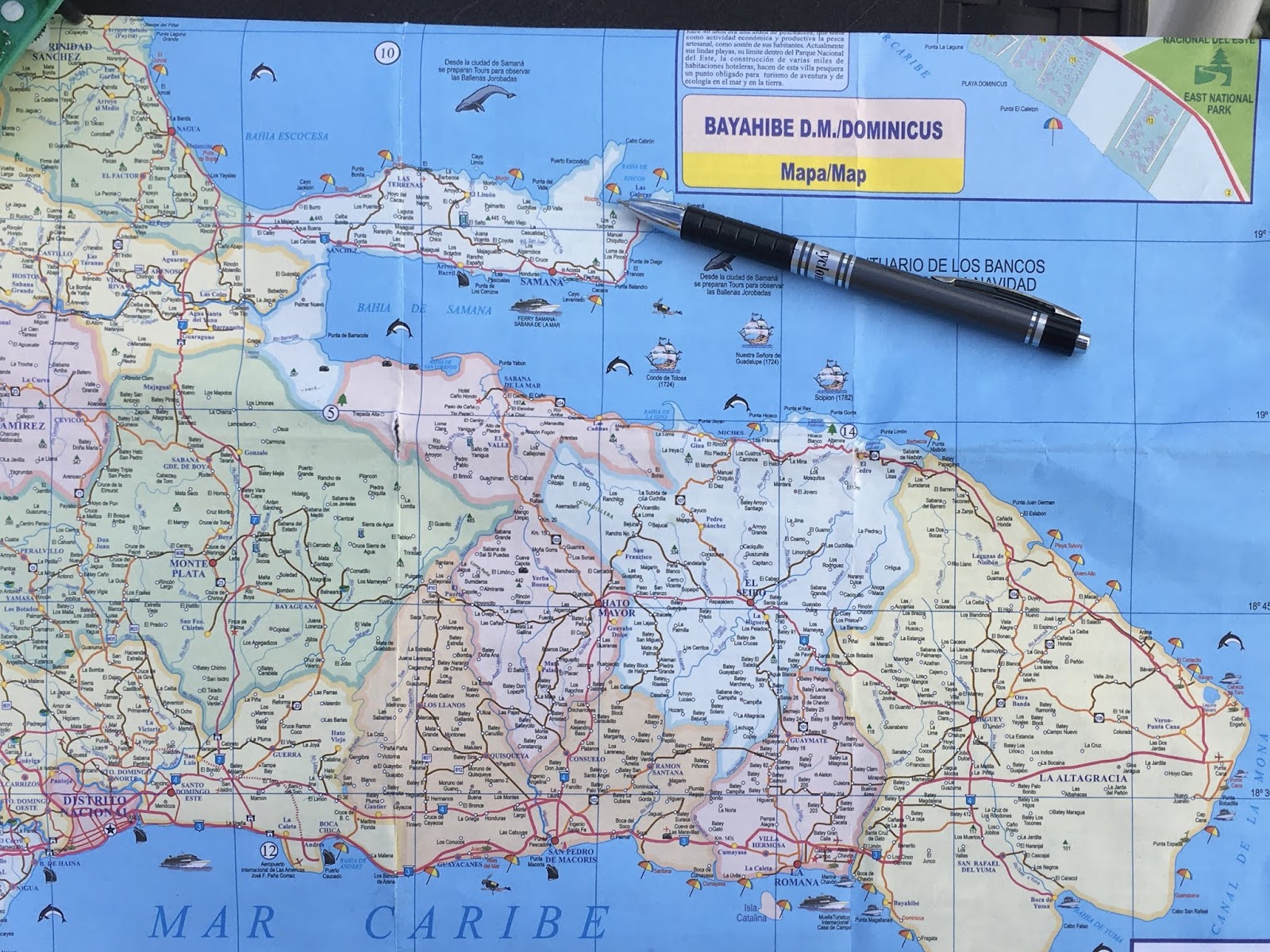
In the Dominican Republic 30 December 2019 – 11 Jan 2020
![]() |
| The point of the Pen shows where we were in Samana. Bavaro is on the Eastern tip if the island. |
N2CQR Portable with uBITX in the Dominican Republic (video)
More to follow…
KK4DAS Michigan Mighty Mite Heard by WEB SDRs — CBLA Mobilized!
Santa Came to SolderSmoke! From Australia!
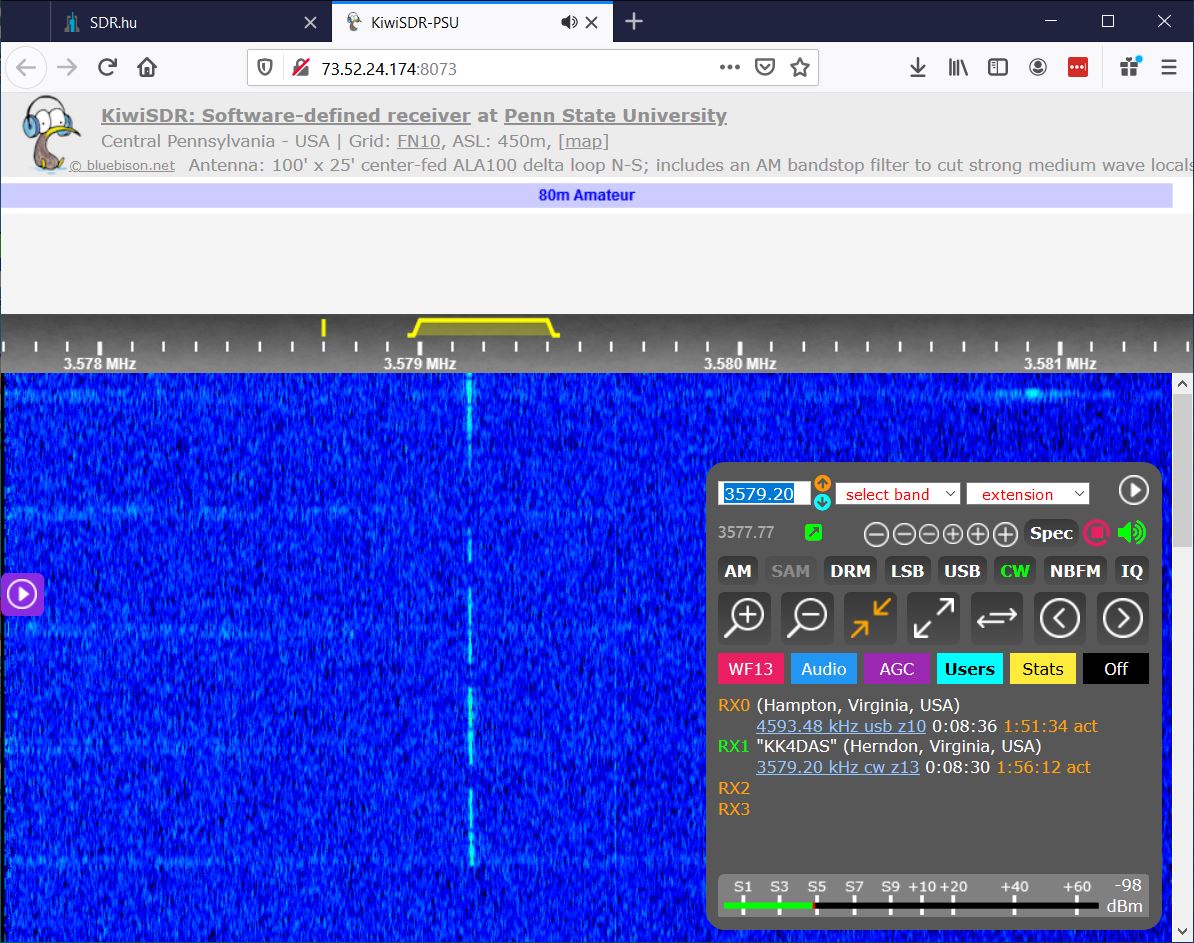
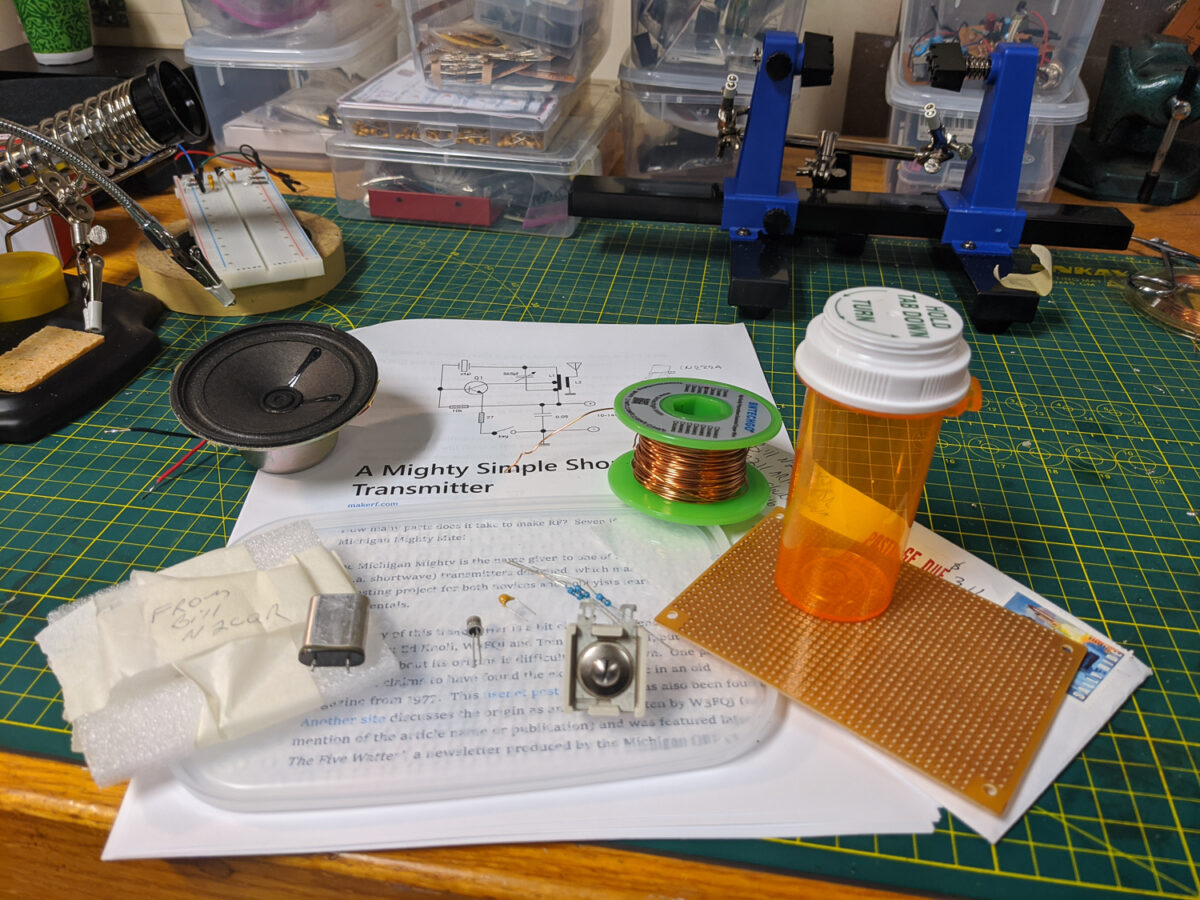
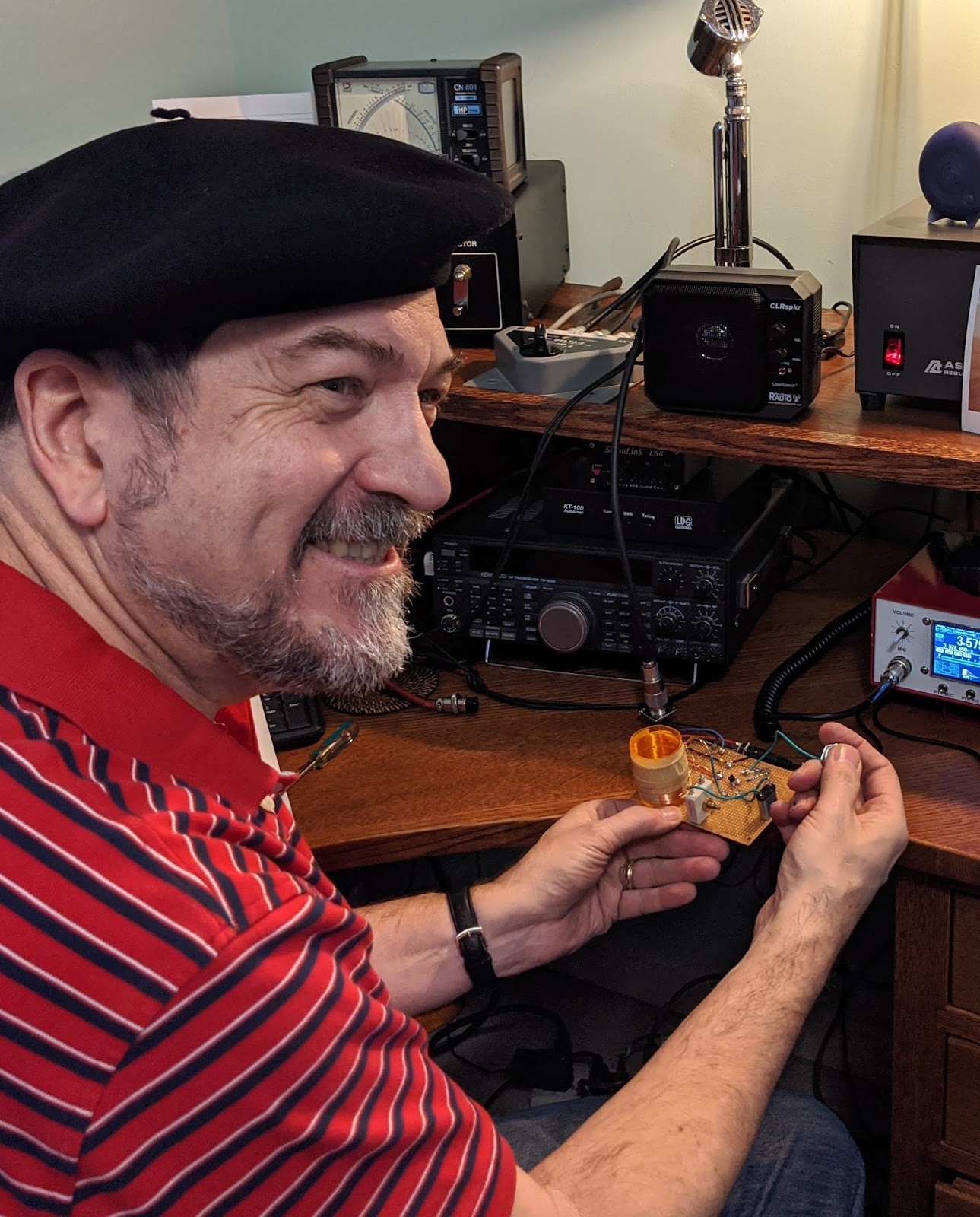
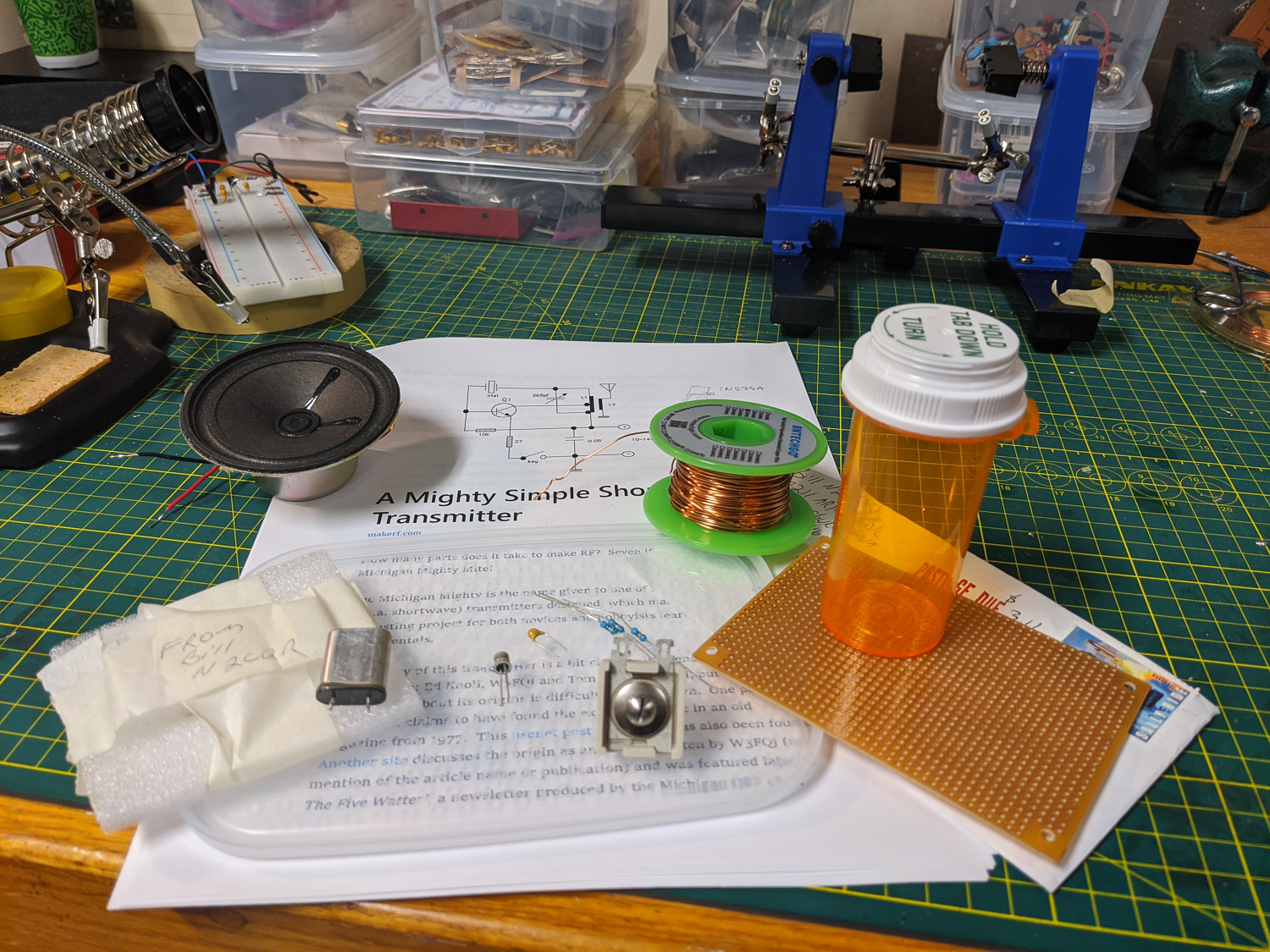
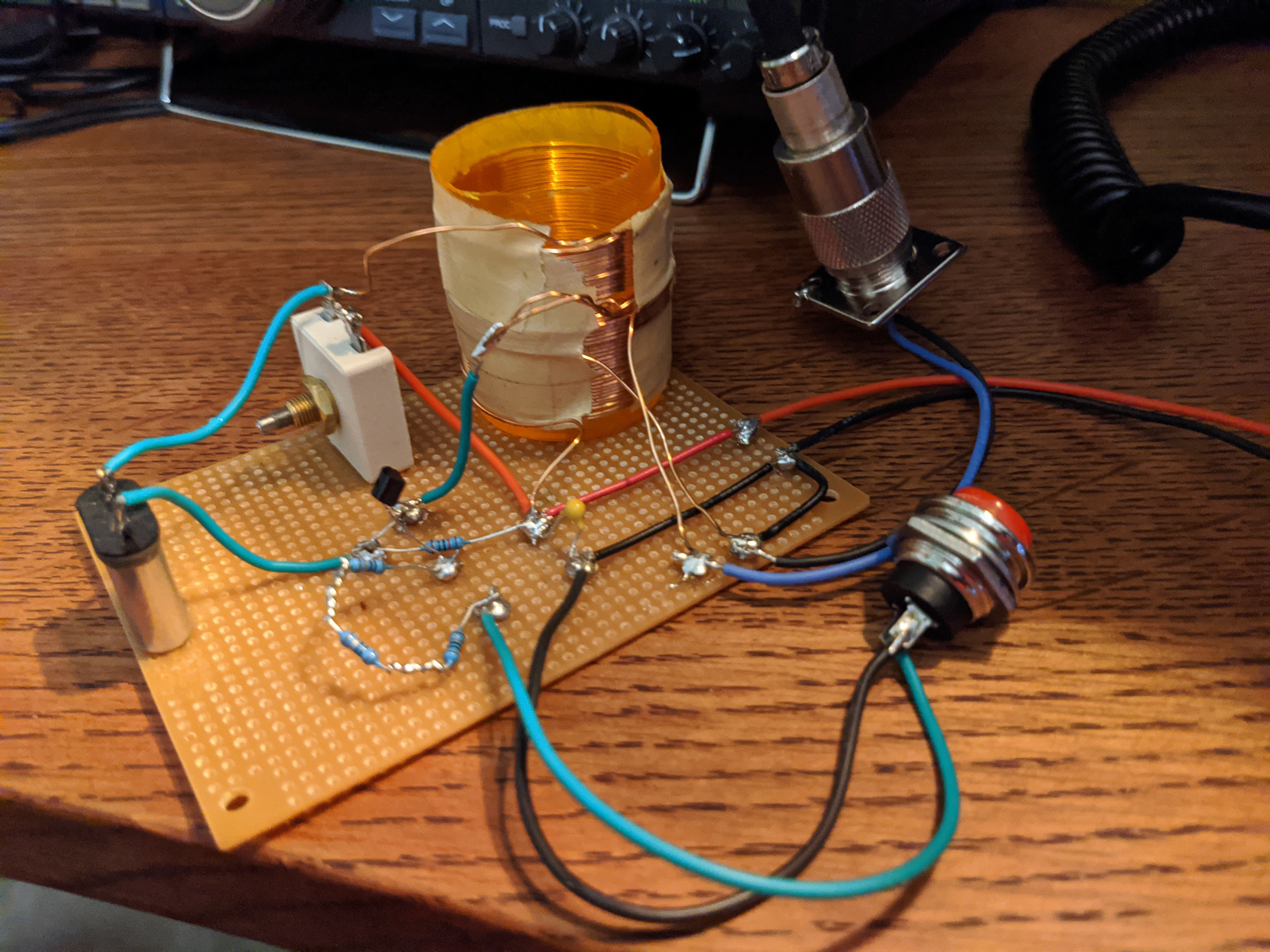
Dean KK4DAS Puts Michigan Mighty Mite on the air! And is heard in Falls Church, Virginia! (video)
QRZ.com says we are 5.9 miles away. The U.S. Postal Service almost prevented this from happening — they objected to my just putting the crystal in an envelope and mailing it. Dean’s wife had to pay postage due.
The rig didn’t work at first, but Pete N6QW provided sage advice and tribal knowledge. Adjustments were made and Dean experienced the Joy of Oscillation. Then, he connected an antenna and was heard at the SolderSmoke East Coast HQ.
Obviously the beret was the key to Dean’s success:
SolderSmoke Podcast #216 Is Available: BITXs, Paesano, Paraset, ET2, Antuino, Mailbag
![]() |
| Bill’s uBITX with HB keys and the mic that used to be the podcast mic! |
SolderSmoke Podcast #216 is available
21 December 2019
HAPPY HOLIDAYS TO ALL!
http://soldersmoke.com/soldersmoke216.mp3
Leif WB9IWT — helped me trouble shoot my uBITX (BFO was low)
Some Inspiration from Farhan
One knows that it was just a matter of breaking down everything into amplifiers, filters, mixers and oscillators, but that is just theory. The practice of bringing a radio to life is a perpetual ambition. The first signal that the sputters through ether, past your mess of wires into your ears and the first signal that leaps out into the space from your hand is stuff of subliminal beauty that is the rare preserve of the homebrewer alone.
YouTube LTSpice Tutorials
For those who want to get started in circuit simulation, or to improve your use of the LTSpice program:
https://www.youtube.com/playlist?list=PLT84nve2j1g_wgGcm0Bv3K4RSl2Jdjsey
And this one for the inductor:
https://www.youtube.com/watch?v=65fNDRows90&feature=youtu.be
Thanks to Ben KC9DLM for alerting us to this.
Hangin’ it up (the ET-2)
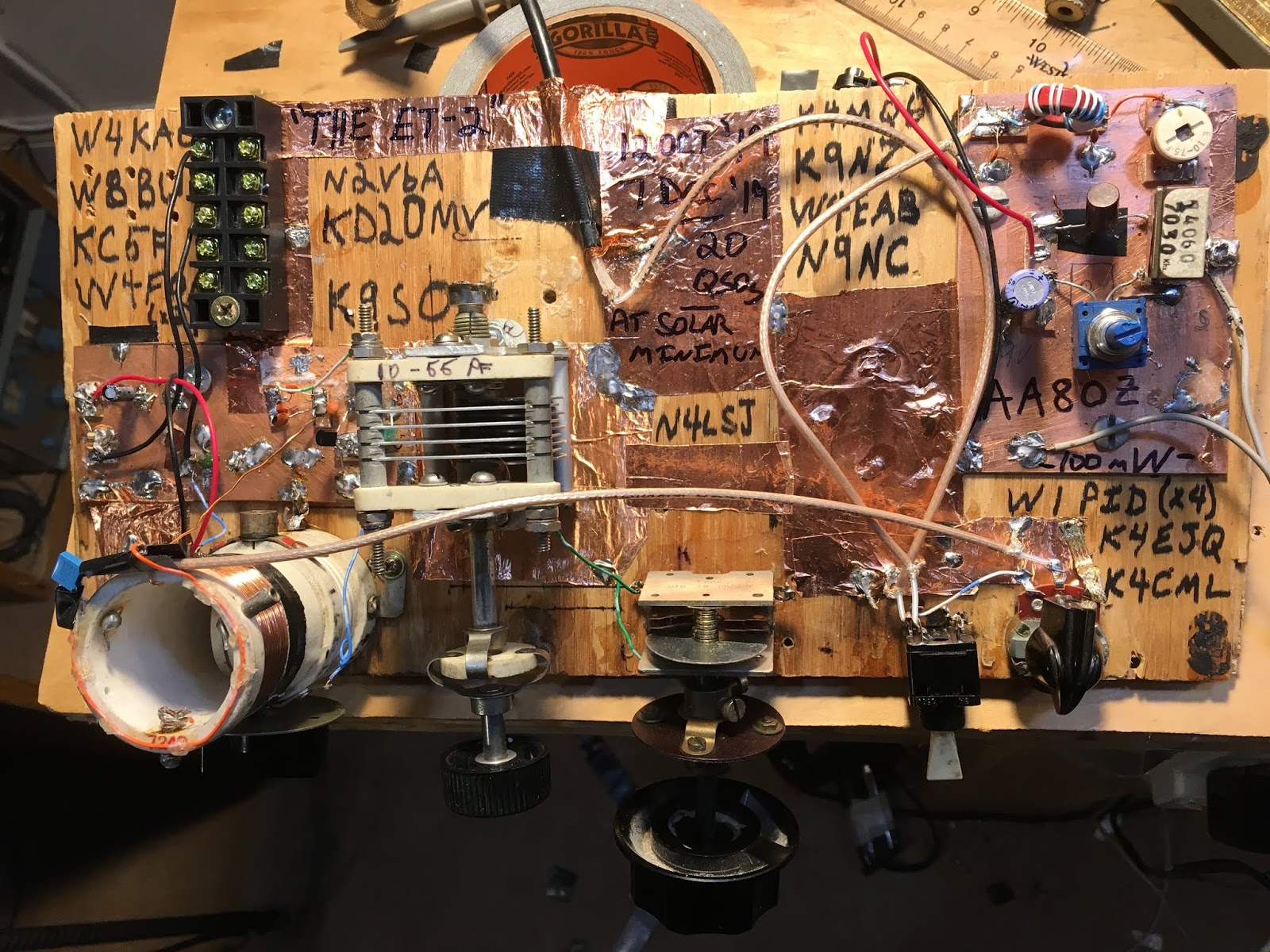
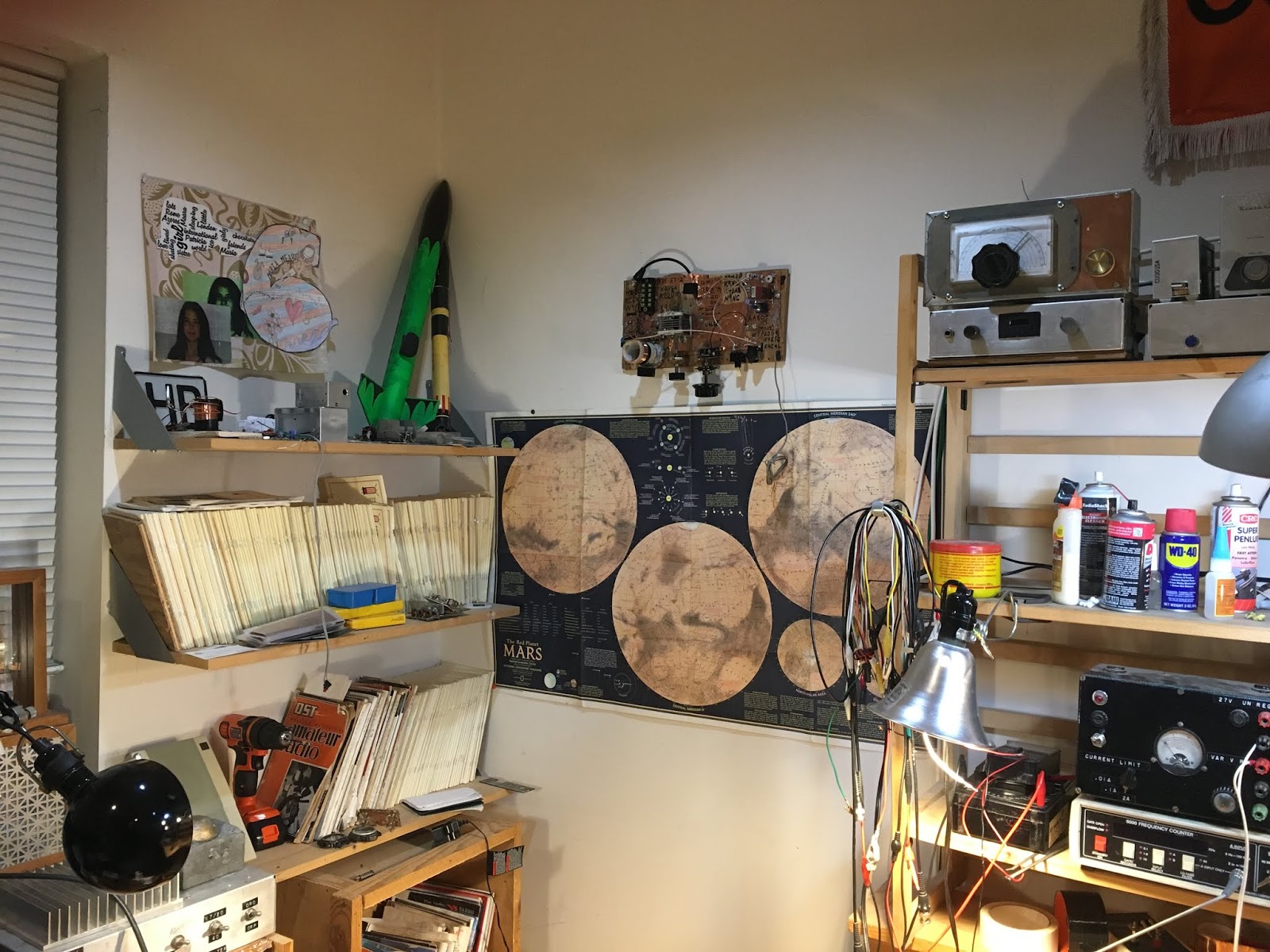
My ET-2 minimalist QRP CW adventure is (for now) officially over. I have taken the rig – festooned with the callsigns of all the stations I contacted — and have put it up on the wall. This may be a new form of art. I think I am the first radio amateur to do this. I think it is pretty cool.
Farhan’s New uBITX Version 6!
I’m currently reviving my “version 3” uBITX and putting it on CW. It sounds and works great, but when I saw this I realized that I am falling behind.
Farhan wrote: