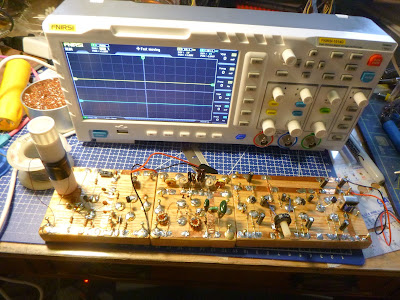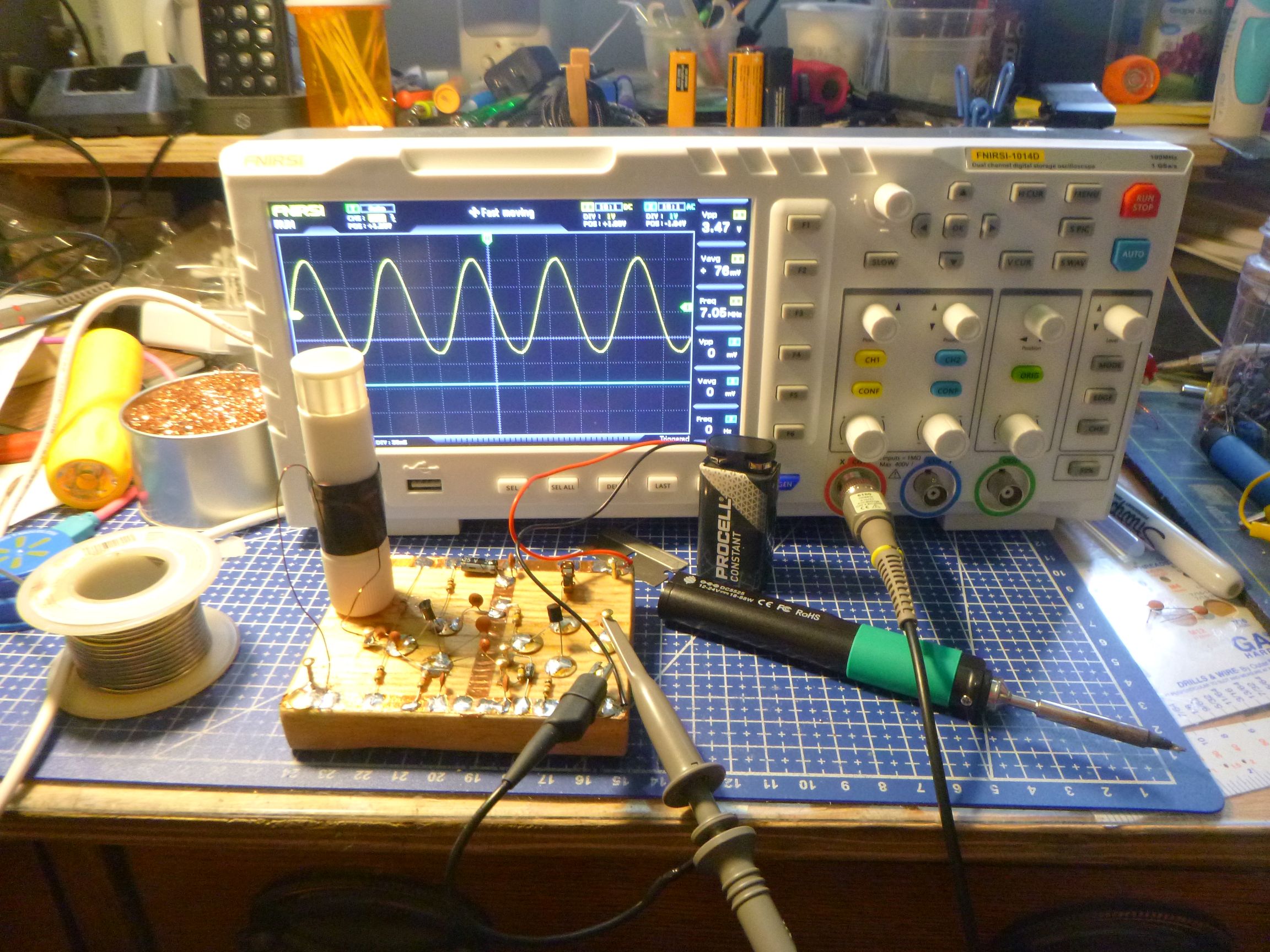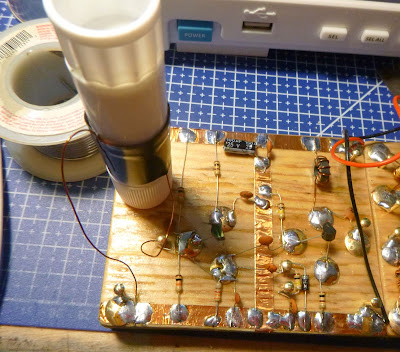
Not a Toy! K1OA Making Contacts with the SolderSmoke Direct Conversion Receiver and a KA4KXX Transmitter

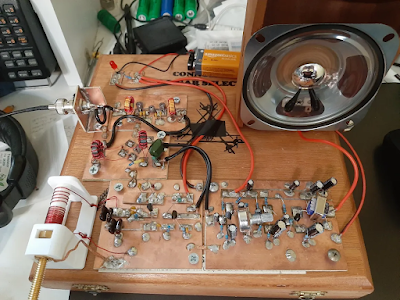
This goes to prove what we have been saying all along: this receiver is not a toy! It is capable of operating as part of a real 2-way ham radio station. Hall of Fame member Scott K1OA has paired his receiver up with a Merry Christmas transmitter designed by Walter KA4KXX and has been making CW contacts with it (see above). Walter supplied the crystal and many of the needed parts. Scott has already worked WA9RNE, N4HAY and W3RJ, and has tried making contact with Walter but no luck yet. He has gotten RBN reports from Germany and New Zealand. All that with just 3 watts.

This is not the first time this receiver has been out to use. I made one contact with it using a “Ten Minute” QRPp transmitter that I had intended only to use for test purposes:

https://soldersmoke.blogspot.com/2023/02/first-qso-with-high-school-receiver-100.html

HoF member Aaron ZL1AUN used his receiver with an SSB transmitter to make contact using his receiver:

https://soldersmoke.blogspot.com/2025/02/soldersmoke-direct-conversion-receiver_23.html We understand Aaron’s article about the receiver has been published in “Break-In” magazine — we hope to get a copy (electronic would be fine!)

And who can forget HoF member Nate KA1MUQ who turned his “frying pan” direct conversion receiver into a double sideband transceiver and used it to make phone contact with Idaho from California:

https://soldersmoke.blogspot.com/2025/03/nate-ka1muq-turns-his-frying-pan-dc.html

If anyone is aware of other contacts made using this receiver, please let me know.

Hiss, Filters, QRM, and Hearing Loss: Do we need AF filters in direct conversion receivers?

L6 is the 88mH toroid

Messages on Discord about the need to knock down higher frequency audio response in the SolderSmoke direct conversion receiver got me thinking.

I agree with Rick Campbell and others on the benefits of hearing a “wide open” direct conversion receiver. But Rick and others have built DC receivers with 3 kHz low pass AF filters. This made me ask myself a question: Is an audio filter in a direct conversion receiver a good idea?

And I started wondering if perhaps I was being too dismissive about the complaints about high frequency audio — I had been attributing them to newcomers who were just unaccostomed to radio noise or “static.” But maybe there was more to it than that. Maybe a big part of the problem was in my head, specifically in my ears. So this morning I did an experiment. I took an online hearing test. First, without my hearing aids: As expected, it showed significant high frequency loss. (It was as if the US Army had installed a 3 kHz audio low pass filter in my head!) Then I put my hearing aids in and retook the test: This time I passed the test and showed no loss. I then listened to the DC receiver with my hearing aids in. Now I could hear what builders on the Discord server were commenting on: I could hear higher frequency hiss, and, more importantly, stations that were producing 4-5 kHz sounds on my speaker were audible and annoying.

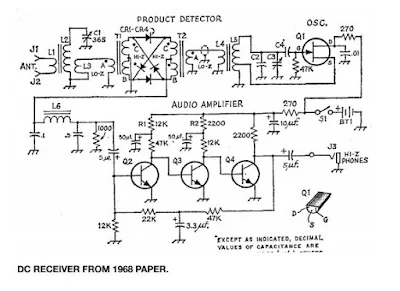
So I went back to Wes Hayward’s November 1968 QST article. In his receiver, he has a low pass AF filter using an 88 MILLIHenry coil and a couple of capacitors to ground. I had a few of the coils (given to me years ago by a NOVA QRP club member) so I built it. With my hearing aids in, I noticed an immediate improvement. I then did what one of the Discord builders did and put the filter in with a switch that would let me make “with and without” comparisons. The filter definitely cuts down on any AF above about 3.5 kHz. And it doesn’t seem to do damage to the desired signal. This is useful. I left the W7EL diplexer in the circuit.

This filter won’t solve the image or “opposite sideband” problem inherent to simple DC receivers, but it will help with signals or noise that are producing tones above about 3.5 kHz in the receiver. I think this is especially important in countries in which there is a lot of SSB crowding on 40 meters. The UK, for example, has an allocation from 7.0 to 7.2 MHz. In the US we go from 7.0 to 7.3 MHz. That is a big difference.

So the answer is probably yes, an AF filter in a direct conversion receiver is probably a good idea, especially if you can switch the filter out of the receiver. You can live without these filters. Not having the filter keeps the receiver very simple, and lets it sound really great. But having the filter in there does help reduce interference and high frequency hiss. So I think this is a useful add-on mod for builders who see a need to cut down on the kind of interference that a lack of this filter causes.

In 2019 W7ZOI noted: “Another unusual element is the 88 mH toroid used in the audio low pass filter at the detector output. A viable substitute would be a 100 mH inductor with radial leads. The muRata 19R107C (from Mouser) should work. Bourns also offers a variety of similar parts.”

SolderSmoke Podcast #260 FDIM, Hollow State Design, Pete’s Bench and the Shelf of Shame, Direct Conversion Project News, How Best to Preserve this Blog?, Dean’s Bench and the Desk of Despair, Bill’s Bench and the Garage of Grief, MAILBAG

SolderSmoke Podcast #260 is available:

Audio version: http://soldersmoke.com/soldersmoke260.mp3

Video version: https://www.youtube.com/watch?v=bZzHSjOTbSY

Quote from the Old Miltary Radio Net: “Being on the leading edge is great, but sometimes being on the trailing edge is more fun.” Indeed.

Heard from an Australian on the Southern Cross Net: “My antenna needs a lot of Viagra!”

News from Dayton/Xenia/FDIM: Dayton Xenia. Again, we didn’t go. But Bob Crane W8SX was there and got a nice interview with Grayson, Hans, and Farhan. We are presenting these and more. Michigan Mighty Mite Revival at FDIM! Jeff W9TH.

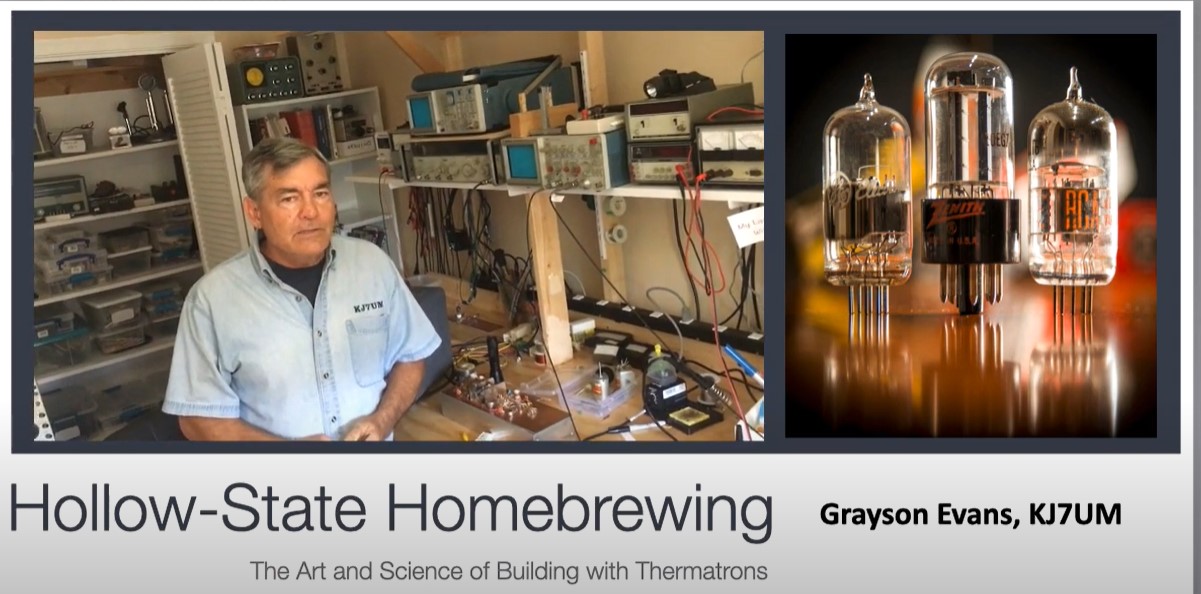
Farhan’s review of Hollow State Design: I am compelled to set aside the future of my family and to orphan my cats to resume work on the 250v power supply that I built last year. Inshallah, Allah favors those who favor thermatrons! Grayson’s book is imbued with deep experimental insights and littered with gems. You have to read it over and over to find new things each time. It goes into my reference shelf in the lab.” Buy it here: https://www.ermag.com/product-category/books/

—————————-

PETE’S BENCH:

Pete working on JF3HZB dial. Send Pete a Heath mono-bander!

MHST on shelf of shame? Even the great ones have to take a break every so often. On the importance of taking a break. Ernest Rutherford 1917 and all that: https://soldersmoke.blogspot.com/2025/05/on-importance-of-taking-break.html

Channelized 40 meter rig. Heard in Arizona by Andy KB7ZUT on a HOMEBREW SSB Reciever. Very rare. SWL HB2HB.

Pete: Thumb broken as a Novice? Early episode of Fat Finger Syndrome?

—————————

DC RX NEWS:

Quote from N6QW: “The radios do not build themselves!”

Alan W2AEW finishes Direct Conversion Receiver. And even he worries about feedback!

Phil W1PJE MIT receiver (with cool MIT stuff). Coming to see us!

KN6FVK’s Barkausen-Be-Gone Spray :https://soldersmoke.blogspot.com/2025/05/john-kn6fvks-fb-homebrew-soldersmoke.html

Indian hams working DC RX. VU2JXN Ramakrishnan, VU2TUM Puneit Singh, Ashish N5ASD, building one in Bangalore with 3D printed form from Scott, KQ4AOP. Ramakrishnan is planning on building a second receiver with his daughter. On June 22, 2008 in SolderSmoke #86 we reported on the birth of Ramakrishnan’s daughter. This is that same daughter! See: https://soldersmoke.blogspot.com/2024/01/long-time-soldersmoke-supporter.html How to get a PTO form in India. A tip from Ramakrishnan: “I got the 3d printing done via https://robu.in with 1:1 size. After uploading the stl, I received it by post in 5 days or so.”

German students of Andreas DL1AJG. and Canadian students of Daniel VE5DLD.

Receiver built in Singapore! 9V1/KM7ABZ

John M0XJA reports 8 members of his club are building this receiver.

Chuck N4AVC got his PTO coil form 3D printed at the local library. For free! FB!

Few admit to being fooled by April Fool story. But still, inspirational. VK3HN was going for a few seconds — SOTA AI chatbots? John West liked the 85th harmonic threat.

What next after DC RX? Choose carefully! Don’t bite off more than you can chew.
Do some mods! Build something else! And remember to be a homebrew Elmer. Help someone else build the receiver.

—————————–

SHAMELESS COMMERCE DIVISION:

Check out the SolderSmoke blog on the WayBack Machine. The blog, not the podcast. www.soldersmoke.blogspot.com Would this be a useful backup if Google were to pull the plug on blogspot? Is the format OK? Is the template recoverable? How best should we backup the SolderSmoke blog?

Be a Patreon SolderSmoke Sponsor! Please subscribe to the YouTube channel! Buy your Amazon stuff through our link. Buy stuff from Mostly DIY RF.

——————————-

DEAN’S BENCH:

Dean has completed his Mythbuster: https://kk4das.blogspot.com/2025/05/kk4das-mb-20-transceiver-complete.html Plexiglass top!

Diode switching.

Dean: Build of the SDR receiver. Microscope required?

____________________

BILL’S BENCH:

VK6JDW and HCJB in the Kimberly.

The stages of separation: Shack, Garage, Car trunk: HP-8640B and HAMEG scope saved from garage. HP-8640B repair. HAMEG Modulation Monitor.

=================

MAILBAG

— Wouter ZS1KE. Thinks Soviet spies COULD homebrew. Hamilton KD0FNR concurs. Agent Sonya and Soviet Spy homebrew. Copacetic Flow. I dunno….I dunno…

— Hamilton KD0FNR grew up in New Mexico, supports my idea of Starlink deorbit. See : https://www.kallmorris.com/columns/goodness-gracious-green-balls-of-fire

— Adam N0ZIB Heard my 10 meter beacon from the DR. 28,233.5 MHz On now.

— Rick N3FJZ Great memory Direct Conversion messages.

— John KN6FVK had fun with DC RX. Tattoos on Board. We need a high sign! Like the Little Rascals.

— Adrian M7EFO DC RX builder in GQRP. FB.

— Steve KW4H Kits not the same as homebrew, but old Boatanchor kits have value.

— Mike WU2D — Old buddy Charles Kitchen SK.

— Craig — Some really nice feedback on Hack-A-Day re DC RX and Dean’s videos.

— Peter VK3TPM proposes a certificate for SolderSmoke DC RX Honor Roll.

— Michael WN2A used a 3 inch reflector from Northern New Jersey. Edmunds Scientific “Space Conqueror”

— Phil W1PJE and Mike WN2A lament that our eyes don’t pick up radio frequencies. This would be a great troubleshooting tool! I can SEE the IMD! Perhaps some tin foil hats?

— John WPE9IRS SW listener! Heard my beacon. Many SWLs switching to tuning in ham stations.

— Peter VK3YE found a homebrew 160 meter double-sideband transciever at a hamfest. He also found “Solid State Basics for the Radio Amateur — A QST Anthology” NOT SSDRA. But good!

— Peter VK2EMU From the Southern Cross (I took a picture of it in the DR!) Building the DC RX!
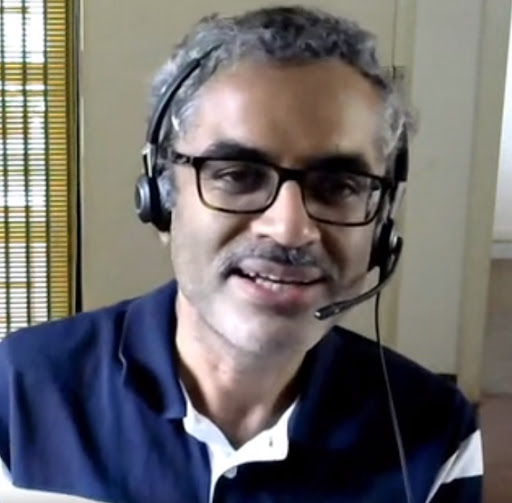
Ramakrishnan VU2JXN
Kevin K3IY’s Beautiful FB SolderSmoke Direct Conversion Receiver: “An amazing experience… A milestone for me…”

Kevin’s receiver was beautifully built. And it sounds great. Congratulations Kevin, and welcome to the Hall of Fame.

Kevin writes:

This was my first “real” homebrew project. I’ve built a few kits and toyed with some basic circuits, but this is a milestone for me. It wasn’t without some troubles but what an amazing experience. I couldn’t get my oscillator to work and the issue was I tried to make due with two 680pF ceramic caps. I took Dean’s advice to stick with the 330pF silver mica’s and I found my signal. At this point I also broke down and bought an oscilloscope. I now plan to do some mod’s and eventually build a TR switch and pair it with a transmitter. I can’t thank Bill and Dean enough for making this an obtainable goal. Kevin, K3IY

Kevin’s receiver on CW (above) and SSB (below).
He’s thinking about his receiver

Chuck N4AVC’s FB SolderSmoke Direct Conversion Receiver: “I enjoyed the build and testing.”

Chuck N4AVC’s use of the frequency counter in his digital multimeter is pretty cool and innovative. And it is nice to have yet another receiver in Virginia; he is down in the Richmond area. And of course the Sharpie callsign tattoos on the wooden board are really nice.

Chuck writes:

Completed!!! For Pete: “She ain’t pretty, but she sure can cook!”. Thanks Bill and Dean, I enjoyed the build and testing. It’s funny, the audio oscillates on an older 9v battery, but is clean on the 9.5v bench supply. Going to put Bill’s mod on the inductor to make tuning a little finer and spread the boards out a little more. I used the double sided boards I had and there is some interaction between the boards.

Congratulations Chuck! Welcome to the Hall of Fame!


Simplicity, Presence, Mods, and Direct Conversion Receivers

Over on the Discord server that we set up for the SolderSmoke Challenge project. One of the guys who succeeded in building the receiver (kudos to him!) commented that, for some reason, his receiver didn’t sound good on SSB. I was kind of surprised by this, because usually we hear the opposite: that direct conversion receivers sound GREAT on phone. In fact, this may be the origin of the term “presence” when used to describe the audio quality of DC receivers. So I sent this note on the issue:

Sounds like you are on the right track in wanting to understand the circuitry . I would just point out that even experienced users of commercial SSB radios are usually impressed by the sound quality of simple direct conversion receivers like this one. This is the origin of the term “presence” — Doug DeMaw used this word when describing the experience of listening to Wes Hayward’s 1968 direct conversion receiver. He said it made the guy from the distant station sound as if he were “present” in the room with the receiver! From an article about this event: “This was the epiphany, the moment when Doug realized that solid-state technology had produce a new way to build a simple receiver. Doug tuned the receiver higher in the band and found some SSB. Again it was like nothing he had ever heard. It was as if the voice came from the same room. Doug used the term presence in his description.” So you should not have diminished expectations for this simple receiver. Realize that Wes’s receiver was even simpler than ours! I don’t feel a need to defend this design, but will point out that these receiver can sound great if used properly. Here is a recording of one of these receivers in action in December 2024: https://www.youtube.com/watch?v=JSI7YDJGAos And this one: https://soldersmoke.blogspot.com/2024/12/listening-to-40-meters-on-dc-receiver.html Mods are great, but remember that you CAN diminish the simplicity and thus the “presence” of these receivers by strapping on a lot of unnecessary features: filters, amplifiers, Digital VFOs, frequency counters, etc. especially if these mods are put in there to address shortcomings that don’t really exist. 73 Bill N2CQR

What do you folks think of all this?

BTW, you too can get involved in the project by visiting our Discord server. Just go to Discord and set up (it is easy) you own server. Then use this logon to get to the SolderSmoke Discord server:

Join the discussion – SolderSmoke Discord Server:

https://discord.gg/Fu6B7yGxx2

Menus are for restaurants (not for rigs).

Libraries are for books (not for computer programs).

Halucinations are for psychiatrists (not for AI).

Hotplates are for cooking (not for PC boards).

Stencils are for drawings (not for surface mount parts).

Pi’s are for Thanksgiving (even if they are Raspberry).

Microscopes are for biologists (even if the parts are so small you can’t even see them).

Homebrew means rigs built from scratch (not for computer game consoles)

Training and weights are for the gym (not for AI)

Paul WA1MAC GETS DOWN TO BRASS TACKS with his FB GLUE STICK SolderSmoke Direct Conversion Receiver

Wow, look at that beautiful build of the SolderSmoke Direct Conversion Receiver. We haven’t received a “proof of life” video from Paul yet, but we trust that his receiver does in fact work. Paul has some heavy care-giver responsibilities that keep him in his home. We do not want to complicate his life by asking for outside antennas or videos.

We are also not going to complicate Paul’s life my insisting that he build it our way. First, his life is already complicated enough, and second, the innovations he introduced are really cool. The use of brass tacks and conducive copper tape is really ingenious. And the glue stick has brought him to the Joy of Oscillation (JOO). In fact the glue stick has given him JOVO — the Joy of Variable Oscillation. FB Paul.

Paul writes:

Hi guys

I’ve been gettin down to brass tack here at the mac-shack! Fits in nicely within my new caregiver role.
Been having a ball with the brass thumbtack breadboarding from SPRAT on your DC Receiver challenge!
Gluestick PTO, check, alive with the joy of oscillation!
BPF, check (need to tune once I find the nano VNA here somewhere)
DBM and diplexer, check, there was room on the board left over so I cheated and snuck the BPF on that board too
3 BJT audio amp with transformer, check, alive and passes the finger test, loudly!
Since I currently have no 40m antenna here guess it’s time to finally put that active antenna I’ve been meaning to build…………Any how thanks for all the fun and hair pulling, oh wait, I’m already bald!
73
Paul WA1MAC, get it the mac-shack 🙂
JOVO!
Glue Stick!
Brass tacks!
Congratulations Paul! Welcome to the Hall of Fame!

261

Bill’s 10 meter AM QSO with modified GE CB was in RADCOM.

G3SUY’s amazing HB gear. Also in RADCOM. VOGAD circuit.

Midway memories.

Old Military Radio Net Vintage Sdeband net

Another definition of homebrew:Historically, efforts to create original games and tools, port over open source emulators, and explore a game console’s hardware and software have been generally lumped together under the banner of ‘homebrew.'” Yuck.

VE7SL: The George Batterson 1935 CW QSO Party. Lots of homebrew gear.


HCJB is now in Western Australia. In “The Kimberly.” And VK6JMS can use their antenna.

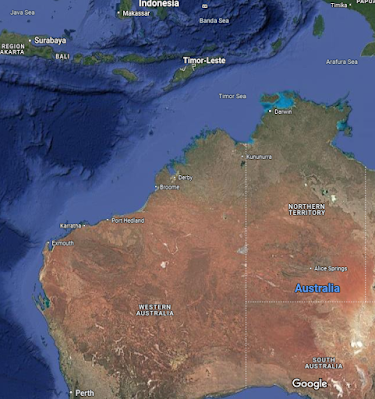
I grew up listening to HCJB’s shortwave broadcasts from Quito, Ecuador. Fast forward to the present: This week I have had two radio contacts with Nic VK6JMS. His callsign indicates Western Australia. I assumed he was in the Perth area, but no, he is in the northern part of Western Australia, in the area known as The Kimberly. Look on the map for the place called Kununurra. That is where he is.

Here is Nic VK6JMS’s QRZ page: https://www.qrz.com/db/VK6JMS He has access to some really fantastic antennas. In his page he refers to them at TCI antennas. I looked them up:

A TCI dipole array refers to a specific type of antenna system designed and manufactured by SPX Communication Technologies, a company formerly known as TCI. These arrays are typically used for high-frequency (HF) radio broadcasting and communications, and they are known for their ability to achieve wide bandwidths and efficient radiation patterns.

https://www.antenna.be/tci-611.pdf

https://www.antenna.be/tci-613.pdf

—————————————

These antennas are used for the SW broadcasts:

Since 2003, Reach Beyond (formerly HCJB) has been transmitting from our Broadcast Facility in the Kimberley, in far north Western Australia, to the Asia Pacific region through shortwave radio, and currently broadcasts programs in 25 languages.

Founded in 1931 as radio station HCJB in Quito, Ecuador, Reach Beyond is now a global, partnership-driven ministry. Many people know us as the shortwave ministry that originated in Ecuador which went on to establish hospitals and medical clinics in Quito and Shell. Today the visionary “madness” of our founder Clarence Jones and his band of missionary pioneers lives on around the world.

Here in Australia, Reach Beyond carries on that vision through its radio broadcast ministry. Our shortwave facility is uniquely placed in Australia to deliver powerful messages of hope to remote and isolated communities throughout the Asia Pacific region. https://www.reachbeyond.org.au/on-air/

—————————–

One thing I noticed about Nic VK6JMS’s signal: there seemed to be a latency delay between when I turned the conversation over to him, and when he began to transmit. I wonder if the Icom RS-BA1 remote station software that he is using might explain this latency. Any ideas on this?


Ted KN4ZXG’s FB SolderSmoke Direct Conversion receiver: “This project is the greatest gift to homebrewing…”

There it is, a thing of beauty. The best part is that Ted built this receiver himself. That is something that most hams NEVER do.

Ted writes:

This project is the greatest gift to homebrewing since I got interested in radio nearly a decade ago. Lot’s of great projects out there but most go into a mysterious black hole of obsolete parts like the NE612 mixer that’s hard to get, or even the LM386, which is plentiful but not as cool as this amp. Everything’s divided neatly on it’s own board and explained. The builder has wiggle room on the layout and ways to test each module whether that’s with nice or budget equipment. Not only did I learn a ton about each stage, but also about making RF probes and making use of my modest but super useful equipment like the Nanovna. Although there were no mysteries, it all comes together to make magic. If you know stuff, you can do stuff! Thanks again de KN4ZXG, Ted.

While he has some great plans for modifications and improvements, at this point I think Ted should follow Farhan’s advice and spend some time just listening to the receiver that he has built. Direct conversion receivers sound especially good. It is as if they are closer to the ether.

Here are some clips of Ted’s receiver in action:

Congratulations Ted. Welcome to the Hall of Fame.

G0UPL at Dayton: SSB for the QMX, and Thoughts on Homebrewing

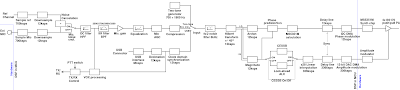
Click on the diagram for a better view.
Listen to the interview here:


I think this is what Grayson was talking about when he said that Hans is a genius, and that his SSB project for the QMX was very complicated. On his website Hans says as much: “This is a very complex project.” Indeed it is. Just take a look at the bloc diagram above. This is not for the faint of heart. In this interview, he talks about a full year of intense work on SSB for the QMX. Wow.

I think Hans makes some good points on why we still homebrew. I liked his fish analogy: we can buy all the fish we want at the supermarket, but people still go fishing. Why? Because they like fishing.

I’m not too sure about “the IKEA effect.” He seems to be saying that people derive homebrew-like satisfaction from assembling IKEA furniture. Well, maybe some people do, but I think this is a long way from what we would consider true scratch-built homebrew. Dean KK4DAS, for example, recently observed that he assembled two IKEA tables, but that this assembly does NOT make him a carpenter. This is related to our discussion about the differences between ham radio kits and true homebrew: IKEA flat packs are like the kits. I think Hans is right about the pride and satisfaction that people get from building their own radio gear.

Thanks to Hans GOUPL and to Bob W8SX for doing this interview.

Mitch NK3H’s FB SolderSmoke Direct Conversion Receiver — “Incredibly satisfying!”

Wow, Mitch NK3H has built a really nice receiver. (He says it is not pretty, but those of us who have built one or who are in the process know that it looks great.) The SSB really sounds good also.

Mitch writes:

It’s not pretty but it works! Incredibly satisfying. In answer to the questions, (1) though I ‘d built a few small Manhattan style boards (e.g., Michigan Mighty Mite) this was more complicated. I’ve been using W1REX’s island cutter to create isolated areas on the copper clad board, rather than pasting on pieces of circuit board. But the islands are a little small for as many as four connections on one island, as in most of the transistor bases. Inevitably a component lead would inadvertently contact the ground plane and all bets were off. Tracking down the shorts was challenging. (2) Once I got to the audio amplifier board I carefully laid out all of the components before starting to solder. But as I finished each stage and was ready for the next, I always seemed to be missing a resistor or two. I’d search the desk and the floor — very frustrating. Turns out the speaker magnet was collecting and hiding the missing resistors. Lesson learned. (3) Next I’m hoping to build a transceiver. Still looking for the right project, probably a little more digital than this wonderful DCR.

Mitch obviously learned a lot during this project. I had similar experiences with pads on the same level as the surrounding board — I found that the 1 or 2 mm of elevation provided by the Manhattan pads prevented a lot of inadvertent shorts to ground. And I too “lost” (temporarily) a lot of components to the magnet in the speaker.

Good luck with the next projects Mitch. With the Michigan Mighty Mite and the DCR under your belt you are ready to go. Maybe a Double Sideband transmitter to go with the DCR? Or, as you said, perhaps something more digital. There is a lot of good ham experience with the Si5351 digital VFOs. Or maybe even an SDR rig.

Thanks Mitch. Congratulations and welcome to the Hall of Fame.

———————–

Join the discussion – SolderSmoke Discord Server:

https://discord.gg/Fu6B7yGxx2

Documentation on Hackaday:

https://hackaday.io/project/190327-high-schoolers-build-a-radio-receiver

SolderSmoke YouTube channel:

Grayson Evans KJ7UM Interview at Four Days in May at the Dayton Hamvention 2025

LISTEN TO THE INTERVIEW HERE:


Grayson said quite a lot in this short 4 minute interview:

— At FDIM he was selling his wonderful book “Hollow State Design for the Radio Amateur.” Buy one here: https://www.ermag.com/product-category/books/

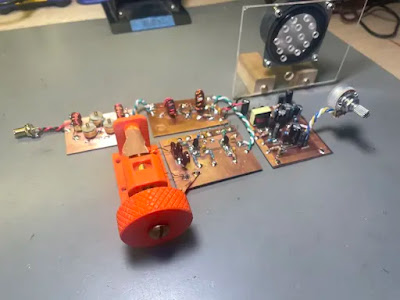
— Grayson was also selling a Thermatron version of our beloved Michigan Mighty Mite transmitter. It is crystal controlled for the 40 meter band, but the Color Burst Liberation Army approves! Here is a wonderful video on this rig:
And be sure to watch Grayson’s excellent course on Thermatron Homebrewing:

— Asked why someone should build with tubes when so much good solid state stuff is available, Grayson makes some especially excellent points: The solid state gear is often filled with mysterious little black boxes — we often don’t really know what goes on in there. Thermatron construction provides a break from complicated SDR nonsense “that is not really radio.” That last comment will generate some criticism, but not from here. I think Grayson is right, He earlier expressed admiration for complex circuitry, but he also rightly defends simple, understandable rigs.

Here are Grayson’s Technical Documents (a real treasure trove): https://kj7um.wordpress.com/

Three cheers for Grayson. And thanks to Bob Crane W8SX for doing this interview.

Bill K7WXW’s FB SolderSmoke Direct Conversion Receiver

This is a very nice build. Bill K7WXW fought a long battle to get this receiver working, and — more importantly — to understand why it is working.

Bill writes:

  1. The cycle of design, sim, build, debug, update, repeat can teach you a lot.


FB Bill. Welcome to the Hall of Fame!

Join the discussion – SolderSmoke Discord Server:

https://discord.gg/Fu6B7yGxx2

Documentation on Hackaday:

https://hackaday.io/project/190327-high-schoolers-build-a-radio-receiver

SolderSmoke YouTube channel:

Hall of Fame: The SolderSmoke Direct Conversion Receiver — 80 Completed Receivers, 7 Honorable Mentions, Built in 15 Countries — Many More Receivers Being Built.

WA1MAC’s Receiver

Please let us know if you spot any errors, or if we have inadvertently missed anyone. Don’t worry about being late to the game — the challenge continues. All of the info is still available (see below).

As of June 18, 2025 1049Z:


So far 80 completed receivers, with 7 honorable mentions. Receivers built in 15 countries.


NE3U (KY4EOD) Matt
KQ4AOP First ham signals ever heard!
N9TD Derek
AC3NG Ryan
VK3TPM Peter Marks
W4KAC Ken
W4KAC Ken built a second one!
N2EPE Erik
VA3NCA Wayde
KI5SRY Mark — Gears on PTO screw
KA1MUQ Frying pan receiver
AA1N Adam
ZL1AUN Aaron — Using SSB transmitter
W8UC Never before homebrewed.
VK4PG Phil — Nice case, “really pleased”
G7LQX Working well, video of CW and SSB.
KE2AMP John Spring on PTO screw — great
N9SZ Steve nice receiver
KD9NHZ Piotr Nice one
KE8ICE Calvin, Very cool receiver.
WV3V Jayson! Got it done!
GM5JDG Martin.
KF8BOG Jim: A long struggle, but success.
Chris Wales Fantastic video.
YD9BAX Wayan! Homebrew transformer!
N0NQD Jeff
WN3F Roy — Made new stickers!

AB5XQ Bill
KB7ZUT Andy
AA1OF Jer

VictorKees Holland
KC9OJV John — Manhattan-style convert
WZ5M 1, 2 or maybe even 3 receivers!
K1KJW Jim in Vermont
KC5DI Dallas — friend of WZ5M
Gary Australian — Wooden PTO form
LU2VJM Juan in Argentina
K1OA Scott “Most fun in 50 years”
KC9DLM Ben — Had EFHW problems
PH2LB Lex Yellow, Glue Stick
AI6WR David
G6GEV Dave (It was a blast!)
KC1ONM Wayne MakerLabs NH
KB1OIQ Andy MakerLabs NH
KA1PQK Jay MakerLabs NH
W1TKO Mike MakerLabs NH
K5KHK Karl
SM0TPW Mikael
KI7LKB Brian (coat hanger tube)
M6CRD Chris
W2DAB Dave in NYC
W4JYK Wes of VWS
KA4CDN Mike of VWS
M7EFO Adrian
VK5RC Rob
KD8KHP Dave
VK1CHW Chris
KA0PHJ Brian
W0IT Louis
W1PJE Phil
W2AEW Alan
KN6FVK John (Barkhausen-Be-Gone Spray)
VU2JXN Ramakrishnan
AA0MS Doug
9V1/KM7ABZ Paul in Singapore
VK2BLQ Stephen
N3FJZ Rick
Daniel VE5DLD
Student 1 Student of VE5DLD
Student 2 Student of VE5DLD

Student 3 Student of VE5DLD
K7WXW Bill
NK3H Mitch
KN4ZXG Ted
WA1MAC Paul
N4AVC Chuck
K3IY Kevin
N6ASD Ashish in Bangalore
W1DSP Rick
WD4CFN Steve

————————-
Honorable Mentions:


*AA7U Steve No PTO
*VK7IAN Ian — No Manhattan boards
*KC1FSZ Bruce’s build on a PC board
*CT7AXD Graham — different AF amp
* DL1AJG Andreas
* Matthew Student of DL1AJG
* Arash Student of DL1AJG
—————————————–

Candidates for the Hall of Fame:
SA5RJS Rasmus
KA9TII James
AA7FO Chuck
VA3ZOT Tony Surface Mount — Honorable Mention?
KM5Z Mike Yancey
AB2XT John (Done, just need the video)
KO7M Jeff (Piper Cub)
KD4PBJ Chris
VU2TUM Puneit Singh

For more information on how you too can build the receiver:


Join the discussion – SolderSmoke Discord Server:

https://discord.gg/Fu6B7yGxx2

Documentation on Hackaday:

https://hackaday.io/project/190327-high-schoolers-build-a-radio-receiver

SolderSmoke YouTube channel:

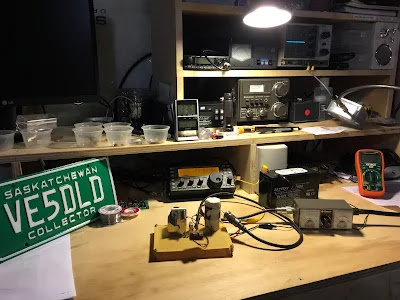
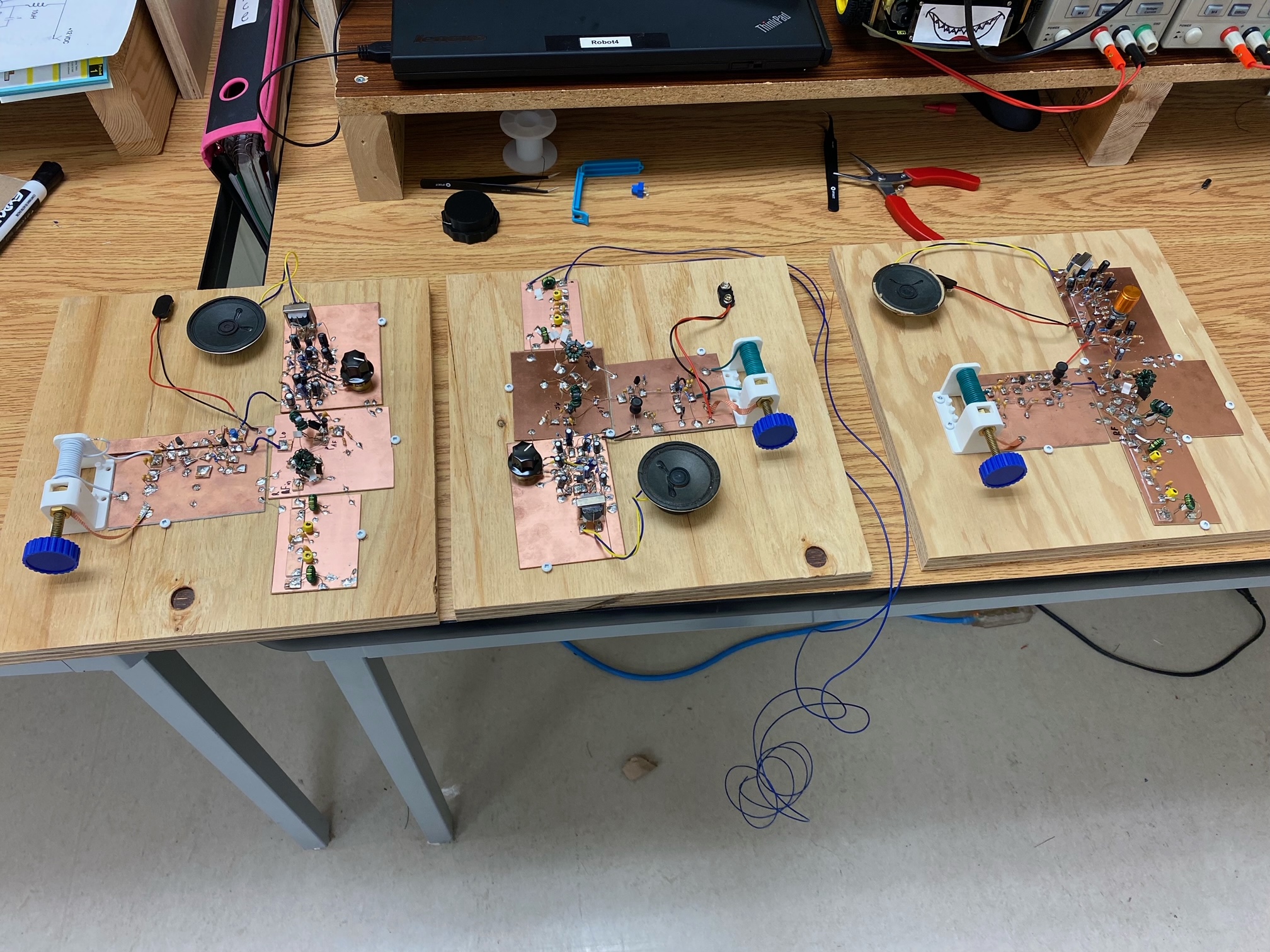
Daniel VE5DLD’s FOUR FB Saskatchewan SolderSmoke Direct Conversion Receivers

Daniel VE5DLD is a teacher in Regina, Saskatchewan, Canada. Back in early 2023 several lucky students joined him in building the SolderSmoke Direct Conversion receiver. We had asked people to build the receiver — we wanted to test the design before asking the local high school students to build it. Daniel and his students came through for us, and ended up having far more success than we did. Congratulations Daniel! Welcome to the Hall of Fame.

Daniel wrote:

Hi Bill! Yes, I had my own DC Receiver that I use every so often for fun and 3 built by my students. All working. We didn’t get any video because we just finished the school year and the kids left, but I’ve kept in contact with them and they told me they have been able to receive signals from their homes. The kids developed excellent troubleshooting skills gained large amounts of confidence in their ability to fix things. Over the next year, my students told about fixing their gaming consoles and fixing problems in their parent’s electronics. They are certainly no longer afraid of opening something up to see what is going on! And that’s what makes me the most happy! Yeah, you can just recognize myself and only mention that 3 students were able to build DC receivers.

And yes, the Michigan Mighty Mite was a fantastic gateway to home brewing!

Thanks for thinking of me and my students!

73
Daniel D.
VE5DLD

On June 19, 2023, Daniel wrote:

We got everything going and all 3 students now have receivers capable of inhaling RF. We 3D printed some knobs and hot glued them. We took one outside but didn’t hear any signals. Mid afternoon is not good for 40m. We will try again later this week and I’ll bring my KX3 to make sure there is a single for them to listen. This issue on that last radio was an improperly installed J310. The angle is was installed hid the problem well! Here are a few pictures of the completed rigs.

Back in 2015, Daniel built a Michigan Mighty Mite. I was pleased to be reminded that I had sent him the crystal. Go CBLA! For more info on Daniel’s transmitter see:
Thanks Daniel! 73
___________________________

Join the discussion – SolderSmoke Discord Server:

https://discord.gg/Fu6B7yGxx2

Documentation on Hackaday:

https://hackaday.io/project/190327-high-schoolers-build-a-radio-receiver

SolderSmoke YouTube channel:

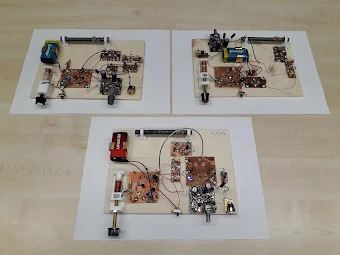
Honorable Mention: Andreas DL1AJG’s THREE SolderSmoke Direct Conversion Receivers for Biologists

Andreas DL1AJG was another of those intrepid hams who, in the dark of winter 2023 took up the SolderSmoke Direct Conversion Receiver Challenge in order to test our receiver (before we pushed high school kids to build it). Andreas came to the task with a lot of useful teaching experience. At the time he was an academic biologist and had been teaching a course called “Applied Electronics for Biologists.” See:

https://soldersmoke.blogspot.com/2022/08/can-biologist-fix-radio.html

Some of Andreas’s students

I put these receivers in the “Honorable Mention” category only because they deviated a bit from the basic schematic: they used an indoor ferrite antenna, had an RF amplifier ahead of the mixer, and did not use a transformer in the AF amp. But they are very clearly the SolderSmoke DC receiver, they succeeded in inhaling RF, and Andreas and his students built them to help us.

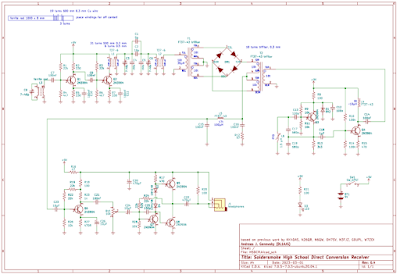
Here is the schematic they used:

Click on the image for a better view
Here is an e-mail exchange I had with Andreas when the scholatic dust had settled in June 2023:

Dear Bill,

Please my apologies for my late update on our DCR project. We started with the course in the semester break and once the semester started only a handful of students were able to finish their receiver. A long shelf of shame ….

Here is what we’ve got so far (those were finished at the end of April already). 3 nice DCRs completely sufficient to copy CW indoors without additional antennas starting from late afternoon. Strong stations can be heard all day. I found that coupling some 6m of wire with one or two windings to the ferrite core can boost the signal dramatically but can also increase noise.

The PTO is based on your design (Bill Meara N26QR & Dean KK4DAS) which was sparked by Farhan (VU2ESE) , except that I’ve swapped the FET for a NPN. The input amplifier and antenna is from the JUMA active ferrite antenna by Matti Hohtola (OH7SV), the band pass filter is from Hans Summers (G0UPL), the mixer and the headphone amplifier is inspired by Pete Juliano (N6QW), you told me that the diplexer (as well as the whole DCR idea) is attributed to Wes Hayward (W7ZOI) and the perfect schematics of Rick Scott (N3FJZ) where crucial to get me started in the first place. I enjoy keeping track of original sources, as I would do in science. This shows that even little achievements are based on the ideas of many other great people – and this is nothing to be ashamed of.

This was a lot of fun! Thank You!
Best and yours sincerely,
Andreas

Wow, the direct conversion re-engineering of education continues, this time at graduate-school level with biologists in Munich! Amazing.

Andreas points out that his group was also plagued by semester-related problems that caused many additions to the German shelf of shame. Let’s hope that someday soon these builders will come to their senses and join the ranks of those who have finished their homebrew projects.

Looking at the schematic (above) of Andreas’s project, there are a couple of significant differences from ours:

— Their AF amp used a transformer-less push-pull design. We had considered this but abandoned it thinking that it would be too complicated to explain the workings of this circuit to our students.

— Most significant, is Andreas’s use of a ferrite rod antenna and an RF amplifier. I think a simple 33 foot quarter wave antenna (with a ground or a counterpoise) might work better. But hey, to each his own! The important thing is that a number of these receivers were successfully built. They look beautiful.

Congratulations to Andreas and the successful Munich homebrewers!

———————————–

Thanks to Andreas DL1AJG. Welcome to the Hall of Fame.

————————————

Join the discussion – SolderSmoke Discord Server:

https://discord.gg/Fu6B7yGxx2

Documentation on Hackaday:

https://hackaday.io/project/190327-high-schoolers-build-a-radio-receiver

SolderSmoke YouTube channel:

Rick N3FJZ’s Early Completion of the SolderSmoke Direct Conversion Receiver Challenge

It was a cold day in early February 2023. Rick N3FJZ had responded to an early version of the SolderSmoke Direct Conversion Challenge:

I wrote:

Rick N3FJZ has completed his the direct conversion receiver that we will soon be building with students at a local high school. See video above.


We are hoping that a number of people will build the receiver as we designed it. Some folks have sent us versions of the receiver that they have built, but these versions often include significant deviations from our design, rendering them less-than-useful in checking our work. Rick built it just as we prescribed. His build is very useful in confirming the validity of our design. So if you are working on one of these receivers, I would encourage you to — for the moment — dispense with innovations and build it the way Rick did: as per the design we have been using.

We know that our design is not perfect. But we have decided to stick with it because it is very simple and very easy to explain. Examples: We know there is an impedance mismatch between the mixer and the AF amp. But fixing this would introduce complexity that we want to avoid. And the receiver works fine with the imperfection. We know that a push-pull AF amp would probably work better than the one we have. But we do not want to have to explain push-pull amps, biasing schemes, and PNP transistors in this short introductory course. So we stuck with three common-emitter AF amp circuits and an 1K-8ohm transformer.

Rick did a really excellent job not only in building this receiver, but also in documenting it. His diagrams and drawings are really superb. We will probably use these in our presentations to the students:


We will keep all of you informed on the progress of this project. We will begin this week. But if you are still working on the receiver, please send us your work, even if it comes in after we begin the course.

Thanks Rick!

————————————-

Thanks indeed Rick. Sorry it took so long to put you in the SolderSmoke Challenge Hall of Fame, but you are in now, and you definitely deserve it. Congratulations OM.

I especially like your finding the audio ourput transformer in an old transistor radio. Too often we see builders quit after discovering that Mouser or some other supplier no longer stocks the needed part. You show that homebrewers have other sources available, if they are willing to scrounge a bit. FB. I also liked the switch that helped compare the outputs of the two AF transformers. Very useful.

Thanks too for all the great videos and your really nice documentation — we have used your work quite a lot.

73 and welcome to the Hall of Fame!

Rick N3FJZ
____________________________

Join the discussion – SolderSmoke Discord Server:

https://discord.gg/Fu6B7yGxx2

Documentation on Hackaday:

https://hackaday.io/project/190327-high-schoolers-build-a-radio-receiver

SolderSmoke YouTube channel: