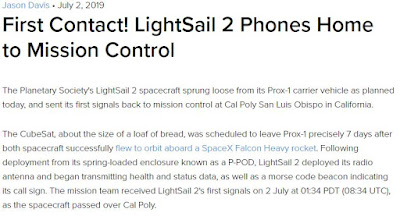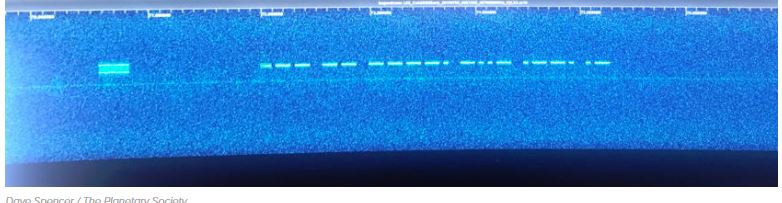
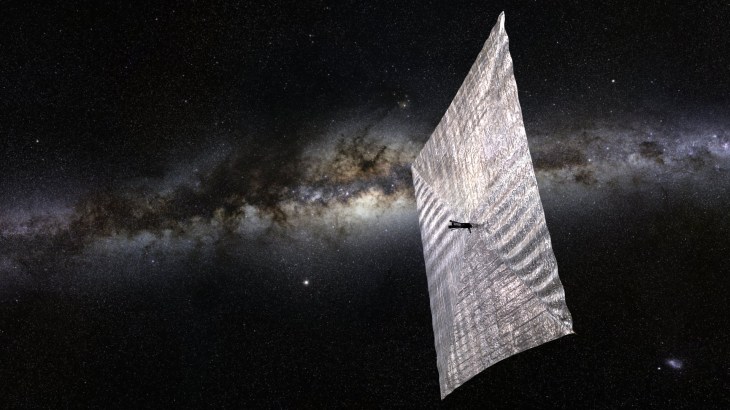
Success! Congratulations to the Planetary Society. Amazing achievement.
http://www.planetary.org/blogs/jason-davis/lightsail-2-successful-flight-by-light.html
SolderSmoke Daily News — Ham Radio Blog
Serving the worldwide community of radio-electronic homebrewers. Providing blog support to the SolderSmoke podcast: http://soldersmoke.com
Success! Congratulations to the Planetary Society. Amazing achievement.
http://www.planetary.org/blogs/jason-davis/lightsail-2-successful-flight-by-light.html
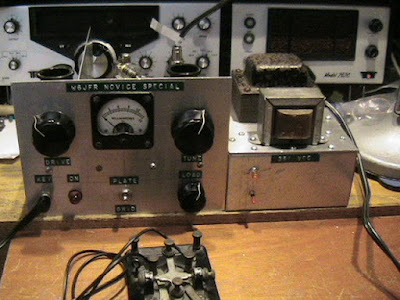
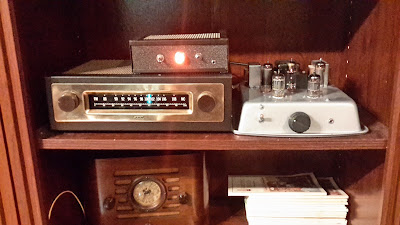
https://n8nmsteve.blogspot.com/2019/07/a-homebrew-stereo-for-shack.html
Excellent work Steve. You are right — lugging something around for 30 years does create an obligation to put it to good use. FB. Love the cakepan. And the multiplexer chip. And above all THE JEWELED LENS.
Dear Bill N2CQR:
I took this quick video during a QSO on July 20, 2019 with Ed K3VA in Philadelphia on 40 meters. Note: Plenty of of audio from the Herring Aid 5 — no additional amplification in the speaker.

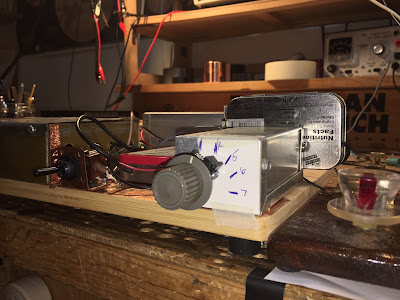
Note the cool BLUE numerals. They represent 7040, 7050, 7060, 7070. The little black “pointer” is from a power cord wall fastener. My tuning cap has a nice reduction drive — the pointer follows the movement of the capacitor blades. The VFO is very stable.
Simplicity is a virtue. CW is, I think, outmoded and kind of absurd (one letter at a time? really?), but it does allow for extreme simplicity. Using a rig with just 10 transistors, putting out half a watt of RF, I am regularly communicating with people. This is what I like about CW.
I’ve had about 12 solid contacts with this rig since putting it on the air earlier this month. The VFO was a huge improvement over being crystal controlled. Crystal control was OK back when receivers were broad and hams tuned around for replies, but those days are gone. Getting the transmit offset set correctly was another huge improvement.
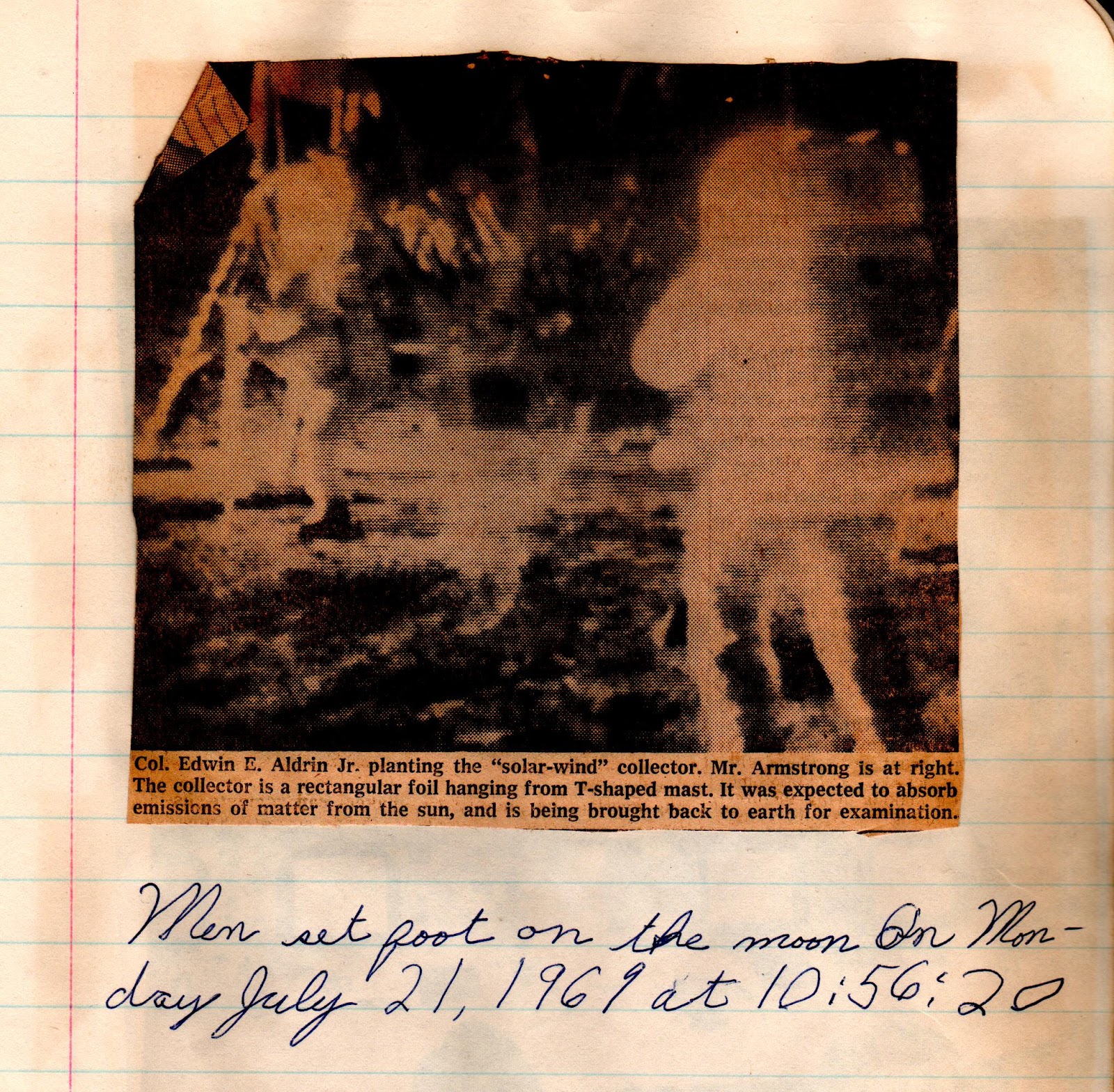
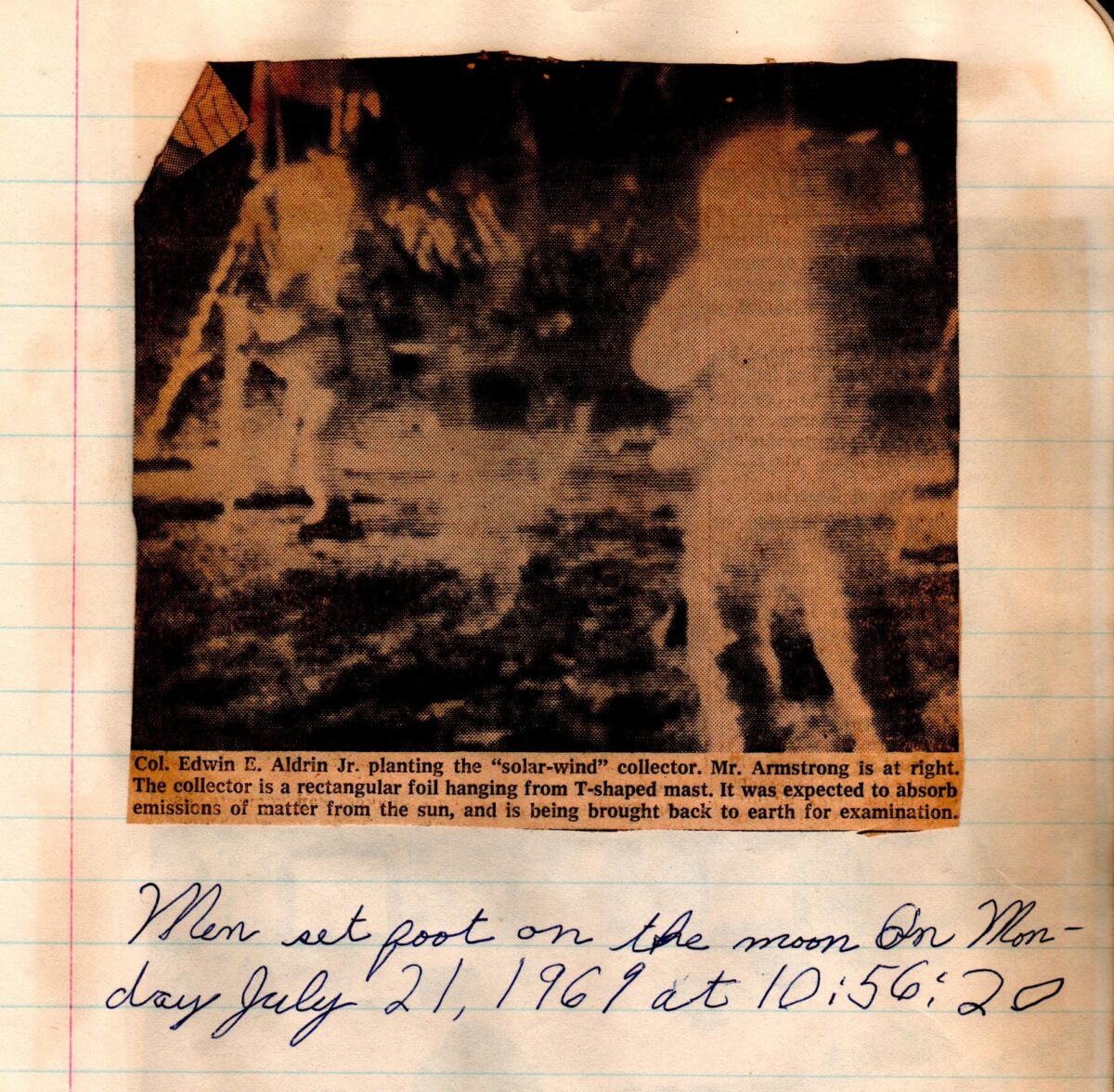
From the Apollo 11 scrapbook I made back in ’69. I got the date for the moonwalk wrong. But hey, I was only 10 years old.
So cool. During our QSO on 40 Meter CW today, N3MLB recorded it and put it on YouTube. This is what my 500 milliwatt Fish Soup 10 rig sounds like in Pennsylvania. Thanks a lot Chris.

From Chris’s QRZ.com page:
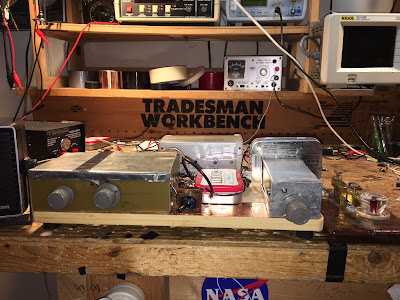
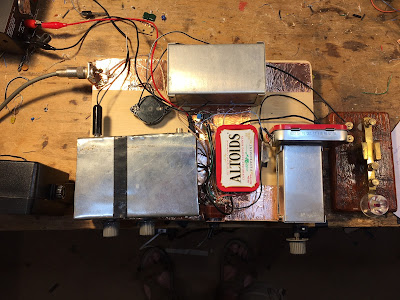
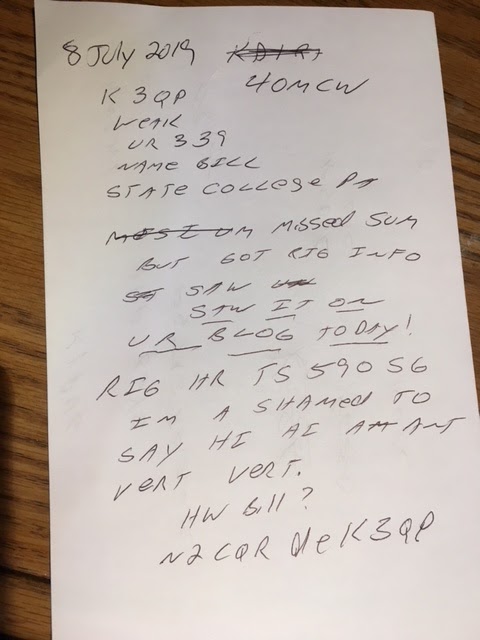
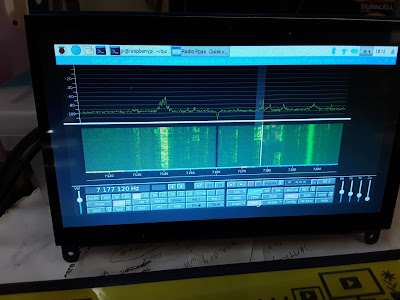
Hi Frank,Last night was the first coast to coast QSO with my homebrew SDR Transceiver. Thanks for the signal report and the comments on the signal.This has been a fun project and my main band of operation these days is 40M. I have the capability to put the SDR on 75 as well as 20M. The second prototype (now in work) will use plug in coils for those two bands. It is simply amazing what can be done with a $35 computer.I have several websites but one has been dedicated to SDR and there is more documentation about the SDR project.Thanks again and at times you hit 15/9. Nice radio and nice antennas.73’sPete N6QW
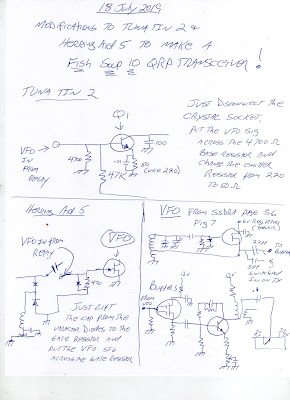
I don’t know why, but this weekend I got the urge to get on the air with a very low power homebrew QRP rig. I reached for my Tuna Tin 2 — Herring Aid 5 combo. I call it the Fish Soup 7 (seven transistors in total).
I first tried to turn this rig into a transceiver by taking the VFO signal from the receiver (it is direct conversion) and using it to excite the Tuna Tin 2, but it just didn’t work out. The oscillator in the Herring Air 5 is very bare bones — no buffering and an LC circuit that is mostly L (10 uH). It became very difficult to get a stable amount of CW offset. So I went back to crystal control for the transmitter. I did replace the 5K tuning pot in the RX with a 10k 10 turn pot (thanks to W8NSA). Tuning is now very smooth. I used my old UK freq counter to monitor my receive freq. (Thanks to Tony Fishpool G4WIF– back in 2009 he sent me the CMOS chip that brought this counter back to life.)
I was putting out about 750 milliwatts.
I had a very quick contest-like contact with K2D — one of the “13 Colony” stations. Then a longer chat with Hank K1PUG (see video above).
I had lost my 7050 crystal, but this morning it re-appeared. TRGHS.
As you can see in the video I am using the beautiful VU3XVR key that Farhan brought me from India.
This was fun. I may try to put a VFO of some sort into the TT2, just to get more agility. But I want to keep things simple.
Look for me on 7050.
The creators of “Plasma” and “Blueprint” YouTube channels have collaborated on this very interesting video about spark-gap radio transmitters and receivers. Really nice work. Especially impressive was the coherer build by Blueprint. I detect the spirit of Nikola Tesla in his lab!