The Homebrew Receivers of F5LVG

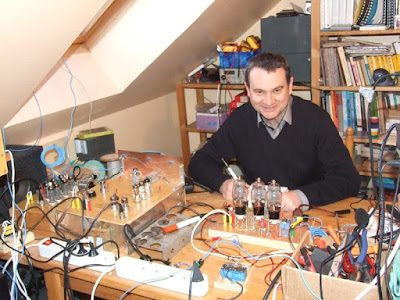
I came across OM F5LVG’s work in SPRAT. He has a wonderful website — it is in French, but Google Chrome translates is quite nicely.

http://oernst.f5lvg.free.fr/index.html

From the site’s introduction:

This site is dedicated to the construction and understanding of radio receivers. If you have dreamed of hearing a radio station with a receiver that you have built yourself, this site is for you. These are essentially direct conversion receivers and modern feedback detectors using only semiconductors, except for retrofitting. The described stations will accommodate amplitude modulation, single sideband (SSB) and telegraphy.

Besides these receivers several articles are devoted to LC oscillators. In particular, an extremely simple original stabilizing device is described.
Similarly, a simple frequency meter is described.
The joy of reception using a homebrew receiver is intense. May this site help you find this joy. Do not hesitate to join the amateur community.
TRGHS: I Can Hear the Roosters of Boa Vista

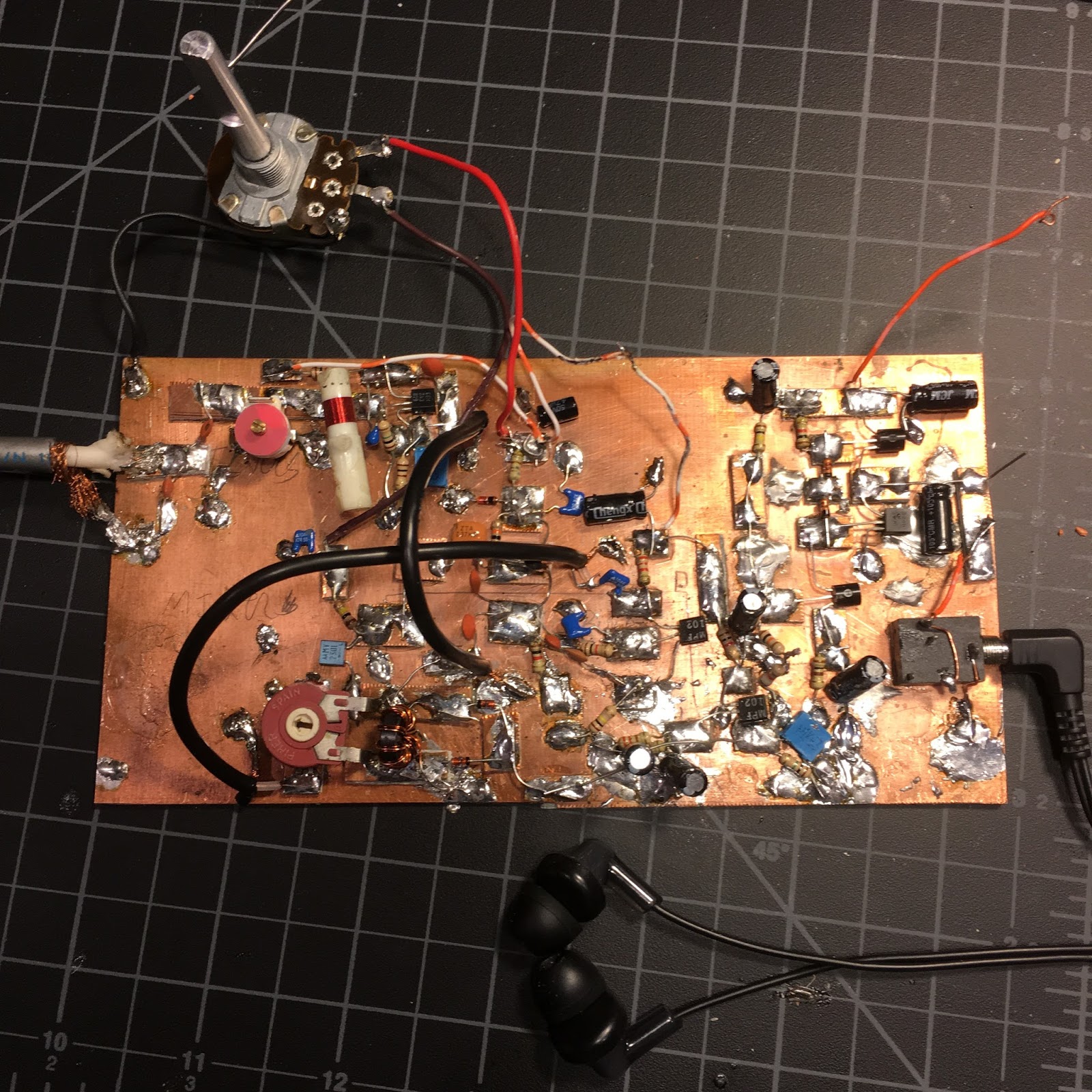
At the instigation of Bob N7SUR I’ve been working on a simple, easy-to-reproduce Direct Conversion receiver for 40 meters. I’m building this for my nephew John Henry, and I’m hoping this will be a circuit that others can use to break into the ELITE corp of successful ham receiver builders. Coincidentally Joh in Freiburg Germany is working on a very similar project — we have been comparing notes.

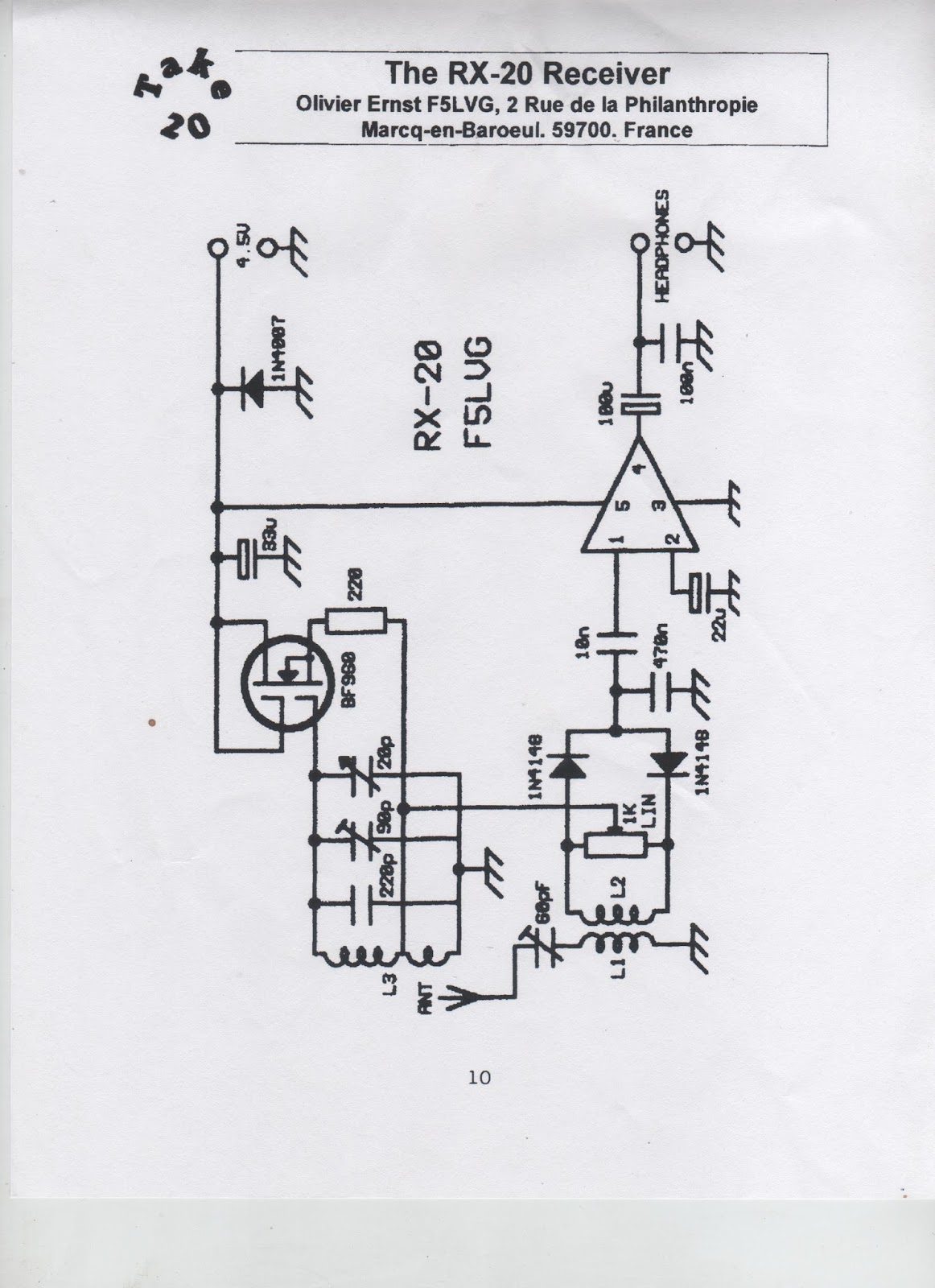
At first I used an FET detector described by Miguel PY2OHH. It worked, but at night the AM detection of powerful shortwave broadcast stations drowned out the amateur signals. So Joh and I started to explore detectors that would eliminate this problem. I went with a version of one described in SPRAT by F5LVG ( “The RX-20 Receiver”- see below). Very simple: A transformer to two back-to-back diodes with a 1K pot to balance the signal from the VFO. OM Olivier used a very, very cool transformer: he took two small, molded chokes and simply glued them together! 22uH choke as the primary, 100uH choke as the secondary. I went with one of the toroidal transformers that Farhan left me when he visited in May.

I’m using a varactor-controlled ceramic resonator VXO (no Si5351 in this one!) and a non-IC AF amp designed for use with ear buds (the world is awash in ear buds). It is a “singly balanced” design with the incoming RF signal being the one “balanced out” in the detector.

Last night the receiver passed the AM breakthrough test. The SW broadcast monsters were balanced out and kept at bay.

This morning the receiver passed The Boa Vista Rooster Detection Test. I fired up the receiver and heard an operator speaking Spanish with a Brazilian accent. When I heard the rooster crowing in the background I knew it was Helio PV8AL from Boa Vista Brazil. TRGHS — this little receiver is a winner.

I’ll try to post a schematic soon.

And hey — look at what wonderful IBEW (International Brotherhood of Electronic Wizards) project this is: Instigation and inspiration from Oregon. Some design ideas from Brazil. A French detector circuit described in a British QRP magazine. A transformer from India. A collaborator in Germany. And finally, the rooster of Boa Vista.

Let’s not forget Wes Hayward W7ZOI for bringing back (in 1968!) the neglected Direct Conversion idea.

Two new bands for US Amateurs

630 meters 1 October 2017
Steve VE7SL reminded us via his blog that US radio amateurs now have the use of two new radio frequency bands: the 2200 meter band and the 630 meter band. As always, Pete N6QW was way ahead of the game and is already working on a full-size 6 element quad for 2200. Good going Pete! Please send pictures (we may need a satellite photo to get the whole antenna in the shot).

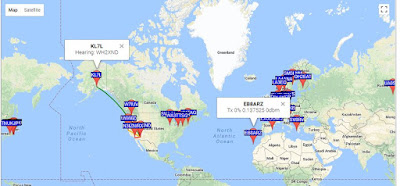
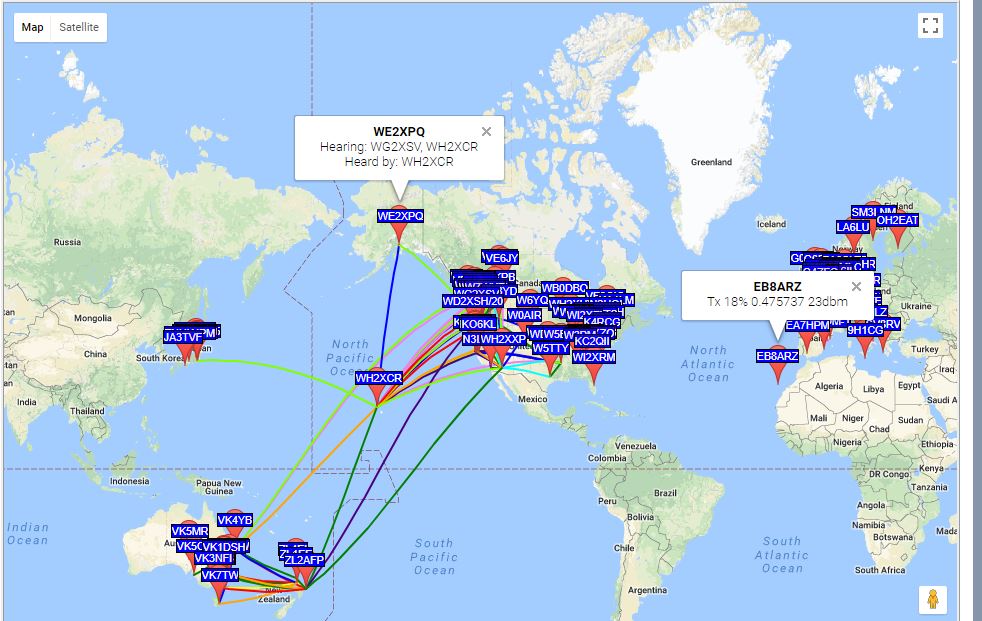
As Steve points out there is already a lot of activity on the new bands — the attached pictures are snaps of just ten minutes of WSPR activity this morning.

I’m especially intrigued by 630 meters — it is so close to our beloved 455 kc IF frequency. Will some intrepid ham take advantage of this fact? Seems like some peaking and tweaking could do the trick…

2200 meters 1 October 2017