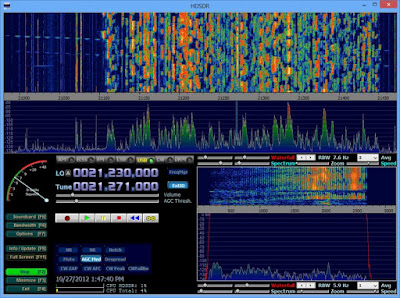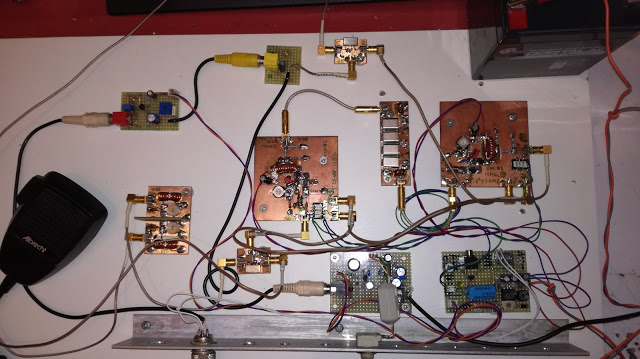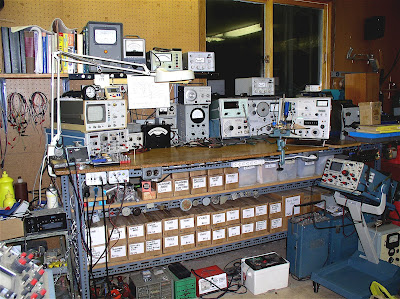
“I guess today’s experimenters build things in software, without ever touching a soldering iron. The hocus pocus is inside the program. It’s cleaner this way — nothing to burn or zap, and you don’t need a voltmeter… What happened to home-brewed and breadboarded circuitry? Where’s the joy of mechanics and electricity, the creation of real things? Who are the tinkerers with a lust for electronics?”
From “Silicon Snake Oil” 1995 by Cliff Stoll
Month: October 2017
Modular BITX Boards
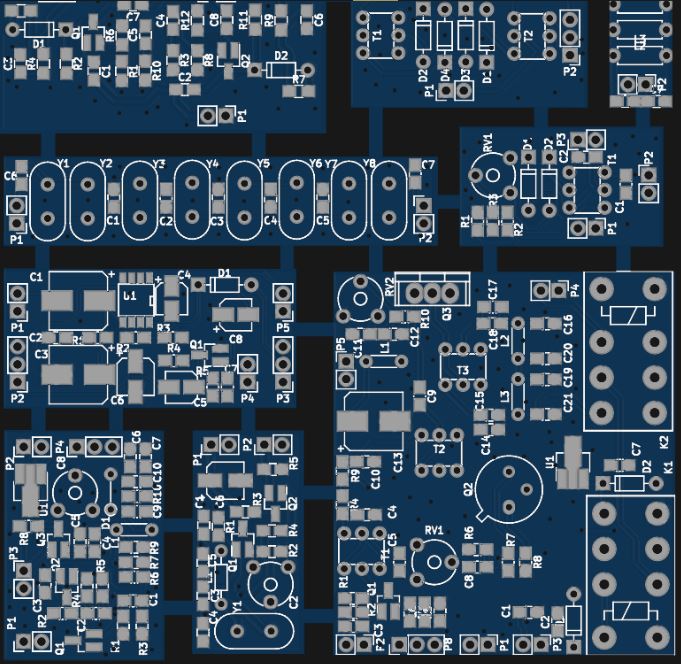
I’ve had a few emails regarding the modular BiTX build and I probably should clarify a few things. First, ON6RF has posted his gerber files on the link at Hackaday.com that I originally posted – just scroll down to around the middle of page to the ‘Files’ section. Since he has placed these in the public domain they are available to anyone that cares to download them. But, because it is HIS work, I’m not comfortable forwarding the files myself. I don’t know if he follows it but I’m sure that he can keep track of how many downloads have occurred and I’m certain he would be gratified to know that his work is appreciated. What I have offered is to make my gerber file for the motherboard available and, if I can manage it, I will post it here in the files section in the Modular BiTX folder. I will also include the pdf files that I created for each of the module showing component placement and values.
As for acquiring the circuit boards, as I stated earlier, I use PCBWAY.com for production. Their prices are excellent and the turn-around time is hard to beat. The cost of the panelized pc board for me was $5.00 for 10 boards with DHL shipping costs of $22.00 for a total of $27.00. I ordered the boards late on a Monday and DHL delivered the finished boards the following Monday morning. Their website says boards that measure 100X100 mm or smaller cost $5.00 for 10 boards so whether you order 1 or 10, the cost is the same. To complete the build you will need 3 boards to have enough bi-directional amp modules so, if you’re interested in following thru with building a modular version, you could perhaps join with two other interested parties and split the cost between you. With 3 boards you will be able to build a complete transceiver and have 2 extra modules for experimentation for every section except the bi-directional amps. As an example, on my first prototype I built the double balanced mixer as designed and a second one using an ADE-1 to compare the results. For the record, there was absolutely no noticeable difference between the two. I also built a 4-crystal filter as designed and an 8-crystal QER filter on a second board for comparison. There was a definite difference between these two modules.
I hope this clears up some of the questions and I’m still available via direct email to answer questions specific to my build or class presentation. I’m currently working on the assembly manual for my class and when finished I will post it also in the files section.
–73– Mike — W0MNE
Ron Gang, 4X1MK on “QSO Today” Podcast: Knack Story, Satellites, Quads, Philosophy
Wow, Eric Guth’s interview with Ron Gang 4X1MK really resonated with me:
— Asked about how he got is start in radio, Ron went back further than many of us do in response to this question. He cited his early experiments with “two tin cans and a string.” Yes, of course! I’d forgotten all about it, but in retrospect this might have been a very early indication of THE KNACK. (I’ll bet many of our readers were also active on the String and Can band.)
— Ron used a DX-100. FB.
— Ron was active on the satellites. In his voice you can hear the joy and the burst of enthusiasm that resulted from those early satellite contacts. He also mentions the untimely demise of Oscar 13. Bummer.
— Ron was the Israel correspondent for 73 Magazine. I held a similar position in Dominican Republic. My friend David Cowhig was at the same time correspondent from Okinawa, Japan. We should have a reunion of “73 Magazine Hambassadors.”
— Ron mentions John Tait EI7BA. John was a regular contact of mine when I was in the Azores. He appears in the SolderSmoke book. He was the one who introduced me to an important Irish accolade: John told me that WD-40 is “the Pope’s pee.”
— Toward the end, Ron discusses the wonder of ham radio conversations, and provides a good suggestion on how to get beyond the all-to-common “hello-59-goodbye” contacts.
Ron’s comments on the spiritual or philosophical aspects of the hobby were just the thing for a quiet Sunday morning.
Thanks to Eric and to Ron for a great interview.
Listen here:
http://www.qsotoday.com/podcasts/4X1MK
BITX40 Featured in “Nuts and Volts”
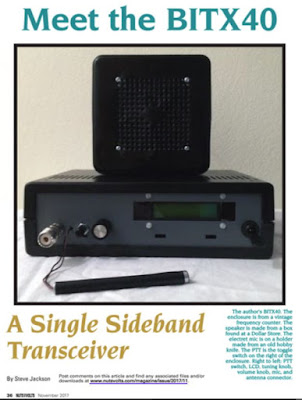
Congratulations to Steve Jackson and to “Nuts and Volts” for putting out a very nice article on the BITX40 transceiver. Steve did a great job in describing the origins of the BITX, and in explaining that Farhan’s intent is to encourage experimentation and tinkering. Pete and I had pitched a similar article to a major ham radio magazine but sadly they were not interested. Three cheers for “Nuts and Volts.” I’m thinking about subscribing.
I know many of you will wince when you see Steve’s unshielded mic cord lying right next to the front panel antenna connector, but please don’t freak out about this — in the article you will see that Steve acknowledges that the antenna connector would have been better placed on the back of the box. That’s an example of the educational value of the BITX40 — live and learn. Even with the connector like this, Steve was making many contacts.
The “Nuts and Volts” website very kindly let me read the entire article without a subscription.
Try here and click on the blue “digital edition” box:
http://www.nutsvolts.com/magazine/article/meet-the-bitx40-a-single-sideband-transceiver
Or try going directly here:
http://nutsvolts.texterity.com/nutsvolts/201711/?folio=36&pg=36#pg36
Pete’s Simple-ceiver — Al Fresco Success
N6QW’s Simple-ceiver design is being replicated far and wide. Above you can see PA3GUP’s beautiful rig in its “Al Fresco” stage of development. For much more of this — including a cool video of Pete’s rig in action — go to Pete’s blog: http://n6qw.blogspot.com/
630 Meter DX from Wasilla, Alaska
![]() |
| Kl7L’s 600m Part 5 station |
Hi Bill – It’s been a few years and I’m sort of glad my global wanderings have been curtailed to a point and I’m now based out of Alaska and via a couple of call signs (KL1X KL7UK etc) have ended up with KL7L. I still travel with the Oil Company but no China on the horizon.
I had a chuckle when you and Pete mentioned the new 630 and 2200m bands – and the real estate requirements – Well, I’ve been active with the experimental callsigns since 2003 and very glad we have finally got the bands – so a small form to fill out on the UTC web site and a 30 days wait to check you are not within 1Km radii of the co channel PLC on Trunk power lines, if no “disapprove” away we go – and I and many have!
Just turn off all those nasty dimmers, LED lights and SMPSU wallwarts – plonk your radio on 474.2kHz USB and decode using WSPR or JT9 and I think youll be surprised on what you can hear even on a short typical 80m or topband wire or so. There a lot of activity all around you
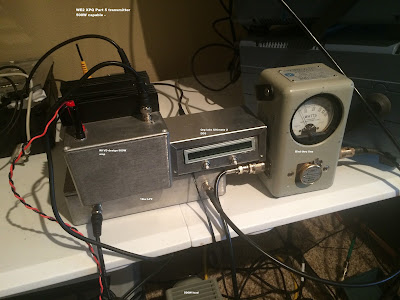
The station for both band is homebrew soldersmoke heaven – transverter/PA and filters/Couplers/Phase meters etc with only my ol’ TS850 doing the prime driving, or a Hans Summers U3S.
Size does matter – but my best RX for both bands is a 2ft long active probe up a pine tree, that’s all – and some 300ft of RG6, and the Tx antenna is a 60ft high Marconi or more over an inverted L with a 3 wire top cap all nested in the Birch forest – loads or radials but still very lossy in the Summer – nothing special here – Of course with the QRP per se we have to use CW or digital modes mostly but DX can be done – after all my closest active neighbor on 2200/630m is over 2000Kms away!
So, for the first time I sparked up on JT9 on 630m this early morning and first blood to QSO with VK4YB @ 5W EIRP!
Not bad for a first qso on what is a fairly typical back yard antenna – so, there is hope and many people appear to be putting transcontinental signals out this power, so everyone is on the same playing field – just the ground and location and latitude will change things! It tends to be more flaky, lossy and geo/solar events tend to hit us hard up here compared with say Seattle.
On 2200m TX its a loop of thick wire hanging in the trees – literally 500ft circumference and a beefy coupler to deal with the 50A or so of antenna current to make the 1W ERP or so – still its getting out OK and again should be putting signals over the Pole to EU and across the Pacific as it becomes more and more dark up here.
I’m now caught up with past Soldersmoke pod casts and thanks to you and Pete for making me smile
Take care
Laurence KL7L aka G4DMA et al
Wasilla Alaska 23rd Oct 2017
Woz with Soldering Iron; Wooden Enclosures for Electronics (Video)
The Woz scared me for a second — I tought he was going to leave a hot iron on the desk amidst paper and other flamable items. But no — he put the soldering iron in its holder.
Later we hear Woz talking about the need to update schematic diagrams. And I was esepcially taken by the use of wooden enclosures for electronic projects. My BITX rigs have followed the Apple example.
Cliff Stoll — K7TA — Has THE KNACK. And a GREAT NOVA Video
Hack-A-Day had a piece on Cliff Stoll of “The Cuckoo’s Egg” and “Silicon Snake Oil” fame. I read these books years ago. I included a quote from Cliff on page 45 of the SolderSmoke book (the quote seemed to foreshadow my aversion to SDR).
I didn’t know that NOVA produced an hour-long program on Stoll’s Cuckoo’s Egg adventures. It is really good. Many of those involved play themselves in the video. Very cool. See above.
I checked Cliff’s QRZ.com page. We wrote several years ago that Cliff has THE KNACK. Note below his preference for thermatrons and the affection for Heathkits. Diagnosis confirmed.
From QRZ.com:
The First “Transistor Radio”
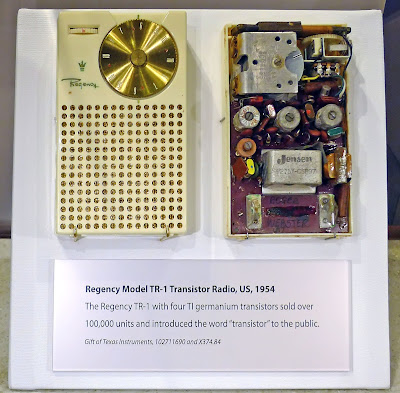
I’m a few days behind on this. On October 18 Bob Crane pointed out that Garrison Keillor marked the anniversary of the broadcast band “transistor radio.” I had mine (a 1970s version), and it did indeed allow me to listen to that seditious rock music without parental interference. Looking around the shack, I still have items in use that have “Transistorized” as part of their product name (like my Lafayette Radio Electronics Transistorized DC Power Supply.”
Garrison (on October 18, 2017):
The Quantum Indians
Beautiful video. Strongly recommended.
https://www.youtube.com/watch?time_continue=350&v=bI7sasQsQWI
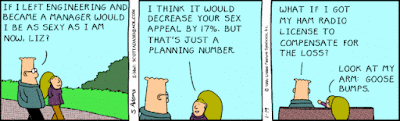
Ham Radio, Dilbert, Dating, and the Baofeng Breakup
SolderSmoke Podcast #200! 17, Knack Nobel, QCX, 630, UHF, Fessenden, TROUBLESHOOTING
![]() |
| DL3AO 1950 |
SolderSmoke Podcast #200 — TWO HUNDRED!!!!– Is available
http://soldersmoke.com/soldersmoke200.mp3
— Old friends on 17 meters.
— Another Knack Nobel in Physics.
— Hans Summers’ QCX transceiver: $50 IS THE NEW 10 GRAND!
— New Bands! 630 and 2200 Meters. BIG ANTENNAS!
— Nuke Powered QRP. No joke!
— The Challenge of UHF. Not for the faint of heart.
— Reginald Fessenden, Father of Phone.
PETE’S BENCH REPORT: The New Simple-ceiver. Soon to be a Transceiver.
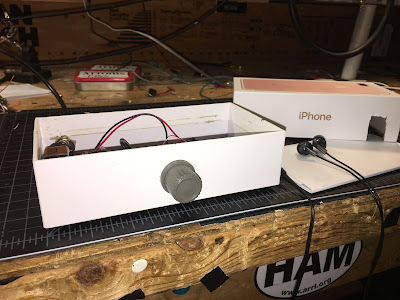
BILL’s BENCH REPORT: Discrete, Direct Conversion, Ceramic Receiver in iPhone Box.
THE EDUCATIONAL PORTION OF TODAY’s PROGRAM:
HOW TO TROUBLESHOOT A HOMEBREW RECEIVER.
MAILBAG.
![]() |
| DL3AO 1950 |
SolderSmoke Podcast #200! 17, Knack Nobel, QCX, 630, UHF, Fessenden, TROUBLESHOOTING
![]() |
| DL3AO 1950 |
SolderSmoke Podcast #200 — TWO HUNDRED!!!!– Is available
http://soldersmoke.com/soldersmoke200.mp3
— Old friends on 17 meters.
— Another Knack Nobel in Physics.
— Hans Summers’ QCX transceiver: $50 IS THE NEW 10 GRAND!
— New Bands! 630 and 2200 Meters. BIG ANTENNAS!
— Nuke Powered QRP. No joke!
— The Challenge of UHF. Not for the faint of heart.
— Reginald Fessenden, Father of Phone.
PETE’S BENCH REPORT: The New Simple-ceiver. Soon to be a Transceiver.
BILL’s BENCH REPORT: Discrete, Direct Conversion, Ceramic Receiver in iPhone Box.
THE EDUCATIONAL PORTION OF TODAY’s PROGRAM:
HOW TO TROUBLESHOOT A HOMEBREW RECEIVER.
MAILBAG.
![]() |
| DL3AO 1950 |
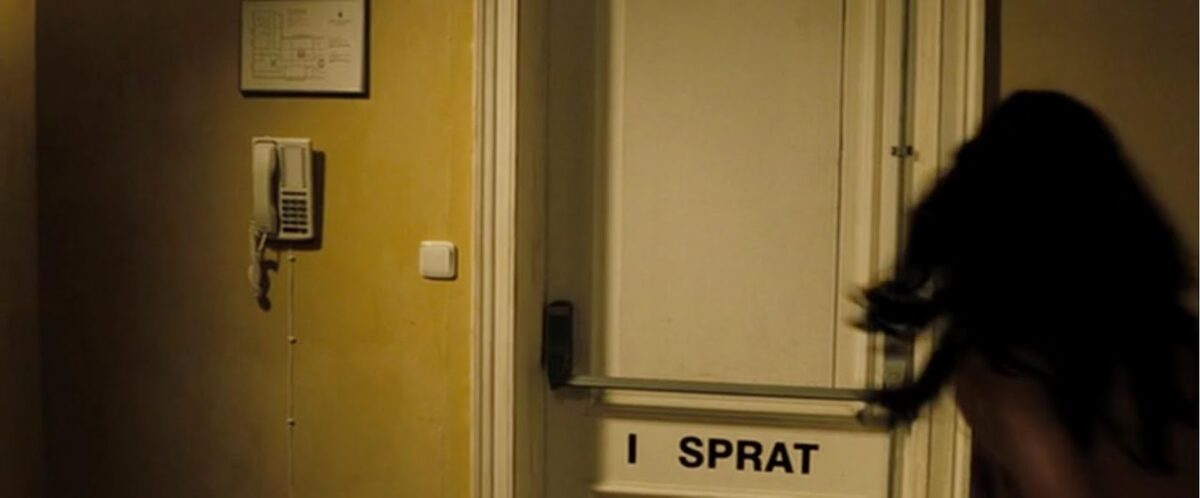
SPRAT — The 007 Connection
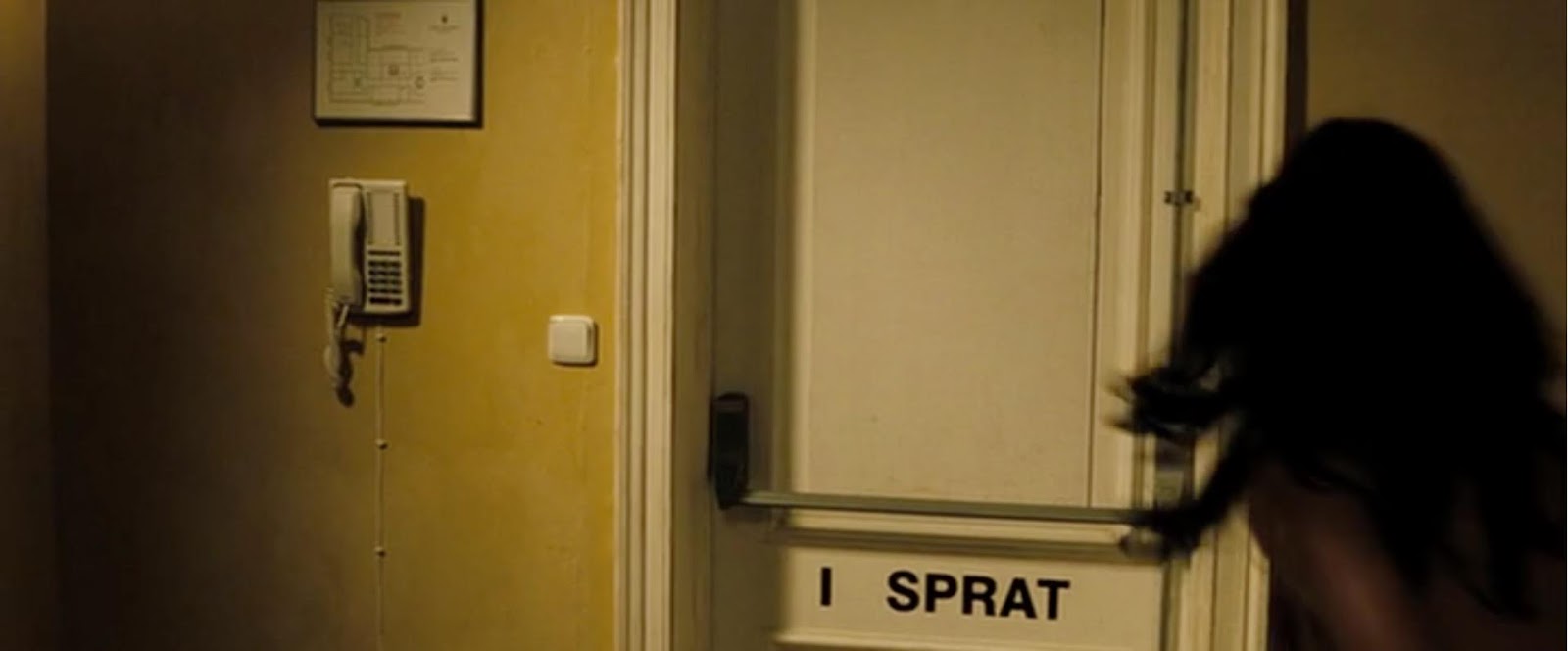
The eagle eye of Brent KD0GLS spotted this frame in the 007 movie “Casino Royale.”
Wow — I just knew those GQRP guys had to be much cooler than they seemed. I guess there were some indications: They do seem to talk quite a bit about “Q”. There is that weird fondness for Parasets. I understand that several of the senior GQRPers drive Aston Martins. And that Dobbs guy — a kindly retired Anglican minister you say? Really? I can just hear him saying it: “Dobbs, George Dobbs.”
DL1YC’s Flat Moxon with Armstrong Rotation
![]() |
| DL1YC Moxon |
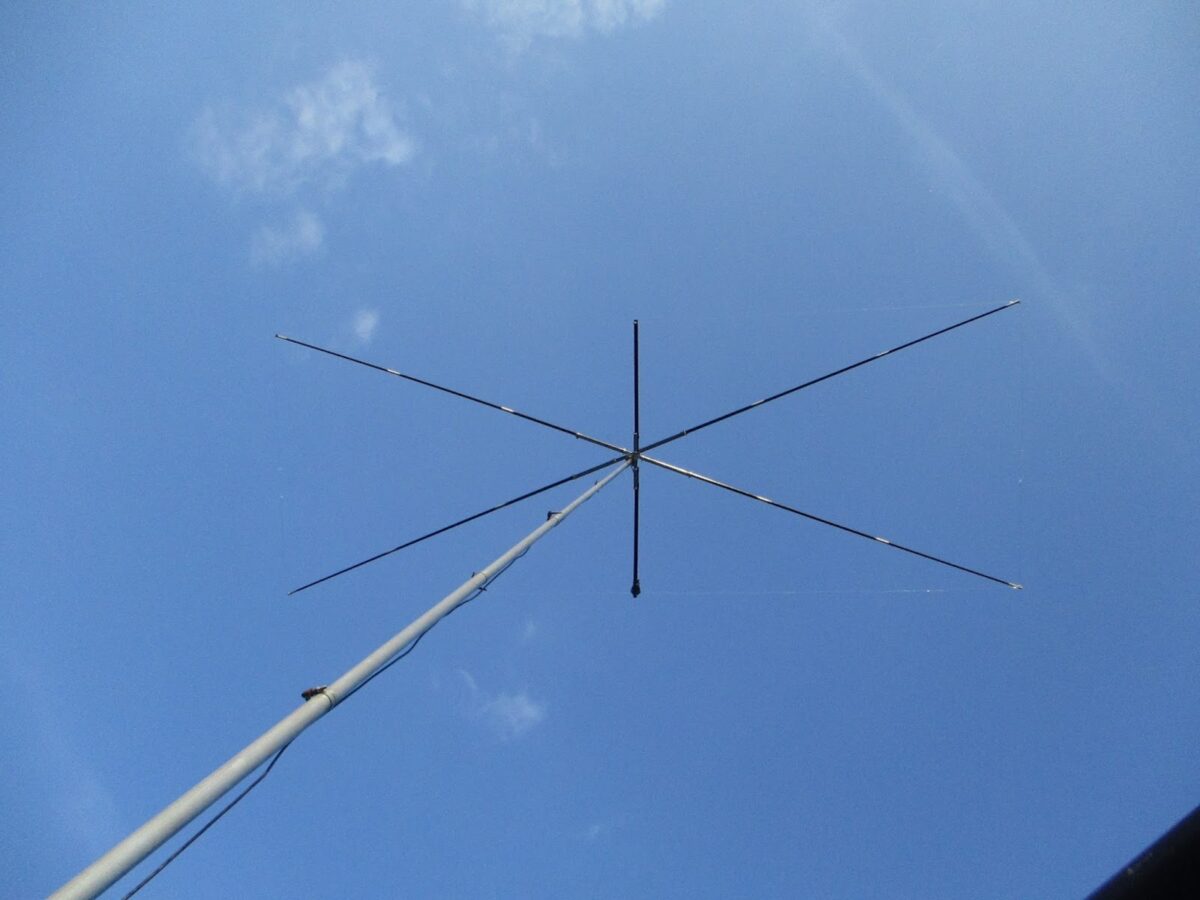
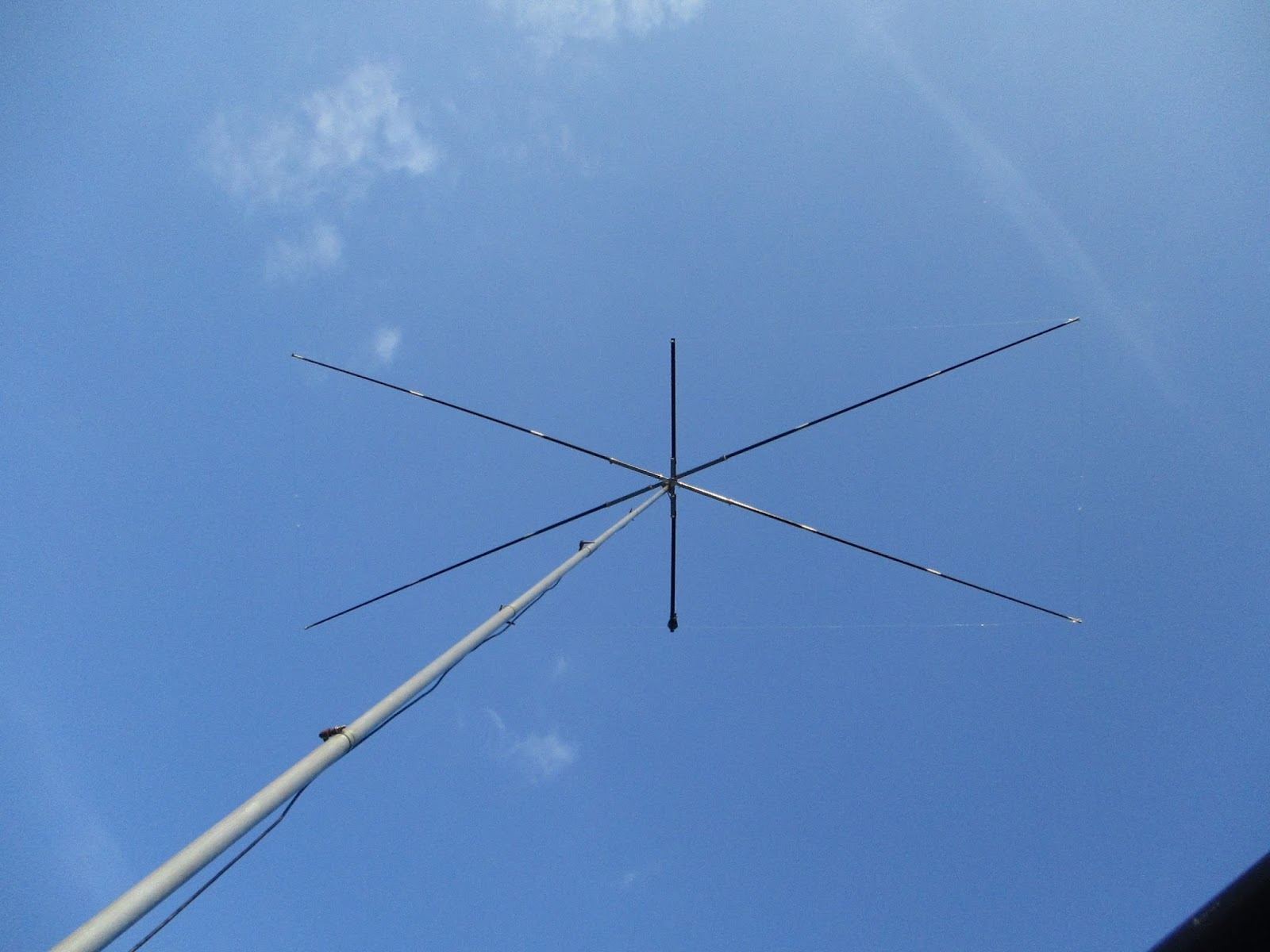
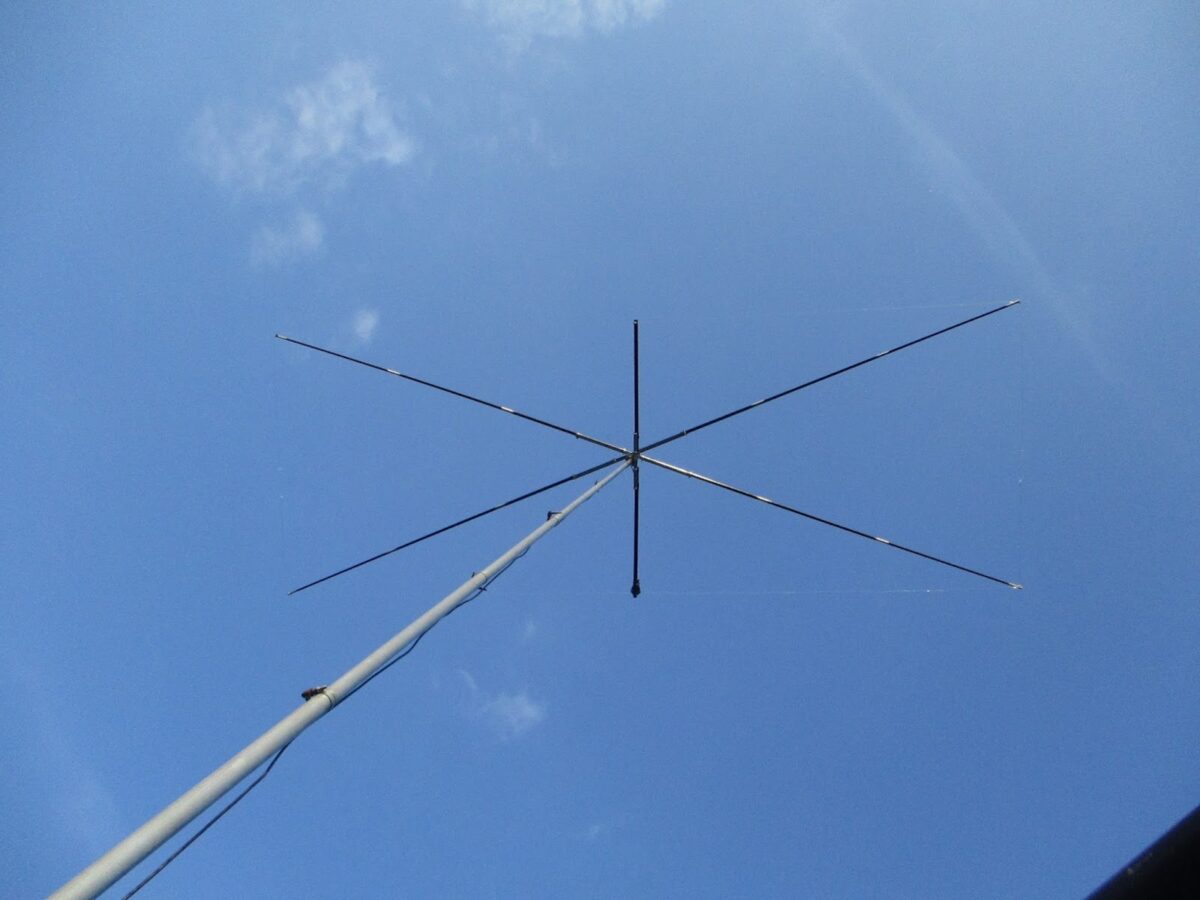
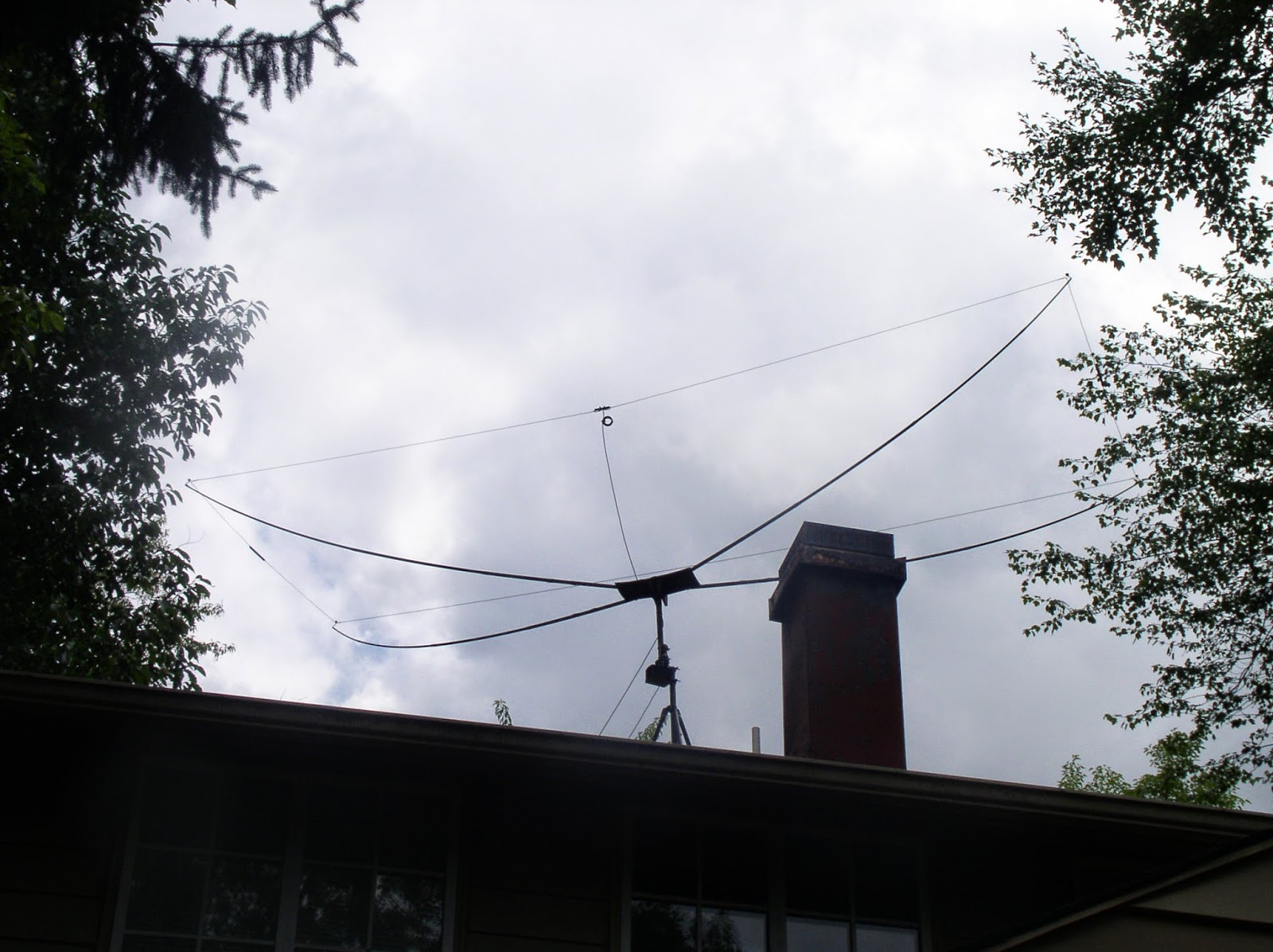
I had a very nice contact on 17 meters yesterday with Jan DL1YC. It was a rare Moxon-to-Moxon contact, with homebrew 17 meter Moxons on either end. Jan’s is a bit cooler than mine: His is flat, without the “blownout umbrella” support that we see in mine (below) and in the Hex Beams. Jans told me that he achieved this flatness by starting out with very long telescoping fishing poles — he discarded the the thin portions of the pole and used only the more rigid pieces. (I used 16 foot, 5 piece Shakespeare Wonderpoles from Amazon.) I think he also used thin wire for the elements. The crossbar that you see in the picture above is there to support a balun at the feed point — without the cross bar the balun and the feedline would cause the balun to droop.
I couldn’t resist a little front to back testing. Jan’s antenna does not have a rotator — he used the “Armstrong” method of antenna pointing. I didn’t want to make him go outside to spin the thing around by hand, so I just turned mine and asked him to take note of the difference front to back. He saw 3 S units. 18 db. Not bad.
Jan said his antenna weighs about 8 pounds — mine is very similar at 9 pounds. Jan expressed some concern about UV deterioration of the fishing pole fiberglass. Mine has been up there three years without any problems.
Like me, Jan had considered “nesting” an element for another ban (perhaps 20 or 12) but — like me– had concluded that this would be too difficult.
![]() |
| N2CQR Moxon |
DL1YC’s Flat Moxon with Armstrong Rotation
![]() |
| DL1YC Moxon |
I had a very nice contact on 17 meters yesterday with Jan DL1YC. It was a rare Moxon-to-Moxon contact, with homebrew 17 meter Moxons on either end. Jan’s is a bit cooler than mine: His is flat, without the “blownout umbrella” support that we see in mine (below) and in the Hex Beams. Jans told me that he achieved this flatness by starting out with very long telescoping fishing poles — he discarded the the thin portions of the pole and used only the more rigid pieces. (I used 16 foot, 5 piece Shakespeare Wonderpoles from Amazon.) I think he also used thin wire for the elements. The crossbar that you see in the picture above is there to support a balun at the feed point — without the cross bar the balun and the feedline would cause the balun to droop.
I couldn’t resist a little front to back testing. Jan’s antenna does not have a rotator — he used the “Armstrong” method of antenna pointing. I didn’t want to make him go outside to spin the thing around by hand, so I just turned mine and asked him to take note of the difference front to back. He saw 3 S units. 18 db. Not bad.
Jan said his antenna weighs about 8 pounds — mine is very similar at 9 pounds. Jan expressed some concern about UV deterioration of the fishing pole fiberglass. Mine has been up there three years without any problems.
Like me, Jan had considered “nesting” an element for another ban (perhaps 20 or 12) but — like me– had concluded that this would be too difficult.
![]() |
| N2CQR Moxon |
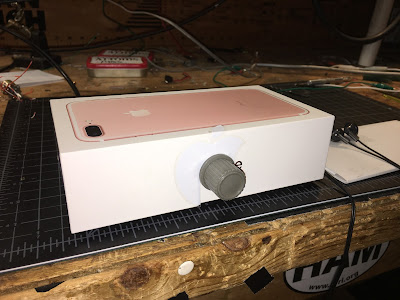
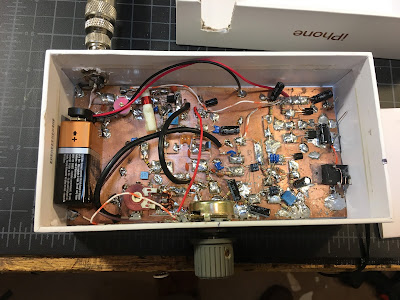
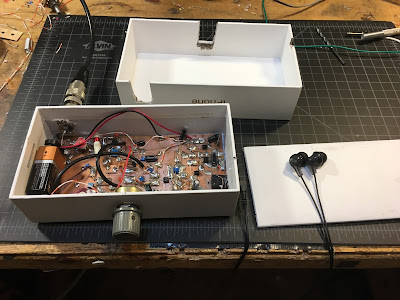
A Direct Conversion iPhone!
IZ7VHF’s Video on on Hans Summers’ QCX Rig, and a Video from Hans
Thanks to W8SX for alerting me to this.
There is a lot of good stuff on Roberto’s site. He obviously has THE KNACK.
http://radio-signals.com/
Hans himself has a less detailed video on the rig:
VE3BOF’s Regens and DC Receivers
![]() |
| VE3BOF BENCH |
ANOTHER Nobel Prize Winner with THE KNACK
When I heard that the guys who ran the LIGO gravitation wave experiment won this year’s Nobel Prize for physics, something told me that at least one of those involved in this historic detection of weak distant signals would have THE KNACK. It did not take me long to confirm this. Rainer Weiss (above) definitely has had the THE KNACK all his life. And what an interesting life it is. Check it out:
http://www.sciencemag.org/news/2016/08/meet-college-dropout-who-invented-gravitational-wave-detector
Knackish excerpts:
The family soon had to flee again, when U.K. Prime Minister Neville Chamberlain signed an accord ceding parts of Czechoslovakia to Germany. They heard the news on the night of 30 September 1938, while on vacation in the Tatra Mountains in Slovakia. As Chamberlain’s address blared from the hotel’s massive radio, 6-year-old Rainer stared in fascination at the glowing array of vacuum tubes inside the cabinet. The hotel emptied overnight as people fled to Prague.
As a teenager, Weiss developed two passions: classical music and electronics. Snapping up army surplus parts, he repaired radios out of his bedroom. He even made a deal with the local toughs: If they left him alone as he lugged radios to and from the subway, he’d fix theirs for free. “They would steal things and I would have to fix them,” he says. “It wasn’t a good deal.”
Weiss was drawn to tinkering partly as a reaction to his family’s cerebral atmosphere. “This is a German-refugee kid with very self-consciously cultured parents, and he’s rebelling against them by doing things with his hands,” Benjamin says. “But he’s surely not rejecting doing things with his head.”
He applied to MIT to study electrical engineering so that he could solve a problem in hi-fi—how to suppress the hiss made by the shellac records of the day. But electrical engineering courses disappointed him, as they focused more on power plants than on hi-fi. So Weiss switched to physics—the major that had, he says, the fewest requirements.