SolderSmoke Daily News — Ham Radio Blog
Serving the worldwide community of radio-electronic homebrewers. Providing blog support to the SolderSmoke podcast: http://soldersmoke.com

Bill:
David Cowhig WA1LBP and I are the only two Foreign Service officers to have also been 73 Magazine “Hambassadors” (impressive, right?). David was covering Okinawa for 73 (and for Uncle Sam!) while I was doing the same in the Dominican Republic.
Today David sent me a link to the book “Hardware Hacking” by Nicolas Collins: http://www.nicolascollins.com/texts/originalhackingmanual.pdf
It is not exactly about ham radio, but there is a lot of electronic wisdom in Mr. Collins’ book. You folks will like it. I especially liked the hand-drawn schematics — this adds soul to the book.
Nicolas Collins is an interesting fellow. He is Profesor, Department of Sound, The School of the Art Institute of Chicago.
https://en.wikipedia.org/wiki/Nicolas_Collins
http://www.nicolascollins.com/read.htm

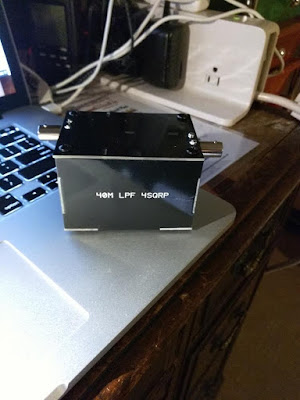
On Saturday October 24, Dean AC9JQ (Indiana) and Rick N3FJZ (Maryland) made contact on 40 meter SSB using Si5351/TIA BITX rigs. FB!:
Bill:
Dean and I made contact. We both were in and out most of the time, but conditions seemed to improve towards the end where I could understand Dean about 90%. Using the RST “by the book”, I would say he was a 33, 3 =(readable with some difficulty), and signal strength was 3=(weak), and based on what Dean was reporting, my signal back to him was the same – 33.
73 to you both.
Rick – N3FJZ.
This weekend brought another HB2HB (Homebrew to Homebrew) contact. We have been following with interest the 40 meter transceiver project of Dean, AC9JQ. Above you can watch a video of Dean’s rig in action before it went into the box. Earlier this month Dean achieved a remarkable “Double First” when he made his very first amateur radio contact. He was using his homebrew rig to do it. So his first contact was also his first homebrew contact. FB. More info on Dean’s rig and homebrew exploits can be seen here:
http://soldersmoke.blogspot.com/search?q=ac9jq
This week Dean got a decent 40 meter dipole up in the air. We arranged (via e-mail) to meet on 40 on Friday evening. We made contact, but conditions weren’t great. We tried again several times on Saturday, looking for open spots amidst the madness of the CQ WW DX contest. Rick N3FJZ joined us and also tried to make contact with Dean, but had no luck either. Daytime conditions didn’t allow for a good contact between Indiana and the Washington/Baltimore area where Rick and I are located.
Finally, last night after family obligations at both ends settled down, Dean and I found a relatively open frequency on 40 and made a good contact. A short snippet of it can be heard by clicking on the link below. Keep in mind that Dean was running about 2 watts to a dipole on 40 at night.
http://soldersmoke.com/HB2HBAC9JQ.mp3
Thanks Dean! Thanks Rick!
Michael DF2OK has been melting solder in Germany. Above is a short video of the first sounds made by an AC-1 replica he built. Michael notes: “Yeah, I love these old style radios. You can see nearly everything. 🙂 BTW: All without Arduino and other black boxes and chips!”
FB Michael.
During the AC-1 build Michael struggled with a bad tube. His discovery and resolution of the problem is presented in this video (understandable even to those who don’t speak German):
Finally, here is a nice video of Michael’s 40 meter regen receiver. Anyone who has built or worked with a regen will understand perfectly this video. Watch Michael tune in stations while adjusting the regeneration. Note his demonstration of the lack of hand capacitance. FB Michael! Thanks!
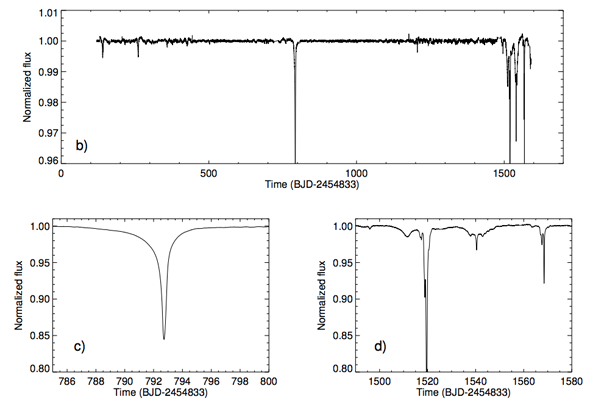
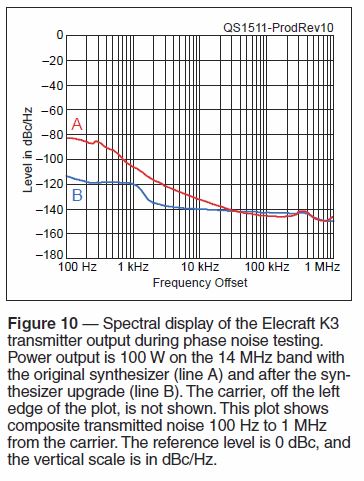
Wayne Burdick, N6KR, of Elecraft let us know that there was an error in the QST article about the KSYN3A Synthesizer Upgrade. The original graph in the QST article showed an improvement in phase noise at close-in frequencies, but it also showed a significant worsening of the phase noise beyond 10 kHz. THIS CHART WAS INCORRECT. The Upgrade does, in fact, improve the phase noise performance as shown in the corrected graph above. A corrected version of the article appears here:
Thanks for letting us know about this Wayne. We have long been big fans of Elecraft and are proud that a picture of your KX3 appears on all of our blog pages under the headline “One of the Best Receivers in the World.”
Pete and I will continue our study and discussion of phase noise; as synthesizers make their way into more and more of our hombrew rigs it is important for us to understand the significance of this parameter.

Hackaday has an article today that is, for me, very timely. In our last podcast, Pete and I were discussing the meaning of the word “homebrew” in the world of Software Defined Radio. As always, Pete was closer to the cutting edge, while I remain mired in Ludite (one D please!) curmudgeonism, committed to RADICAL FUNDAMENTALIST HOMEBREWING. No chips and no menus for me please.
Today, the Hackaday guys came to my rescue with a blast from the past. Homebrew computers! Not that simple “buy a mo-bo and plug in some boards” stuff. No, REAL homebrew, so HB that they even made their own components. 1968. I can dig it! I should have gone down this road. I had the C.L. Stong book “The Amateur Scientist” IN MY HANDS. It had some great articles about relay-based computers. I could have been rich!
In those dark days of February 2015, when all the members of the SDR ESSB Panoramic Spectral Police were on my case over some imperfections in my 40 meter homebrew SSB signal, Rick, N3FJZ came to my rescue by sending me a great YouTube video of his reception of my new rig. Rick was using a wonderful homebrew Direct Conversion receiver with a really cool PTO. Here is my blog post on Rick and his receiver:
I want to share my excitement with you.
After 32 years as a ham, I finally had my first ever HF QSO on October
16, 2015, and on a homebrew rig no less! Oh the Joy of Emission!It was on 7.242MHz, 8:00 a.m. eastern on the “Woodpecker net”.
– Rig was based on the Bitx, using ZIA bidirectional amps.
– 20 Watts into a 80 meter full-wave loop up at 20 feet.
– 600 ohm homebrew open wire ladder line.
– Balanced antenna coupler inspired by the Annecke and Johnson matchbox
units.
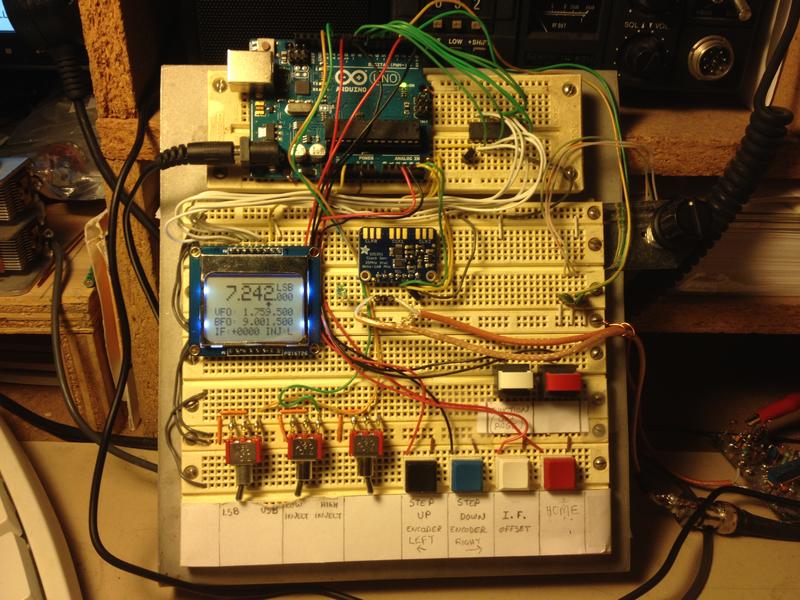
– and most importantly, the Arduino controller software and use of the
Nokia display were derived and inspired from Pete’s “Let’s Build
Something” code presented on his website, and the carrier
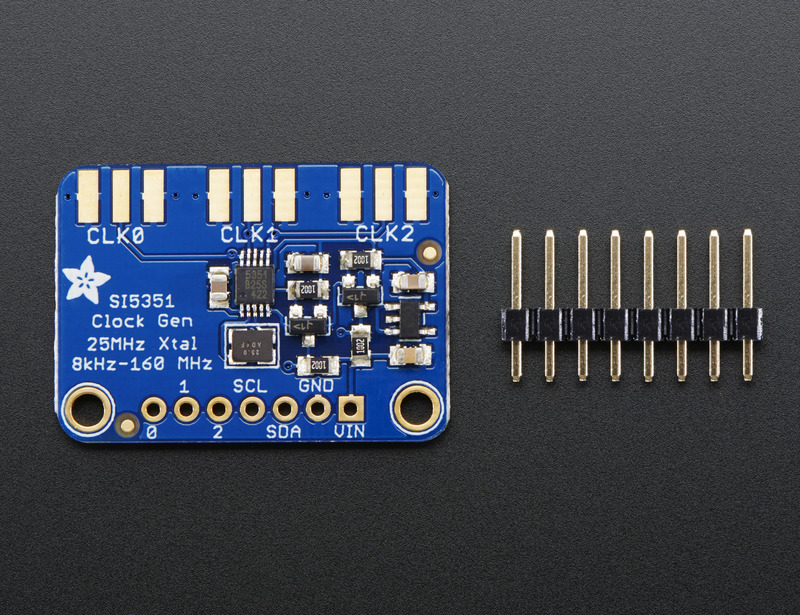
oscillator(BFO) & L.O. are generated by an Adafruit SI5351 clock
generator board. Thank you Pete.
See my N3FJZ look-up on QRZ.com for photos of my homebrew rig. I have
also put links to the SolderSmoke blog and to Pete’s web page and blog.
I just want to tell you both that your podcasts, websites, circuit
diagrams and stories were a huge part of my success. They were the
inspiration I needed on many dark days when my amplifiers would
oscillate, and my oscillators would simply smoke. At times I thought I
would never get on the air, but an hour listening to SolderSmoke podcast
would give me the drive venture on. Thank you!
***VERY IMPORTANT!!!!
Bill, during my first QSO, I was getting 5×8 and 5×9 signal reports
(with 20 watts!)from North Carolina, up-state New York, Michigan, and
Indiana, and I know we are only about 50 miles apart (I’m in north
central Maryland), so I believe we could probably achieve a successful
HB2HB contact if you want to try.
If you want to, and have the time, you could join me on the Woodpecker
net any Friday, Saturday or Sunday on 40 meters 7.242MHz 8:00 a.m.
eastern, or we could set-up a prearranged contact on a General class 40
meter frequency of your choosing. Let me know – making an HB2HB
contact with you would mean the world to me.
Pete, I also extend this invitation to you as well, but with only 20
watts on my end, it may be a stretch, but we could try.
Thank you both again for the joy you have given me with your pod-casts.
73
Rick – N3FJZ
17 October 2015
— Our audience IGNORES Pete’s guitar intro!
— Pete on QSO Today Podcast.
— Part 97, The Radio Art and International Goodwill.
BENCH REPORTS:
— Pete connects his new beam to the KX3.
— Pete puts the Bell-thorn on 20.
— Simple-ceiver update.
— Pete’s new drum machine: http://makezine.com/2015/10/15/learn-electronics-worlds-oldest-drum-machine/
— Bill fights noise in the DIGI-TIA.
— Bill fights power-line noise (and wins!).
— Drake 2B, skirts, reduction drives, and tuning rates.
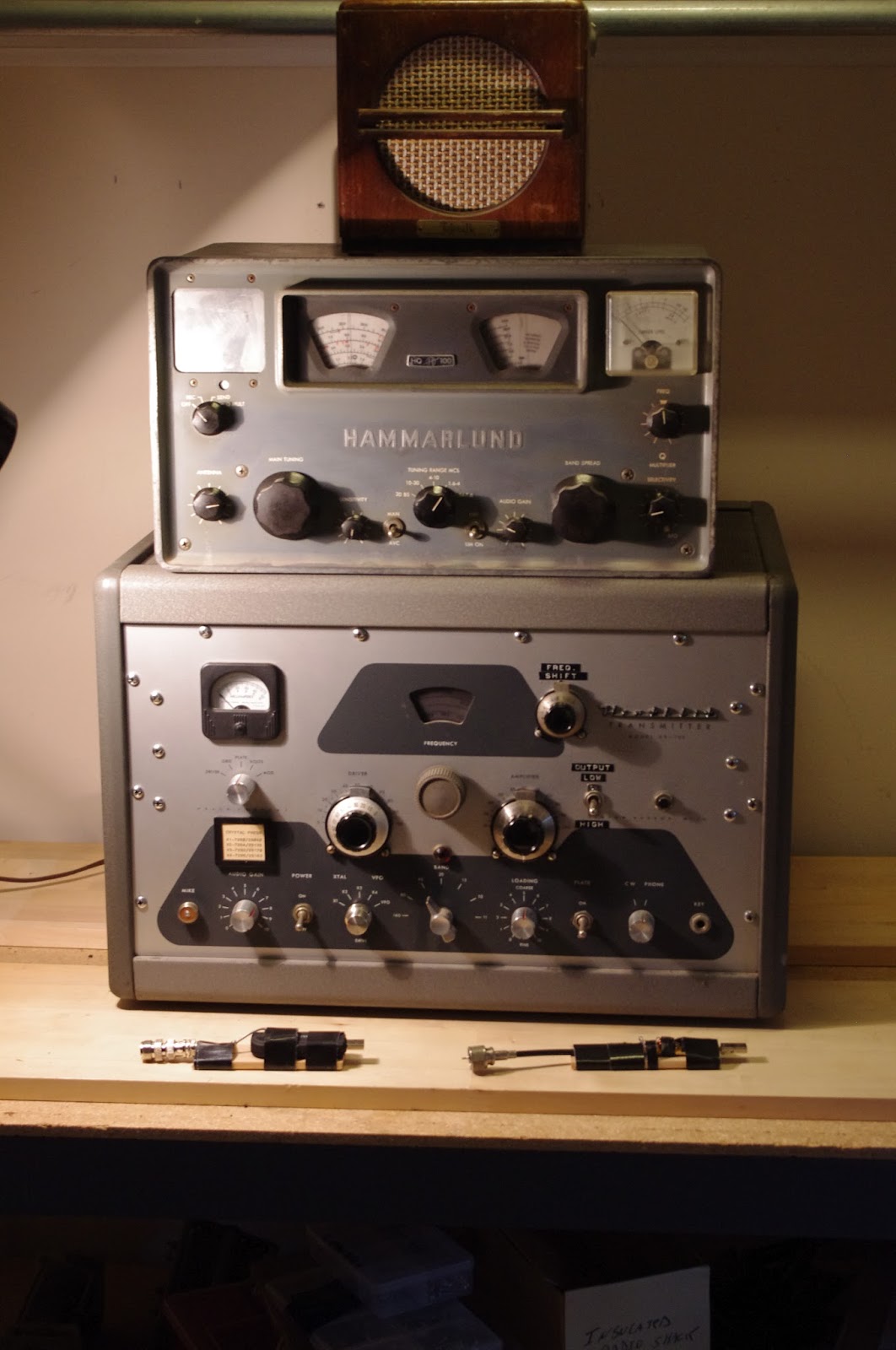
— Warming up (with!) the DX-100.
— N2CQR — N6QW First Ever HB2HB QSO.
— On 40 AM with an HT-37
— Listening to Chinese CubeSats.
— SDR Dongle as a bandwidth checker.
— SDR and the Future of Homebrew Radio.
— Bryan’s LBS Receiver.
— Dean’s First Ever QSO with his HB rig.
— 32 Mighty Mites Completed
— The Martian — Did Mark Watney REALLY have the Knack?
— MAILBAG:
Peter Parker’s New Book
Sparks from Ron Sparks
Armand’s 1Watter
Rogier’s pyro machine
BIG boxes from Tim KI6BGE
Mikele’s ZIA and N6QW rig collection
SPRAT 141 and SPRAT 164
17 October 2015
— Our audience IGNORES Pete’s guitar intro!
— Pete on QSO Today Podcast.
— Part 97, The Radio Art and International Goodwill.
BENCH REPORTS:
— Pete connects his new beam to the KX3.
— Pete puts the Bell-thorn on 20.
— Simple-ceiver update.
— Pete’s new drum machine: http://makezine.com/2015/10/15/learn-electronics-worlds-oldest-drum-machine/
— Bill fights noise in the DIGI-TIA.
— Bill fights power-line noise (and wins!).
— Drake 2B, skirts, reduction drives, and tuning rates.
— Warming up (with!) the DX-100.
— N2CQR — N6QW First Ever HB2HB QSO.
— On 40 AM with an HT-37
— Listening to Chinese CubeSats.
— SDR Dongle as a bandwidth checker.
— SDR and the Future of Homebrew Radio.
— Bryan’s LBS Receiver.
— Dean’s First Ever QSO with his HB rig.
— 32 Mighty Mites Completed
— The Martian — Did Mark Watney REALLY have the Knack?
— MAILBAG:
Peter Parker’s New Book
Sparks from Ron Sparks
Armand’s 1Watter
Rogier’s pyro machine
BIG boxes from Tim KI6BGE
Mikele’s ZIA and N6QW rig collection
SPRAT 141 and SPRAT 164
Nice work Dean! With this rig, Dean recently had his first ever ham QSO. FB OM.

As I’ve been saying on the podcast, contacts in which both operators are using homebrew gear are increasingly rare, especially on SSB, and especially, it seems, in the USA. So let’s chronicle these rare events. I’ve started a Label here on the blog called HB2HB. Send me reports of good HB2HB contacts — recent or past — and I’ll try to get them onto the blog.
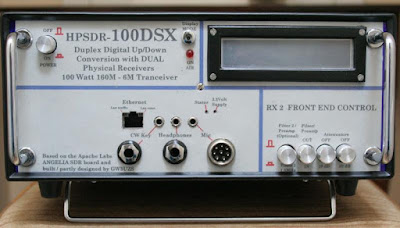
I’ve already described my recent QSO with Pete, N6QW. My second HB2HB from this location took place on 12 October 2015. I talked to Jeff GW3UZS in Cardiff, Wales on 17 meters. I was using my trusty BITX17. Jeff was running a much more sophisticated homebrew rig — see above. More details on Jeff’s beautiful rigs are on his QRZ.com page”
So send in HB2HB reports. These contacts are almost in “endangered species” category — they deserve to be preserved!
Michael Rainey’s underground shack in Vermont is undeniably cool, but these folks have REALLY gone deep. They are almost a mile down, blocking out that nasty cosmic ray QRN, building sensitive detectors to QSO with some extremely elusive DX: DARK MATTER.
SEE IF YOU CAN SPOT THE TEK ‘SCOPE.
Wonderful video. Thanks to Ira Flatow and Science Friday.
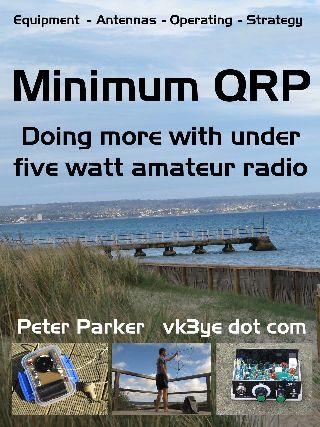
The wizard of Melbourne Beach, Peter Parker VK3YE, has written a book about QRP. Check it out here.
Peter is a true QRP guru. His Beach 40 transceiver is shaking the ether from locations around the world. I am really glad that he put that Melbourne dock on the cover. That dock has been the test site for many of Peter’s amazing creations. The railing has supported many great antennas. So many wonderful YouTube videos have been recorded there. There really should be a plaque or something…
Peter’s book is available as an e-book from Amazon. Details on how you can get it are here”
http://home.alphalink.com.au/~parkerp/miniqrp.htm
Thanks Peter for this important addition to the QRP literature.
I was telling Pete that thousands of years from now, archeologists will be puzzled when they find, in many remote corners of the world, strange homebrew electronic devices with the symbol “N6QW” emblazoned on them. Who, they will ask, was the cult leader N6QW, and how did he get his followers to build these devices?
Thanks to the work of Mikele 9A3XZ, Croatia will surely be a major center for research into the N6QW cult. Check out Mikele’s video. Stick around for the full 6 minutes and you will see the many N6QW rigs that Mikele has built. FB Mikele! Keep up the good work!