Our book: “SolderSmoke — Global Adventures in Wireless Electronics” http://soldersmoke.com/book.htm Our coffee mugs, T-Shirts, bumper stickers: http://www.cafepress.com/SolderSmoke Our Book Store: http://astore.amazon.com/contracross-20

SolderSmoke Daily News — Ham Radio Blog
Serving the worldwide community of radio-electronic homebrewers. Providing blog support to the SolderSmoke podcast: http://soldersmoke.com

Our book: “SolderSmoke — Global Adventures in Wireless Electronics” http://soldersmoke.com/book.htm Our coffee mugs, T-Shirts, bumper stickers: http://www.cafepress.com/SolderSmoke Our Book Store: http://astore.amazon.com/contracross-20
I liked this interview a lot, and I am sure SolderSmoke listeners will like it too.
Weir admits to NOT having the Knack, but Mark Watney clearly does have it.
Also, check this out: http://www.cannonade.net/mars.php#map
Our book: “SolderSmoke — Global Adventures in Wireless Electronics” http://soldersmoke.com/book.htm Our coffee mugs, T-Shirts, bumper stickers: http://www.cafepress.com/SolderSmoke Our Book Store: http://astore.amazon.com/contracross-20
I realize I’m very late in reading this book. Billy read it last winter. The movie is already coming out. I guess I didn’t see the Knack element in this story until I saw the movie trailer. Wow. This is a book and movie for us. Dude is stranded on Mars and has to fix the radio (with Hendrix playing in the background). I’m reading the book now (appropriately, on my I-phone). I find myself thinking about the Elser-Mathes Cup.
More on the book here: https://en.wikipedia.org/wiki/The_Martian_(Weir_novel)
From the Wiki article:
Andy Weir, the son of a particle physicist, has a background in computer science. He began writing the book in 2009, researching related material so that it would be as realistic as possible and based on existing technology.[4] Weir studied orbital mechanics, astronomy, and the history of manned spaceflight.[6] He said he knows the exact date of each day in the book.[7]
Having been rebuffed by literary agents when trying to get prior books published, Weir decided to put the book online in serial format one chapter at a time for free at his website.[4] At the request of fans, he made an Amazon Kindle version available at 99 cents (the minimum he could set the price).[4] The Kindle edition rose to the top of Amazon’s list of best-selling science-fiction titles, where it sold 35,000 copies in three months, more than had been previously downloaded free.[4][7] This garnered the attention of publishers: Podium Publishing, an audiobook publisher, signed for the audiobook rights in January 2013. Weir sold the print rights to Crown in March 2013 for over a hundred thousand dollars.[4]
The book debuted on the New York Times Best Seller list on March 2, 2014 in the hardcover fiction category at twelfth position.[
Our book: “SolderSmoke — Global Adventures in Wireless Electronics” http://soldersmoke.com/book.htm Our coffee mugs, T-Shirts, bumper stickers: http://www.cafepress.com/SolderSmoke Our Book Store: http://astore.amazon.com/contracross-20
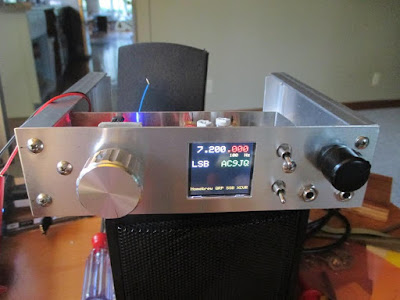
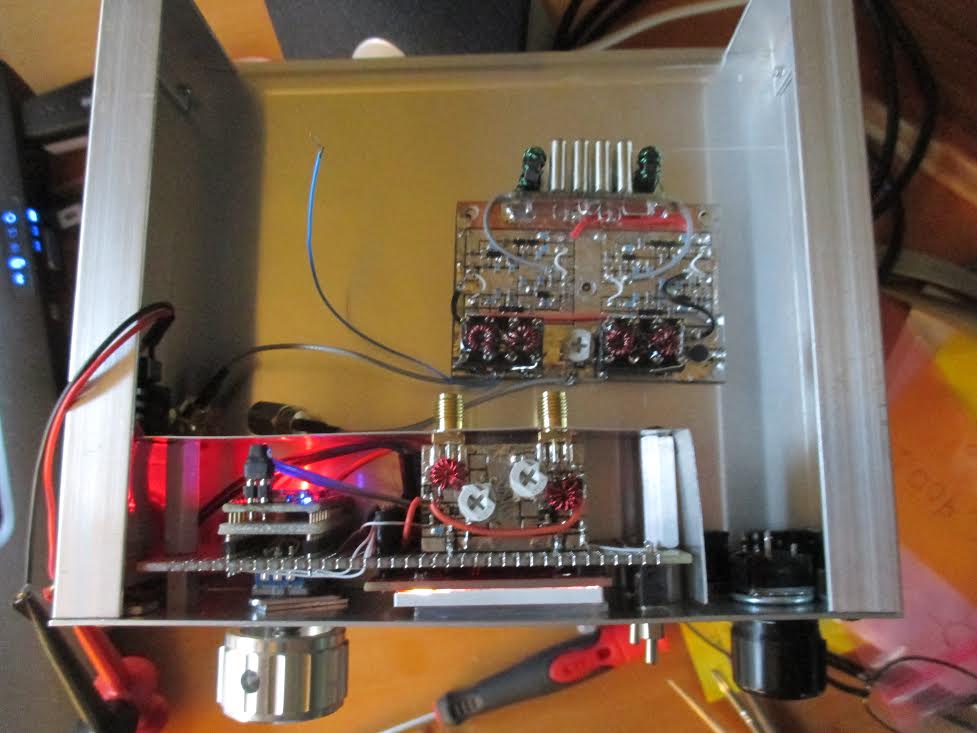
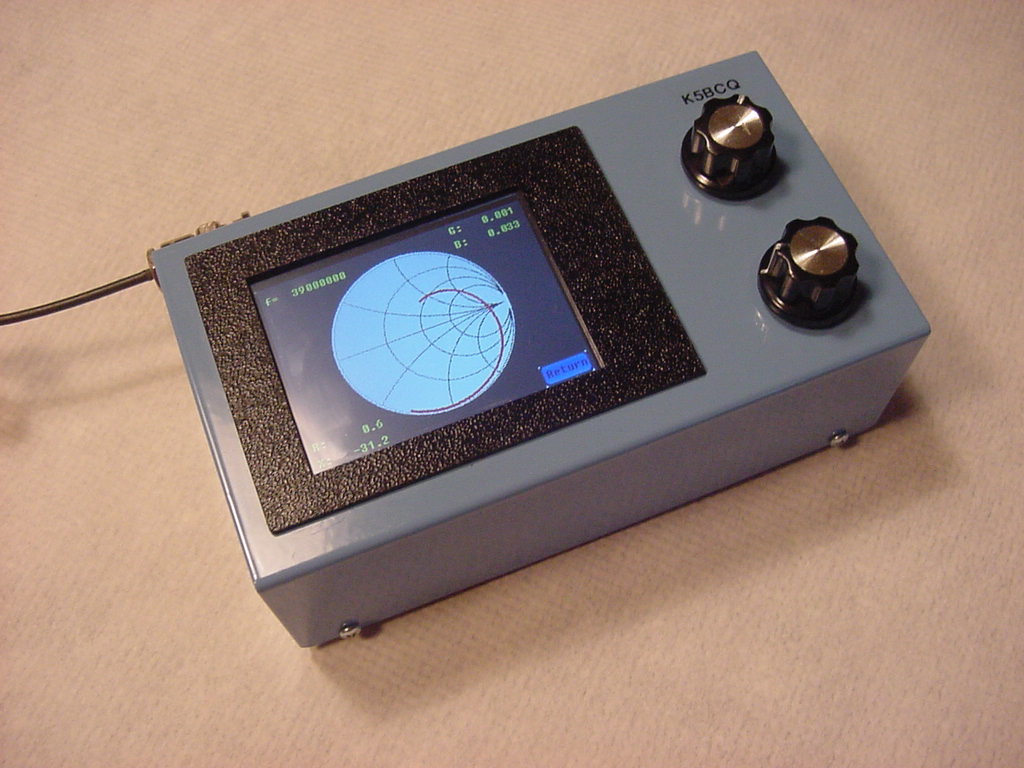
I had been sworn to secrecy for so long, I thought I was going to burst. I almost hinted at this in the last podcast. But I didn’t. I kept the secret. But now Farhan has made public his latest creation:
http://hfsignals.blogspot.in/p/specan-reboot-of-w7zoi.html
This is really great. I want to build one. I have to build one. I NEED one of these.
Great work Farhan. Thanks for bringing the ham community another amazing piece of gear.
Our book: “SolderSmoke — Global Adventures in Wireless Electronics” http://soldersmoke.com/book.htm Our coffee mugs, T-Shirts, bumper stickers: http://www.cafepress.com/SolderSmoke Our Book Store: http://astore.amazon.com/contracross-20

Amazon Print version: $5.54: https://www.createspace.com/5109055
LULU Print versions: $4.45 http://www.lulu.com/spotlight/soldersmoke
Our book: “SolderSmoke — Global Adventures in Wireless Electronics” http://soldersmoke.com/book.htm Our coffee mugs, T-Shirts, bumper stickers: http://www.cafepress.com/SolderSmoke Our Book Store: http://astore.amazon.com/contracross-20

1) We may be worrying about this too much. In all of the homebrew or kit rigs we’ve built over the years, I never recall much concern about the phase noise specs of the LC or crystal oscillator circuit that we were using. What were the phase noise stats on a Heath VF-1? How about the phase noise stats for the little Hartley oscillator in those DC receivers we made? No one even checked. Our rigs usually worked just fine. We would have noticed if they were extremely noisy, but if they were good enough, we left well enough alone. It doesn’t really make much sense for us to now be suddenly very concerned about the phase noise stats of the various DDS and PLL chips that are replacing those LC and crystal circuits, especially when the measurements show that they are usually in the same range as our old familiar oscillators.
2) The perfect can be the enemy of the good, and the “good enough.” We have a long tradition in ham radio of tolerating less-than-perfect or less-than-optimum parts. Remember, the NE-602 has some shortcomings, but we use it. We use it a lot. The IRF-510 wasn’t even designed to be an RF amplifiers, but we have pressed it into service for our PAs.
3) We should be willing to give a new part a try, and we should be pleased if it proves useful. We should be wary of untested claims re the unsuitability of a component. We have to avoid the “works in practice, but not in theory” situation. If something works well, doesn’t create additional QRM, is inexpensive, and fosters experimentation and homebrewing, we should be happy about being able to use it.
4) All electronic components — not just the Si5351! — produce noise. Resistors produce noise. Look at this:
” We can infer… that if we install phase-quiet oscillators in transmitter and receiver, we ought to be able to tune our receiver to a frequency closely adjacent to a very strong signal from the transmitter without encountering anything like phase-noise hiss. Yet, after an exhaustive phase-noise cleanup at transmitting and receiving sites, we test our communication system only to discover that the transmitter still emits broadband hiss! The culprit is transmitted amplifier noise. Just about every modern transmitter or transceiver consists of a high-gain, linear amplifier strip that amplifies the low-level output of oscillators, mixers and phase-locked loops to hundreds of watts or a few kilowatts. Because amplifier circuitry is not perfectly quiet, the output of the transmitter contains noise (hiss) in addition to the amplified signal. Transmitted along with the desired signal, this hiss can degrade the noise floor of nearby receivers-just as transmitted phase noise can. Where does amplifier noise come from? Thermal noise, for one thing. Electronic components operated at temperatures greater than absolute zero generate random electrical noise. This noise is broadband in nature. Greatly amplified in an audio amplifier-or greatly amplified in a radio transmitter, transmitted as broadband radio noise, received and converted to audio-it sounds like hiss. Random variations in electron flow within active amplifier components (transistors and vacuum tubes) are another source of amplifier noise. Transmitted as broadband radio noise, received and converted to audio, it also sounds like hiss.” Source: http://www.robkalmeijer.nl/techniek/electronica/radiotechniek/hambladen/qst/1988/03/page14/index.html
5) It seems that whenever a new technology or part comes along there will be those who issue dire warnings about how we can’t or shouldn’t use it. When transistors came along, there were those who said that hams shouldn’t homebrew with them because — it was argued — without spectrum analyzers we couldn’t possibly come up with spectrally pure signals.
6) We have to be careful lest this obsession with perfection and extremely high tech standards be used as a rationale for not homebrewing, or (much worse) as an argument against homebrew rigs on the ham bands. There is a bit of this going around. Get on 40 meters with rig that drifts a bit or that is not “on frequency” to within 10 Hz and you will find out what I mean.
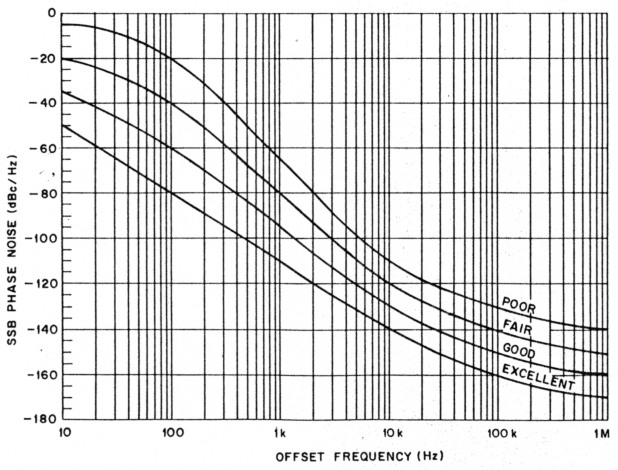
7) The Si5351 is a good part for our purposes. It does something new and VERY useful for us: It can put out BOTH our VFO and BFO frequencies. It makes it much easier for us to change bands and-or switch between USB and LSB. Its phase noise figures are fine. LA3PNA (citing measurements by KE5FX) notes: “The phase noise of the Si5351 is around -130dBc/Hz at 10KHz. This is quite decent, If compared to a Hartley or Collpits you would see little or no difference. Some of my measurements of published free running oscilators show phase noise in the -110dBc/Hz range!”
-130 dBc/Hz at 10 kHz puts this part on the “good” curve of this chart. From (http://www.robkalmeijer.nl/techniek/electronica/radiotechniek/hambladen/qst/1988/03/page14/index.html
We should give this little chip a chance! Give it a try!

Our book: “SolderSmoke — Global Adventures in Wireless Electronics” http://soldersmoke.com/book.htm Our coffee mugs, T-Shirts, bumper stickers: http://www.cafepress.com/SolderSmoke Our Book Store: http://astore.amazon.com/contracross-20

There seems to be a bit of hysteria on the alleged phase noise problems of the Si5351 chip. The library yields some words of wisdom that help keep things in perspective:
ARRL Handbook (2002) page 14.5: “You would be excused for thinking that phase noise is a recent discovery, but all oscillators have always produced it.”
Experimental Methods in RF Design page 4.12 “At first glance, phase noise sounds like a esoteric detail that probably has little impact on practical communications. This is generally true.” (EMRFD does, however, go on to discuss the problems that arise on both receive and transmit from EXCESSIVE phase noise.)
Our old (young!) friend Thomas LA3PNA e-mailed on this subject noting that the Si5351 chip produces less phase noise than many Hartley or Collpits oscillator designs. He provides a link to measurements (far better than mine!) of the noise from the Si5351:
http://nt7s.com/2014/11/si5351a-investigations-part-7/
NT7S puts it this way:
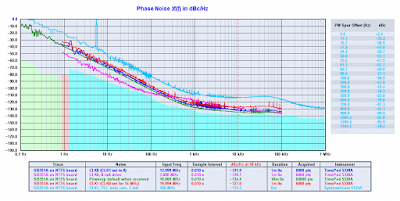
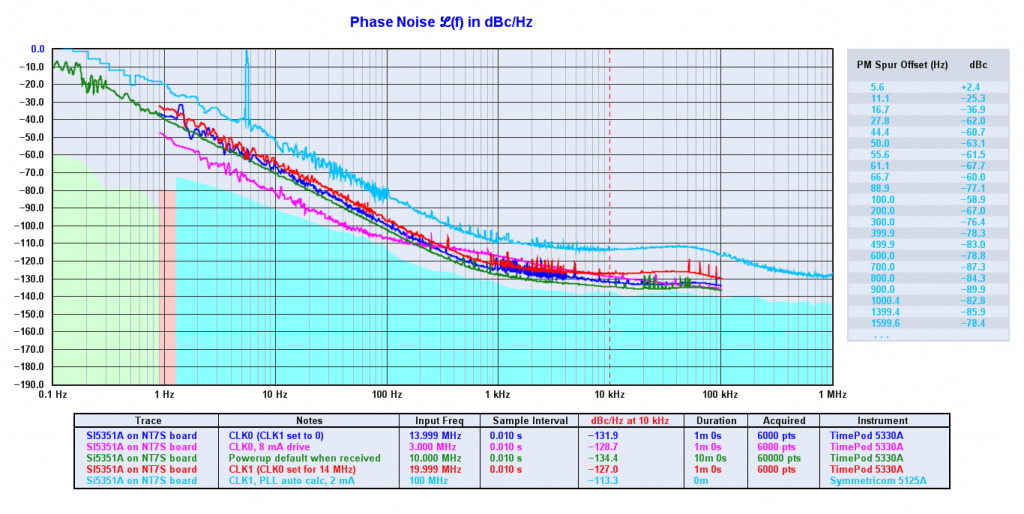
I believe that the plots speak for themselves fairly well. If you compare these results to the receivers in the Sherwood Engineering receiver table, I think you’ll see that the Si5351 acquits itself quite nicely for such an inexpensive part. Personally, I think the Si5351 is eminently usable for many receiver applications, except perhaps the most high-performance. Certainly for the price, it’s going to be extremely hard to beat. I hope this motivates those sitting on the fence to decide if the Si5351 will meet their needs.
Be careful in evaluating statements saying that the Si5351 phase noise is 3-6 db worse than an Si570. This makes it sound like there is a LOT of noise coming out! But again, it is important to keep things in perspective: The noise from one chip might be -156 dbc/Hz while the “worse” chip might be -150 dbc/Hz. That’s still not enough noise to make a lot of noise about.
The ARRL handbook recommended a very simple check for excessive phase noise: Set up a very strong signal in the band of your receiver. Then slowly tune to the signal, listening carefully for any build-up in noise as you approach the signal. I did this, and I didn’t hear any. As for transmit, well, as Pete points out, I think the spectrum police on 40 meters would let us know if our signals were broad or noisy! The ARRL Handbook notes that in a transmitter, “This radiated noise exists in the same proportion to the transmitter power as the phase noise is to the oscillator power…”
Our book: “SolderSmoke — Global Adventures in Wireless Electronics” http://soldersmoke.com/book.htm Our coffee mugs, T-Shirts, bumper stickers: http://www.cafepress.com/SolderSmoke Our Book Store: http://astore.amazon.com/contracross-20
There seems to be a bit of hysteria on the alleged phase noise problems of the Si5351 chip. The library yields some words of wisdom that help keep things in perspective:
ARRL Handbook (2002) page 14.5: “You would be excused for thinking that phase noise is a recent discovery, but all oscillators have always produced it.”
Experimental Methods in RF Design page 4.12 “At first glance, phase noise sounds like a esoteric detail that probably has little impact on practical communications. This is generally true.” (EMRFD does, however, go on to discuss the problems that arise on both receive and transmit from EXCESSIVE phase noise.)
Our old (young!) friend Thomas LA3PNA e-mailed on this subject noting that the Si5351 chip produces less phase noise than many Hartley or Collpits oscillator designs. He provides a link to measurements (far better than mine!) of the noise from the Si5351:
http://nt7s.com/2014/11/si5351a-investigations-part-7/
NT7S puts it this way:
I believe that the plots speak for themselves fairly well. If you compare these results to the receivers in the Sherwood Engineering receiver table, I think you’ll see that the Si5351 acquits itself quite nicely for such an inexpensive part. Personally, I think the Si5351 is eminently usable for many receiver applications, except perhaps the most high-performance. Certainly for the price, it’s going to be extremely hard to beat. I hope this motivates those sitting on the fence to decide if the Si5351 will meet their needs.
Be careful in evaluating statements saying that the Si5351 phase noise is 3-6 db worse than an Si570. This makes it sound like there is a LOT of noise coming out! But again, it is important to keep things in perspective: The noise from one chip might be -156 dbc/Hz while the “worse” chip might be -150 dbc/Hz. That’s still not enough noise to make a lot of noise about.
The ARRL handbook recommended a very simple check for excessive phase noise: Set up a very strong signal in the band of your receiver. Then slowly tune to the signal, listening carefully for any build-up in noise as you approach the signal. I did this, and I didn’t hear any. As for transmit, well, as Pete points out, I think the spectrum police on 40 meters would let us know if our signals were broad or noisy! The ARRL Handbook notes that in a transmitter, “This radiated noise exists in the same proportion to the transmitter power as the phase noise is to the oscillator power…”
Our book: “SolderSmoke — Global Adventures in Wireless Electronics” http://soldersmoke.com/book.htm Our coffee mugs, T-Shirts, bumper stickers: http://www.cafepress.com/SolderSmoke Our Book Store: http://astore.amazon.com/contracross-20


Thank you Brad Smith. Live long and prosper OM.
Our book: “SolderSmoke — Global Adventures in Wireless Electronics” http://soldersmoke.com/book.htm Our coffee mugs, T-Shirts, bumper stickers: http://www.cafepress.com/SolderSmoke Our Book Store: http://astore.amazon.com/contracross-20
Wow, Dean’s BITX with Termination Insensitive Amplifiers (3 of them) sounds really nice. And this is with a homebrew ladder filter (see below).
Dean will now add the driver and PA stages and plans on following Pete’s suggestion by making this a 20/40 rig.
Our book: “SolderSmoke — Global Adventures in Wireless Electronics” http://soldersmoke.com/book.htm Our coffee mugs, T-Shirts, bumper stickers: http://www.cafepress.com/SolderSmoke Our Book Store: http://astore.amazon.com/contracross-20
Shell, WA6KJN, has built some really cool homebrew rigs. And an airplane.
On his QRZ page Shell writes: “I have saved all my old homebrew gear. This is a tube SSB exciter using a pair of 6146’s in the final. It has a Collins mechanical filter. Built in the 70’s. It had a matching receiver also with a mechanical filter in the I.F.”
Check out the QRZ page for meore inspiration (and some good ideas on towers):
https://www.qrz.com/db/WA6KJN/
Our book: “SolderSmoke — Global Adventures in Wireless Electronics” http://soldersmoke.com/book.htm Our coffee mugs, T-Shirts, bumper stickers: http://www.cafepress.com/SolderSmoke Our Book Store: http://astore.amazon.com/contracross-20

In addition to having a very cool name, Rupert Goodwins, G6HVY, is a for-real tech guru:
Our book: “SolderSmoke — Global Adventures in Wireless Electronics” http://soldersmoke.com/book.htm Our coffee mugs, T-Shirts, bumper stickers: http://www.cafepress.com/SolderSmoke Our Book Store: http://astore.amazon.com/contracross-20
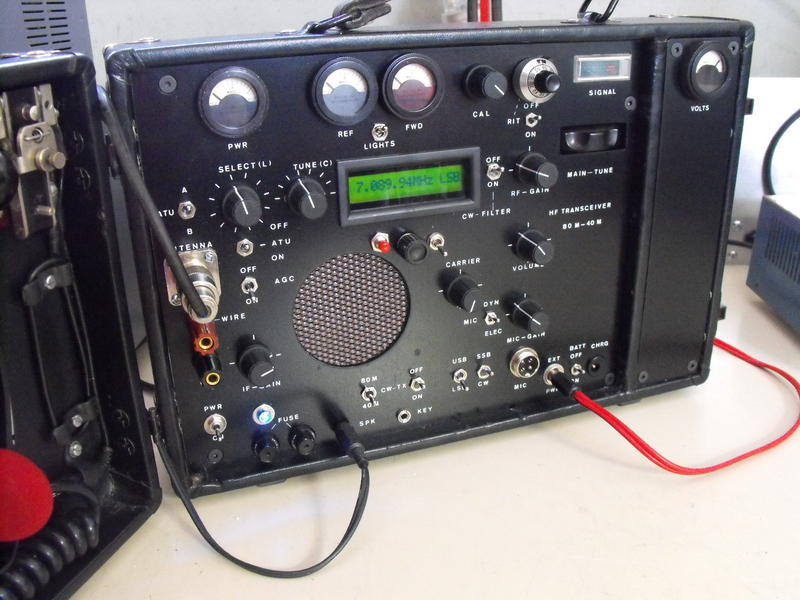
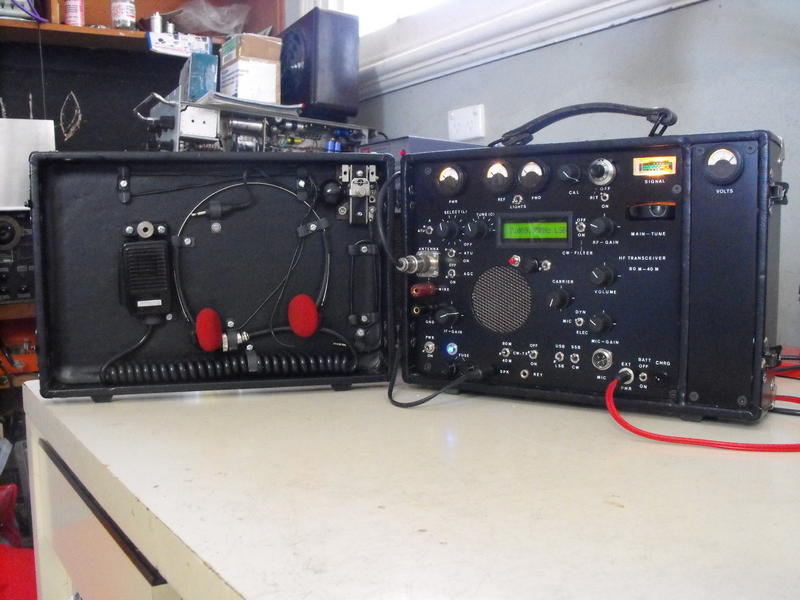
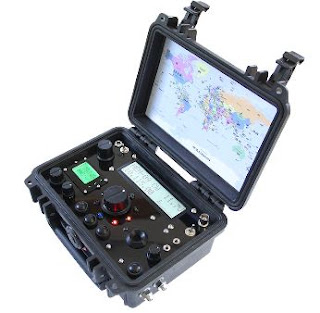
Brad Smith alerted me to this. Very cool. Hanz W1JSB is churning out some amazing trail-friendly rigs. I really like the tinted-translucent front panel.
Here is the site for Hanz’s company: http://radioset-go.com/
Here is his YouTube Channel: https://www.youtube.com/user/w1jsb/videos
Our book: “SolderSmoke — Global Adventures in Wireless Electronics” http://soldersmoke.com/book.htm Our coffee mugs, T-Shirts, bumper stickers: http://www.cafepress.com/SolderSmoke Our Book Store: http://astore.amazon.com/contracross-20
I have to keep reminding myself: This is not “plug and play.” These are not appliances.
After I got my 40 meter problems squared away, I was doing some testing on my beloved 17 meter BITX. I noticed something weird: With the CCI EB63A amp feeding my 17 meter Moxon antenna, as I raised the output of the BITX17 driver, at one point (at about half the max input power) the SWR would suddenly spike. Then, as I raised the drive level above that point, the SWR would go back to normal.
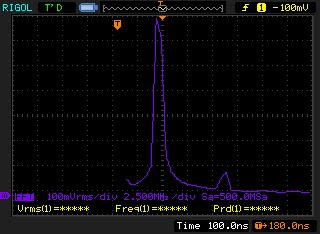
I looked at it on the ‘scope. I can see the signal go very ugly at the mid-level drive point. In the FFT display, I can see that there is a strong signal at around 435 kHz. The 18 MHz signal seems to be riding along on top of it. Take a look at the video above.
Additional clues:
I see no signs of the 435 kHz signal at the output of the BITX 17. It seems quite clean.
This problem disappears if I replace the Moxon with a dummy load.
This problem does not show up if I feed the EB63A with my almost identical BITX20. And I use the same LP filter on both 20 and 17 in the CCI amp.
Any suggestions? Has anyone had this kind of problem?
Allison and Pete have been helping me with this. Thanks to both of them.
Our book: “SolderSmoke — Global Adventures in Wireless Electronics” http://soldersmoke.com/book.htm Our coffee mugs, T-Shirts, bumper stickers: http://www.cafepress.com/SolderSmoke Our Book Store: http://astore.amazon.com/contracross-20
There are currently only 2 in the universe. And they have been talking to each other. Soon there will be more. Many more.
http://www.kitsandparts.com/1watter.php
http://www.1watters.com/
http://www.k7qo.net/onewatter.html
Chuck Adams explains (via the qrp-tech mailing list):
He has S/N 0001 and I have S/N 0002. These are the
only two 1Ws in the Universe. Yesterday (local time)
but 0000UTC today, I went to the lab to put a WWV
atomic clock above the desk for logging purposes.
I turned on the rig to listen while I put the screw into
the side of the shelf to hang the clock on. No warmup
drift. I’m tuned to 14.059MHz, the freq both Diz I start
out on and low and behold I hear him calling CQ. I pound
the paddle to call him and he went back to AF5XF in NTX.
Darn.
At 0031UTC I call him and I get a 229 and later a 339 and
he was a 539 here in AZ. So all the 1Ws in the Universe
have talked to each other. 🙂 The race is on, when and if
you get one to work us all. Or work us with the rig of your
choice and the power level of your choice….
Our book: “SolderSmoke — Global Adventures in Wireless Electronics” http://soldersmoke.com/book.htm Our coffee mugs, T-Shirts, bumper stickers: http://www.cafepress.com/SolderSmoke Our Book Store: http://astore.amazon.com/contracross-20