It turns out that Pete and I may not be the first homebrewers to make use of the word “basta!” At lunch time, while sitting near the Einstein memorial in Washington, I found a short article in SPRAT 83 (Summer 1995). In it, Robert PA3BHK presented some ideas for reverse polarity protection, and noted that his friend Peter PE1MHO had discovered an interesting phrase from antiquity:
“SPIRITUS TRANSISTOR BASTA”
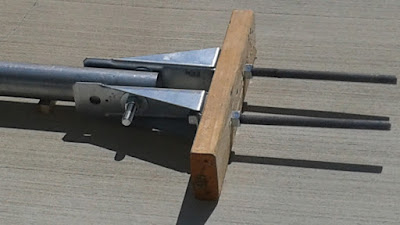
According to Peter this was the diagnosis of a classical Roman engineer when checking a transistorized PA that went dead after an accidental reversal of the polarity of its supply. Above we see that same engineer, obviously setting up a 2 meter Moxon.
Big doings at the Newbury Park Lab of N6QW. A new antenna is in the works. Lots of noodling underway. Much tribal knowledge is being dispensed (FREE!) via Pete’s blog:
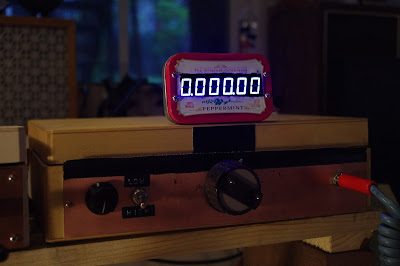
I got a six digit San Jian frequency counter for use with my BITX20. I was trying to figure out how to put it in a box and mount it on the rig when I realized that the counter fits almost perfectly in an Altoids tin. THE RADIO GODS HAVE SPOKEN.
I found the counter on Amazon. I use an eight digit version with my BITX17. But I think the six digit version is better (it fits in an Altoids tin!)
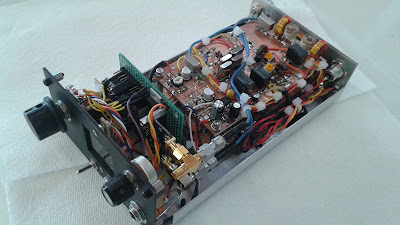
Mikele’s rig is a real “International Brotherhood of Electronic Wizards” kind of project. The Belthorn design is out of England. N6QW has added a lot of California influence. The Nokia screen adds a bit of Finland. And of course Mikele’s excellent construction makes this a profoundly Croatian rig.
We love seeing rigs in their “out in the open ” phase. Thanks Mikele!
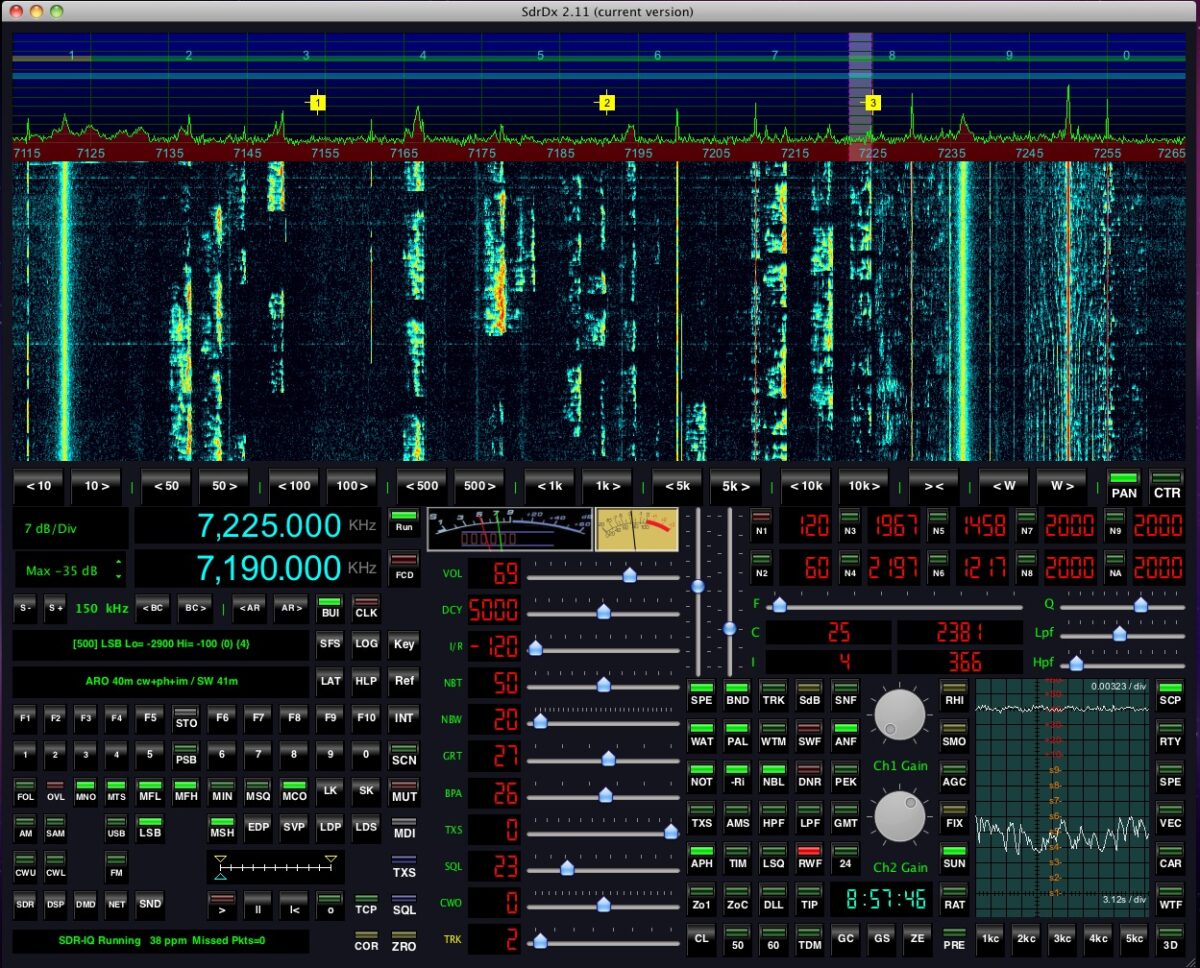
Ken Marshall G4IIB here the guy that wrote the SDR Primer in Sprat 162. I have been listening to your excellent podcasts. You guys cover a lot of ground in the May issue and touched on to the SDR dongle, its potential for future developments etc. I noted that you where going to buy another to cover VHF. Well if it ain’t too late consider this New version by Newsky they are already getting difficult to get a hold of and are only available in the USA. It uses an R820T2 tuner (better LNA) an upgraded and stable crystal oscillator, a reinforced antenna coax and socket. The one I managed to get hold of also had a modified PCB with solder pads for the the Q channel (pins 4&5) to connect the toroid. Incredable at 22 of your Bucks. See the pictures and read all about it on amazon.com.
All we need is for them to slot a 12 or 16 bit ADC in and we could have a truly great SDR receiver.
I noticed in your podcast you mentioned radio astronomy and satellite reception. Ironicaly back in 2013 this is how I started with SDR dongles. I read an aticle on the web on meteor scatter and started experementing with a dongle. Meteor scatter hunting is a bit like watching paint dry unless there is a known storm. So this led me on to the Funcube satellites. The signals from which although QRP 200mW are very stong and you can receive them on almost any antenna. The funcube dashboard software is available for free from AMSAT and alows you to download telemetry. You can also listen to amateur SSB an CW transmissions. There are lots of satellite tracking software available too. This then led onto weather satelite picture reception I built a 4 ele turnstile antenna for this but I found that I needed an LNA for reception at my location. I then started to listen to the amateur bands. Like you Bill I became interested in radio at the age of 11 and got licensed in the early 70’s but work commitments meant I had a 30 year absence from Ham Radio until I stumbled on these SDR Dongles. They got me back into the hobby and I joined the GQRP Club. I noticed that almost no one in the QRP fraternity was talking about RTL SDR hence I started writing the Primer and submitted it to George in late 2014 for publication in Sprat. As you know it appeared in the Spring Sprat and seems to have generated lots and lots of interest in the QRP community. I am delighted by this response and look forward to lots more interesting articles and podcasts. Have fun with your dongle.
Ken G4IIB
PS I wrote another article on getting these dongles to work under Linux. Linux uses completely different architecture so that the software used is completely different to windows. I notice that the software I use for Linux is also available on Mac OS which uses similar architecture (UNIX) so in theory it should also work on a Mac. Quite a few people have expressed an interest in getting a dongle to work on a Mac. As I do not poses a Mac I have not tried this out.
Just found a short Youtube QRP video which is quite fun. It’s of the radio side of Thor Heyerdahl’s cross-Pacific Kon-Tiki raft expedition in 1947, operating /MM with 7 watts. I found a longer description of what they had and what they did – including a thrilling tale of drying components on coral reefs while they desperately tried to make contact having washed up on an island – but not of the unusual parrot incident with a hydrogen balloon-lofted antenna during the voyage. That’s only in the video.
It’s all gripping adventure radio stuff, and shows what HF and a bunch of tubes could do before the digital satcom age.
“The expedition used call sign LI2B and carried three watertight radio transmitters. The first operated on the 40 and 20 meters, the second on 10 meters and the third on 6 meters. Each unit was made up entirely of 2E30 vacuum tubes providing 10 W of RF input. As an emergency backup, they also carried a German Mark V transceiver originally re-created by Britain’s Special Operations Executive in 1942. Other equipment included a hand-cranked emergency set of the Gibson Girl type for use on the maritime bands, a special VHF set for contacting aircraft and two British Mark II transmitters. The Kon-Tiki also carried a National Radio Company NC-173 receiver. Dry batteries and a hand-cranked generator supplied the power.”
As per your discussion with Pete in #177 I can indeed confirm that the correct pronunciation of Belthorn is “Bell-Thorn,” like Bell and Thorn concatenated. I named the design the “Belthorn SSB IF Module” in honour of the village I was living in at the time I developed it. I wanted to put the village on the map and in doing so leave my mark.
The design was published as a two part article in RadCom May/June 2000 intended to offer an alternative to the Plessey SL600/1600 IF strips of the late 70s early 80s. These integrated designs opened up simple SSB construction to many but by the mid 80’s sources of SL600/1600 ICs had all but dried up. I thought that a new design using readily available parts would be worth developing to offer a simple and repeatable basis for building an SSB transceiver.
From the emails I’ve received over the years it was and still is a popular project with many hundreds if not thousands having been built around the world. When the MC1350 IF amplifier became an endangered species I returned to the drawing board to produce a new version using a home brew diode DBM front end, a simple cascode IF stage and NE/SA612 product detector/modulator. An interesting feature of this was an AGC system based around an 8 pin 12F683 PIC. This new design offered considerable simplification and retained excellent performance. It was christened the “Eden SSB IF Module” after the Eden Valley where I now live in the north of England. It formed part of a transceiver project published on Yahoo Groups (Search for Eden 9). The gentleman who created the Yahoo Groups site mistook my schematic revision number (9) to be part of the name, and so it unwittingly became Eden9!!! Fortunately the NE/SA612 remains in production although should it become obsolete I would probably make things right by bringing out a yet another version of the IF strip, perhaps with a switching mixer. Here are a couple of links from the “old world” to give you a flavour of Belthorn the village and Belthorn the design;
The origin of the name “Belthorn” is quite interesting – although of little relevance to radio! Before the industrial revolution the village used to be on a pack horse route. to this day there is a house at the top of the village called “Bell in the Thorn” many years ago this used to be an inn. It’s thought that it takes its name from when a Bell hung in a thorn bush or tree nearby was used to signal when a horse change over was required to carry loads up and down the hill, probably from the mines or quarries on the nearby moors.
The link for the “Eden9” which you may find interesting is; https://groups.yahoo.com/neo/groups/eden9/info There is a power point presentation in the files section which describes the project and which features a section on receiver design. It may be a useful primer for those interested in the design process.
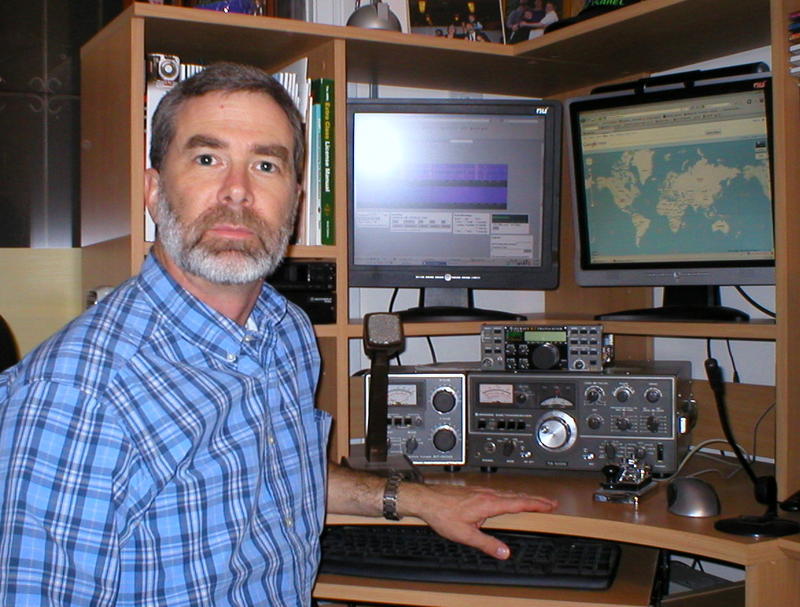
Last week I was interviewed by Eric 4Z1UG for his podcast “QSO Today.” I was at first reluctant to do this, simply because of time constraints: I already have difficulty finding the time to record SolderSmoke. But when I listened to Eric’s interview with Wayne Burdick N6KR of Elecraft, and learned that they had been teenage ham radio friends, I wanted in! Our interview was a lot of fun. You can listen to it here: http://www.qsotoday.com/podcasts/n2cqr or via ITunes.
Please help Eric out by subscribing to his podcast and by linking to his site. I’m sure he’d appreciate comments on our interview.
Anniversaries: Pete Juliano — One year with the podcast BITX20 — Ten years of homebrew fun SolderSmoke Podcast: Ten years of podcasting
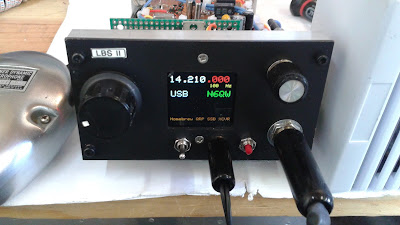
Bench Report: Pete’s ZIA and LBS II Bill messes around with old microphones
Looking ahead: Pete plans antennas Bill lusts after ladder line (spurred on by Farhan’s new blog)
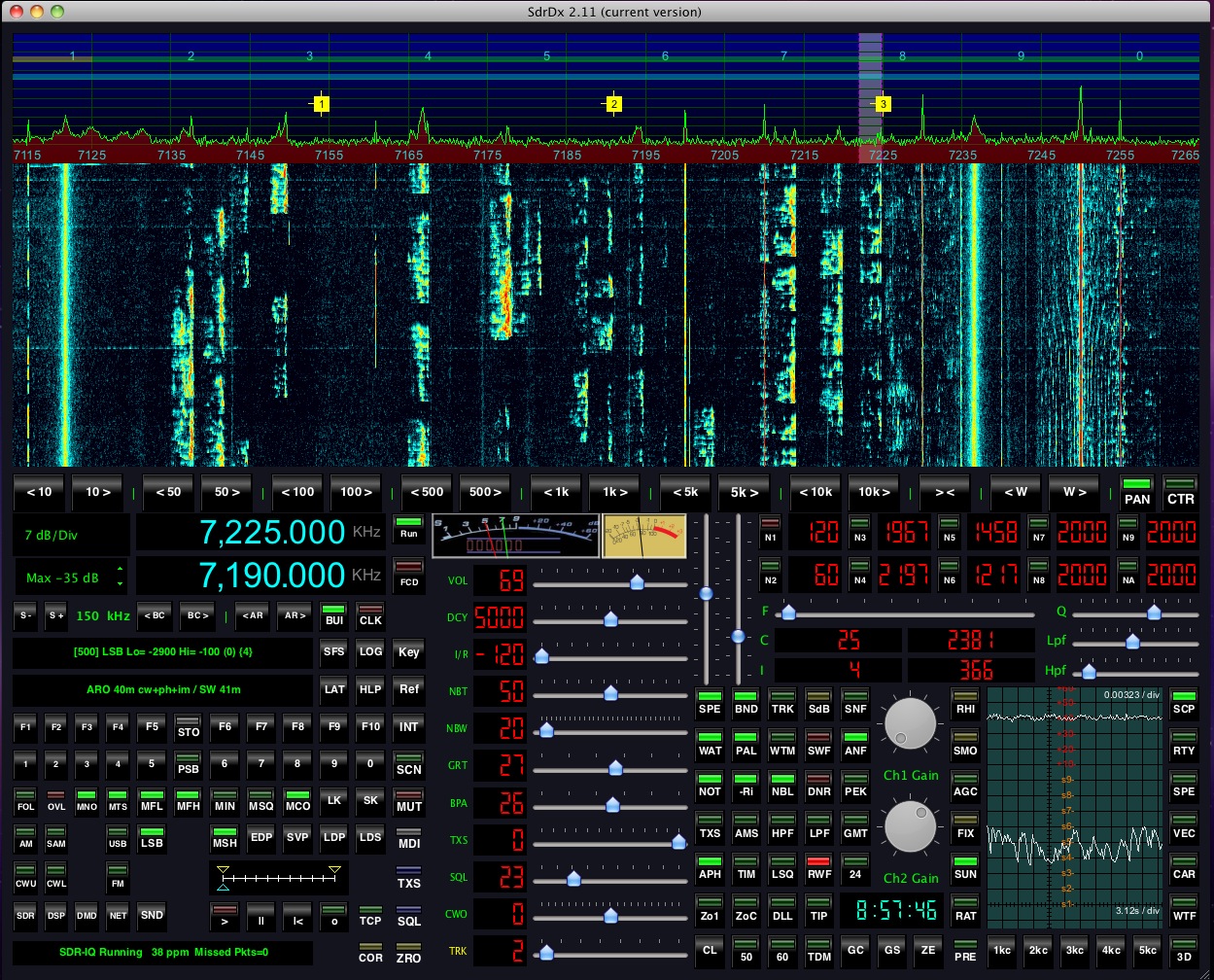
On the Air Reports: Pete on 20 with ZIA and LBSII Bill having fun on 40 (even with the Spectral Purity Police) Bill tries rock-bound QRPp. It is hard. (Spoiled by QRO BITX luxury) Bill’s verdict: BITX40 with Yaesu filter, Si5351, and TIA best of the 3 rigs. Catching Cubesats with Pete’s SDR Dongle
Digitizing old paper logs (and finding a lot more HB rigs) Interviews with Eric 4Z1UG on QSO Today Podcast FDIM interviews by Bob Crane
Peter Parker’s review of DSB kit
MAILBAG: Parts from W8NSA Colin’s tuna Tin Mighty Mite Dean’s Tiny Tia Bryan’s MMM dreams Armand braves the heat at the Manassas Hamfest
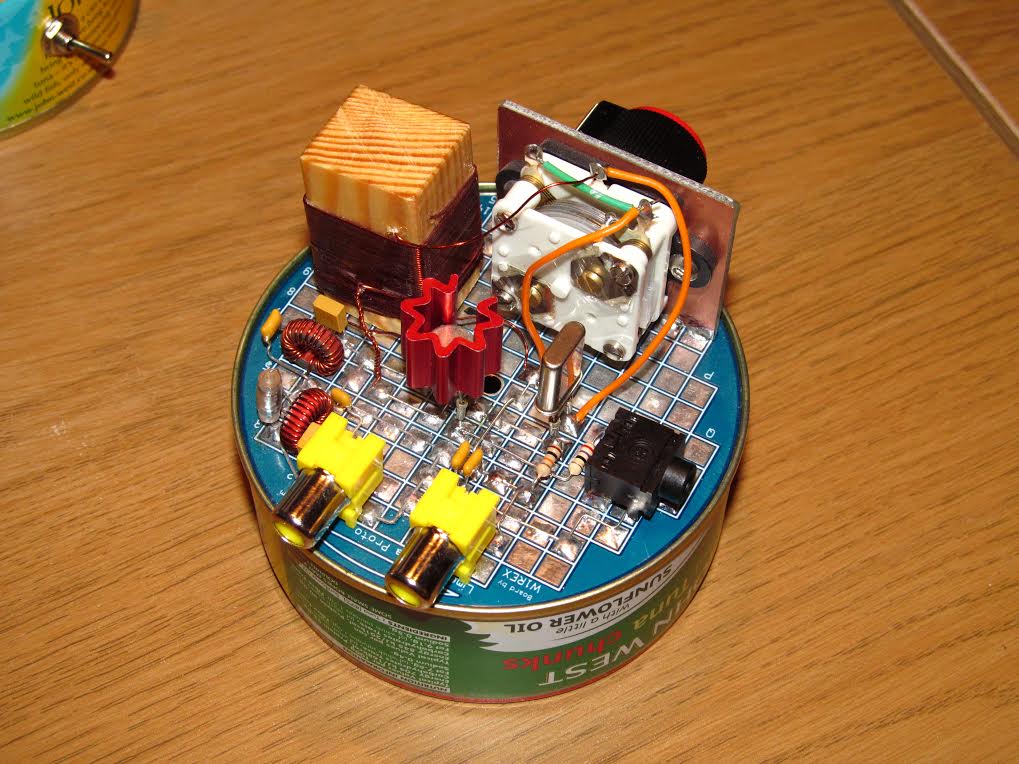
You will remember Colin as the builder of that beautiful BITX20 that he first used from his backyard and later used with great success from a hilltop in Northern England. In this video we see Colin demonstrating his Michigan Mighty Mite. Lots of soul in that little machine! Colin notes that this rig worked well from the start. The Radio Gods were obviously pleased by his use of a tuna tin as the chassis. I think they also liked the MePads from W1REX and the Tek 465 ‘scope. And of course the T-shirt was obviously a key element in Colin’s success.
Here is that beautiful BITX, now equipped with an internal speaker:
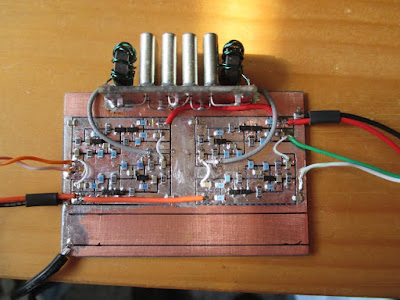
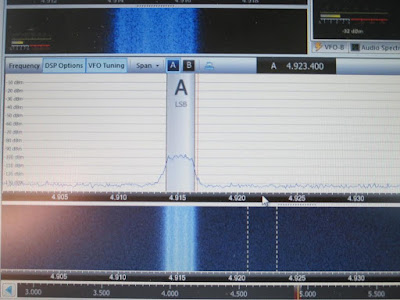
I’ve been on kind of a building hiatus due to various issues, but after seeing the work being done with the termination insensitive amplifiers I had to start noodling again…..as Pete would say. Well I have decided to build a TIA (ZIA according to Pete) SSB transceiver. I’ve decided to homebrew everything including the DBM, crystal filter, and even the Si5351 module. As I wait for more parts to come in, I wanted to show the 2 TIA amps and crystal filter assembly I’ve built. I’ve included a screenshot of the pass band response through the amps and the crystal filter. It looks the same in both directions and everything fits into an area of 2 x 2.5 inches. With the space left on the board, I hope to be able to put my SBL-1 clones on as well. I follow up as I get more completed.
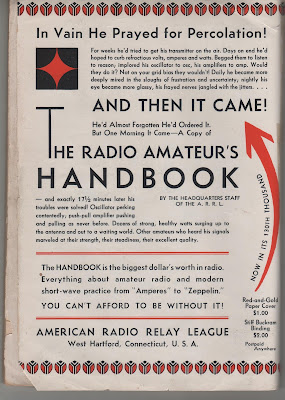
This ad is from the December 1931 issue of QST. This copy has a LOT of mileage on it. In 1993 or 1994, David Cowhig (now WA1LBP) was living in Okinawa Japan and was operating as 7J6CBQ. I was living in the Dominican Republic and operating as N2CQR/HI8. We were both contributing to a 73 magazine column (as “Hambassadors”!) and we were both in the Foreign Service. I wrote to David — he wrote back, sending me some old QSTs, including the one from which the above ad is taken.
This ad shows that many of the homebrew/troubleshooting woes that we face today are very old. And that having access to good technical books is very important when you are trying to overcome these difficulties.
I found Peter’s recording of the DSB signal being received by a DC receiver to be very interesting. We’ve long been warned about the very ironic incompatibility of DSB rigs and DC receivers.
In “W1FB’s Design Notebook,” Doug DeMaw wrote (p 171): It is important to be aware that two DSSC (DSB) transmitters and two DC receivers in a single communication channel are unsatisfactory. Either one is suitable, however, when used with a station that is equipped for SSB transmissions or reception. The lack of compatibility between two DSSC (DSB) transmitters and two DC receivers results from the transmitter producing both USB and LSB energy while the DC receiver responds to or copies both sidebands at the same time.” Bummer.
In essence, we’ve been warned that the simple DSB/DC rigs we’ve put on the air cannot communicate satisfactorily with similar rigs. We are, it seems, doomed to only speak with SSB/Superhet rigs.
The later portion of Peter’s second video allows us to hear just what happens when we try to listen to a DSB signal with a DC receiver: It sounds, well, unsatisfactory. I was trying to figure out why. Here are some ideas:
Simplify things by assuming we are transmitting only a single audio tone of 1000 Hz through our DSB transmitter. The rig’s VFO is at 7100 kHz. The 1 kHz tone results in signals at 7101 and 7099 kHz. Along comes somebody with a Direct Conversion receiver. If he were able to put (and keep) his receiver oscillator on EXACTLY 7100 kHz, he would end up (by taking the difference products from the product detector) with a 1 kHz tone resulting from the 7099 kHz signal AND a 1 kHz tone from the 7100 kHz signal. But there would be phase differences between these two signals, so you would end up with a less than pure 1kHz tone. (Did I get that right?) And if — as is likely — your local oscillator is a bit off frequency you’d get a real mess. If for example the local oscillator was at 7100.1 kHz, you’d have tones at 900 Hz (7100.1 – 7101) and 1.1 kHz (7100.1 – 7099). Yuck.
You might think you could just use the local oscillator in your DC receiver to replace the carrier in the DC receiver, turning it into an AM signal, then use an envelope detector as you would with any AM signal. But not so fast! For this to work your local oscillator would have to be not only at the same frequency as the original carrier, but also in the same phase. That is hard to do. (Hard, but possible — that is what they do with synchronous detectors using phase locked loops.)
I think you can actually hear many of the DC-DSB problems as Peter tries to tune in the DSB signal of VK7HKN using the DC receiver in the MDT transceiver. It is indeed unsatisfactory. But don’t worry. It is highly unlikely that when using a DSB rig you will encounter another DSB rig. I speak from experience on this. Pity.
I have been a listener of the Soldersmoke Podcasts for several years now and I have worked my way through most of the back episodes of the podcast. It is terrific production and has taught me so much about radio electronics. I have also read all of your books. Thanks for what you do for this hobby.
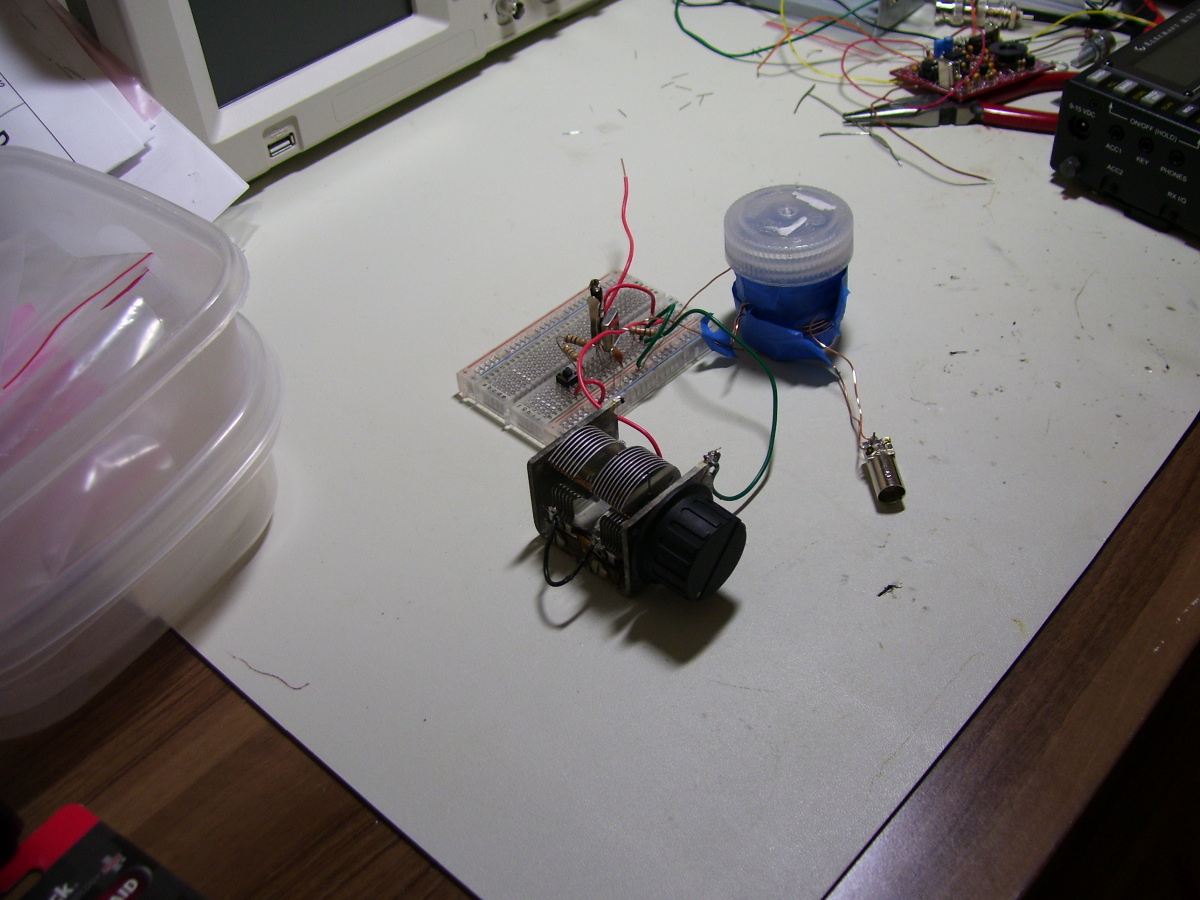
Attached is a photo of my recently completed Michigan Mighty Mite. The FFT function in my scope confirms a good clean signal and it sounds great when I listen to it on another radio. I am sure that the photo depicts one of the worst looking MMMs to date. I built it on a solderless breadboard as I have never built anything using Manhattan or ugly construction techniques. It was a great introduction to very basic homebrew electronics.