Hi Bill,
Our book: “SolderSmoke — Global Adventures in Wireless Electronics” http://soldersmoke.com/book.htm Our coffee mugs, T-Shirts, bumper stickers: http://www.cafepress.com/SolderSmoke Our Book Store: http://astore.amazon.com/contracross-20
SolderSmoke Daily News — Ham Radio Blog
Serving the worldwide community of radio-electronic homebrewers. Providing blog support to the SolderSmoke podcast: http://soldersmoke.com
Hi Bill,
Our book: “SolderSmoke — Global Adventures in Wireless Electronics” http://soldersmoke.com/book.htm Our coffee mugs, T-Shirts, bumper stickers: http://www.cafepress.com/SolderSmoke Our Book Store: http://astore.amazon.com/contracross-20
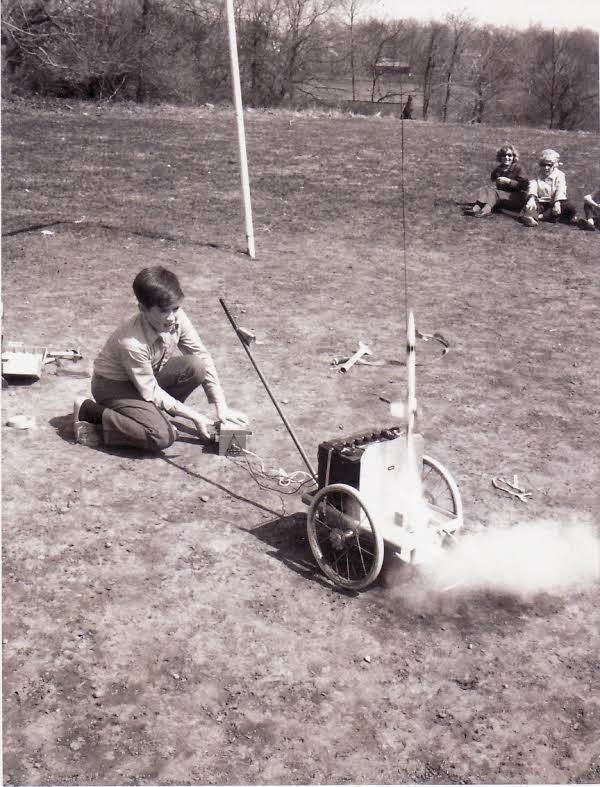
Through Facebook, I have re-established contact with my fellow members of the Waters Edge Rocket Research Society. That’s me, age 10, hitting the button on a homebrew launch controller.
Our book: “SolderSmoke — Global Adventures in Wireless Electronics” http://soldersmoke.com/book.htm Our coffee mugs, T-Shirts, bumper stickers: http://www.cafepress.com/SolderSmoke Our Book Store: http://astore.amazon.com/contracross-20
SolderSmoke Podcast #174 is available:
http://soldersmoke.com/soldersmoke174.mp3
March 28, 2015
Happy Arduino Day!
Pete’s Belthorn III Transceiver (with cool color display)
Bill’s BITX 20 (that used to be a BITX20/40)
AD9850 DDS added to Barebones Superhet
Jean Shepherd on Parasitic Oscillations, Obsession, and Madness
Simple Test Gear for the Homebrewer
Digital Oscilloscopes and their amazing capabilities
Dongles and other great stuff in SPRAT 162
The BIG St. Patrick’s Day Solar Flare
VK6MV’s Amazing Rhombic (+)
VK7XX (Dos Equis!)
A Bit of BITX History
Pete going KX3 QRO
Our book: “SolderSmoke — Global Adventures in Wireless Electronics” http://soldersmoke.com/book.htm Our coffee mugs, T-Shirts, bumper stickers: http://www.cafepress.com/SolderSmoke Our Book Store: http://astore.amazon.com/contracross-20
Dave W2DAB alerts us to tomorrow’s celebration of World Arduino Day. https://day.arduino.cc/#/
Dave says the events often produce some interesting video.
We will attempt to participate by doing something Arduino-ish during SolderSmoke 174, which is scheduled for tomorrow.
Forza Banzi! Viva Arduino!
Our book: “SolderSmoke — Global Adventures in Wireless Electronics” http://soldersmoke.com/book.htm Our coffee mugs, T-Shirts, bumper stickers: http://www.cafepress.com/SolderSmoke Our Book Store: http://astore.amazon.com/contracross-20

I know this will have some of you thinking that I have been kidnapped or drugged or brain-washed (by N6QW!) or something, but the truth is I’m just being drawn in by that fascinating little color screen. This is the beautiful work of Rich, VE3MKC. He has also updated his blog and provided a very nice diagram and written description of all the I and Q action: http://rheslip.blogspot.ca/ Thanks Rich!
Our book: “SolderSmoke — Global Adventures in Wireless Electronics” http://soldersmoke.com/book.htm Our coffee mugs, T-Shirts, bumper stickers: http://www.cafepress.com/SolderSmoke Our Book Store: http://astore.amazon.com/contracross-20
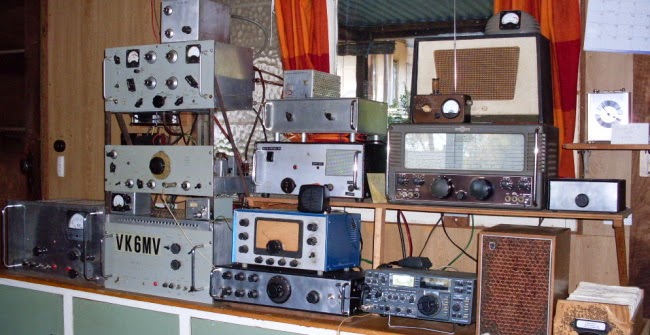
Last week during the big St. Patrick’s day solar eruption/CME impact I (with the help of the radio gods) managed to work Roy VK6MV in Western Australia. (A video of Roy working QRP pedestrian mobile stations in the UK appears above.) Could it have been that that miraculous contact was ALSO my first ever homebrew SSB to homebrew SSB QSO? I e-mailed Roy to find out. Alas, it was not. But OM Roy sent some interesting info on his station and especially his antenna. Excerpts from his e-mail:
Hi Bill
Thanks for the qso and the email.
yes another ‘fadeout’ but we have had many over the years haven’t we ?
Things have changed a lot since 1963 when I had my first license as G3SML.
We came to Aus in 1977 with 3 sons and now have 24 Grandies 13 Grandchildren; 11 Great Grandchildren.
I liked the early Plessey IC’s when they came out ~
Carry on with home brew and get that personal enjoyment out of it, it gives you a boost I am sure. NO I was not on the home brew I was on the Icom IC740 which I bought about 5 years ago at the WA Hamfest it had a fault of jumping to different frequencies, etc. I could not find its intermittent fault at all, but on the internet a ‘W’ ham in your country posted the same fault with explanations etc,
and it cured it,
So I was on that Rig + a home brew linear pair of old 813’s in Grounded Grid and a Voltage doubler for the + 2 kv, I could not get the smoothing caps for that voltage so got hold of 3 metal canned ones 800 volt, then got some plastic drain pipe to insulate the cans from ground & then put them all in series with equalising resistors,
and it worked.
Yes I was on the rhombic ~ amazing antenna for a fixed point to point contacts ~
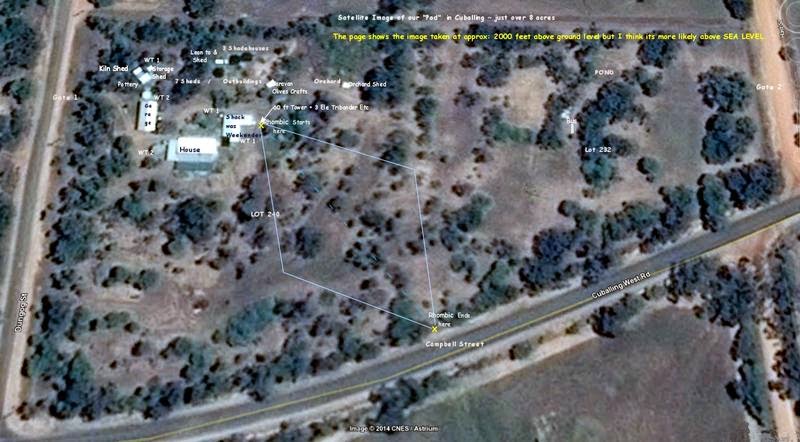
why a rhombic you may ask well when in the Uk I used to work VK2NN [and others] Tom with his farm of rhombics his setup much larger, and I thought one day I would love to put one up. Eventually with our moving to Aus’ then came down here with its 8+ acres the opportunity led itself to put one up, and as I used to work into Europe/UK a lot that direction picked. first I put one up a bigger one than now, but it did not work that good. Moral the longer you go the higher it needs to be
So a smaller version tried using the contours of the land at a height above sea level of 1260 feet asl helps. Using 12 gauge usa hard drawn copper wire I needed winches and turnbuckles etc to pull it up, one end is on the 60 ft tower, the others on assorted Wooden Poles +
The termination R for the rhombic is a 3 element TH3 Tribander ~
think of it why waste power into a whopper of a Resistor ~
this is not my idea but came from ~ Nano VK6UN why not connect it to another antenna with how to do it came from now SK Les Moxon G6XN
a clever man how to make a balun out of old ferrite rods from transistor radios,
Will close now my half a dozen lines of text are expanding to much
Cheers have fun Roy VK6MV
Our book: “SolderSmoke — Global Adventures in Wireless Electronics” http://soldersmoke.com/book.htm Our coffee mugs, T-Shirts, bumper stickers: http://www.cafepress.com/SolderSmoke Our Book Store: http://astore.amazon.com/contracross-20
I’ll be listening. 🙂
73,
–Kirk Kleinschmidt, NT0Z
Rochester, MN
Editor, 1990 ARRL Handbook
Technical Editor, Ham Radio for Dummies
QST Assistant Managing Editor, 1988-1994
Ham Radio Columnist since 1989 for:
Popular Communications
Monitoring Times and now,
The Spectrum Monitor (www.thespectrummonitor.com)
Our book: “SolderSmoke — Global Adventures in Wireless Electronics” http://soldersmoke.com/book.htm Our coffee mugs, T-Shirts, bumper stickers: http://www.cafepress.com/SolderSmoke Our Book Store: http://astore.amazon.com/contracross-20
Hi Bill,
I wanted to leave you feedback on your podcast.
I love it! Keep it up. I travel quite often in my work and listen to
all your podcasts.
Since my early teens in the late 70’s I started subscribing to
electronic magazines (which I have still keep all every issue). I just
found a site that has all the old electronic magazines scanned and
posted for all to read. What a resource!http://www.americanradiohistory.com
It has all the old Popular
Electronic Magazines, Radio Electronic Magazines, Modern Electronics,
Electronics Illustrated, etc, in pdf format. Information from the turn
of the century … Wow. Back when radio hobbyists made their own
chassis for their valve radios. Just google American Radio History and
it will be a top link. You might want to share this link with your
friends, and listeners.
I have purchased your Soldersmoke book from Lulu — Thumbs up!! Great Book.
Thanks again for sharing your experience with radio and the knack.
Greg Self
N8YCB
ps:
I have always called kluge – KLOO-guh .. and I don’t know why. 😉
Our book: “SolderSmoke — Global Adventures in Wireless Electronics” http://soldersmoke.com/book.htm Our coffee mugs, T-Shirts, bumper stickers: http://www.cafepress.com/SolderSmoke Our Book Store: http://astore.amazon.com/contracross-20
There I was. 0900 UTC (0 Dark Thirty local), the morning after the big March 17 St. Patrick’s Day Coronal Mass Ejection Impact. Solar Flux Index: 116. A Index: 117! I’d never seen the A Index that high. When I got home from work on March 17, I had turned on the BITX 20 and heard nothing but white noise. No signals. Nada. Zilch. So the following morning my expectations for 20 were quite low. I tuned across the whole band, again hearing nothing. But wait… there was one signal. And he was calling CQ. With an Australian accent. VK6MV! The only signal on the band. I called him with my recently fixed BITX20 (with .12 kW amp) and a dipole. No problem. We had a nice contact.
A look at Roy’s QRZ page shows that he is a fellow homebrewer. Clearly, the radio gods were making a statement here.
Our book: “SolderSmoke — Global Adventures in Wireless Electronics” http://soldersmoke.com/book.htm Our coffee mugs, T-Shirts, bumper stickers: http://www.cafepress.com/SolderSmoke Our Book Store: http://astore.amazon.com/contracross-20
I was really happy to get this encouraging message from Mark, K6HX. Mark is a real wizard — he has been deeply involved in the production of many of Pixar’s wonderful animated films. And his blog — Brainwagon — is always a good read. Mark offers good advice for software and hardware troubleshooting. Thanks Mark!
Hey Bill and Pete:
Just finished listening to your latest SolderSmoke on my commute
yesterday, and thought I’d drop you a line to let you know that I’m
really enjoying the “dynamic duo” format that you’ve adopted. Having
different ideas and different perspectives on the show, but with both
of you showing such great enthusiasm really makes the show a pleasure
to listen to. (Incidently, your audio for this last podcast seemed
much better to me, a couple of episodes seemed to be plagued with much
different levels between Pete, who was booming, and Bill, who
frequently seemed to be quite low. Whatever you did, keep it up!)
As a guy who does mostly computer/software engineering, I’m especially
liking Pete’s continual, good natured prodding of Bill to get with the
program and use more gadgets like the Arduino, the AD9850 and the
Si5351. 🙂 But what’s most valuable to me is when you guys engage
in the back and forth of debugging problems like your recent amplifier
feedback issues. And what I realized (and might come as some comfort
to Bill) is that most of the skills which you guys have developed to
understand and debug radio projects apply equally well to software.
Stop me if this seems familiar:
If you want to learn to program, you do it by programming. Pick a
simple project and try to get it working, then build on your success.
Don’t try to learn it all at once. Making a computer blink an LED is
a good start.
Make use of the resources of the Internet community. Look at what
other people are doing, look at their designs, and enlist their help
when necessary.
Keep notes about what works and doesn’t. Make an archive of all the
code you write. Examples that work can be helpful to create new code
that works.
Don’t just poke the program with a stick, hoping it will work if you
prod it the right way. Develop a theory of why it works, and test
that theory. If the theory is not born out in practice, then don’t
leave that code lying around in your program.
Don’t get too wedded to your idea about why a program may not work.
Test your assumptions, even the ones that you are sure of. Often
those hide the worst bugs.
Think about modularity. Build simple routines/modules that you can
reuse to build bigger programs.
Build on the shoulders of giants: using tested modules of other people
isn’t cheating. But eventually you may need to understand what is
inside these black boxes, so keep working on developing your skills.
Share your enthusiasm with others, via the Internet, Youtube or social media.
——————————————————————————————-
See Bill, you’ve already learned a lot of the lessons you need to be a
programmer, you just learned them all with respect to radios. They
will serve you well if you decide to take the plunge into tinkering
with programming. 🙂
On some of the ham radio related Facebook pages, I’ve been a little
annoyed lately that so many hams seem to lament that “nobody builds
anything anymore”. Ironically, I suspect these are the same sort of
people who decided to pile onto Bill’s amplifier project and skewer
him for its audio quality. If we want more experimentation in ham
radio, we are going to have to tolerate a little more failed (or at
least, not totally successful) experiments. But even beyond that, I
supect that there is quite likely more people (in absolute numbers)
doing homebrew now than in any time in decades. It’s an incredible
golden age for homebrew. We have great books out like EMRFD, great
mailing lists, vendors to sell us amazing parts at incredibly low
prices, and the Internet to share and learn. People like you two are
part of this. What are all these complainers doing to get people to
build stuff?
I have to really thank you, Bill in particular. While I’ve still not
gotten all the way to building my own transceiver, you got me back
into amateur radio, fueled my interest in beacons, QRSS, WSPR and
homebrew in general. And Pete’s approach to radio seems to be the
wedding of electronics and software that I find in sync with my own
ideas. I look forward to doing more projects, and hearing about
yours in the weeks and months to come.
Well done, sirs.
Mark (K6HX)
Our book: “SolderSmoke — Global Adventures in Wireless Electronics” http://soldersmoke.com/book.htm Our coffee mugs, T-Shirts, bumper stickers: http://www.cafepress.com/SolderSmoke Our Book Store: http://astore.amazon.com/contracross-20
Hi Bill,
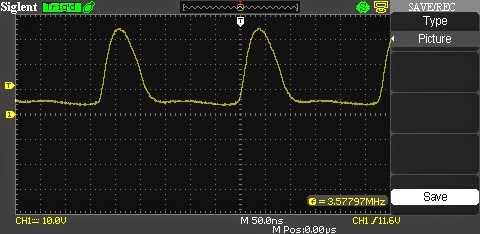
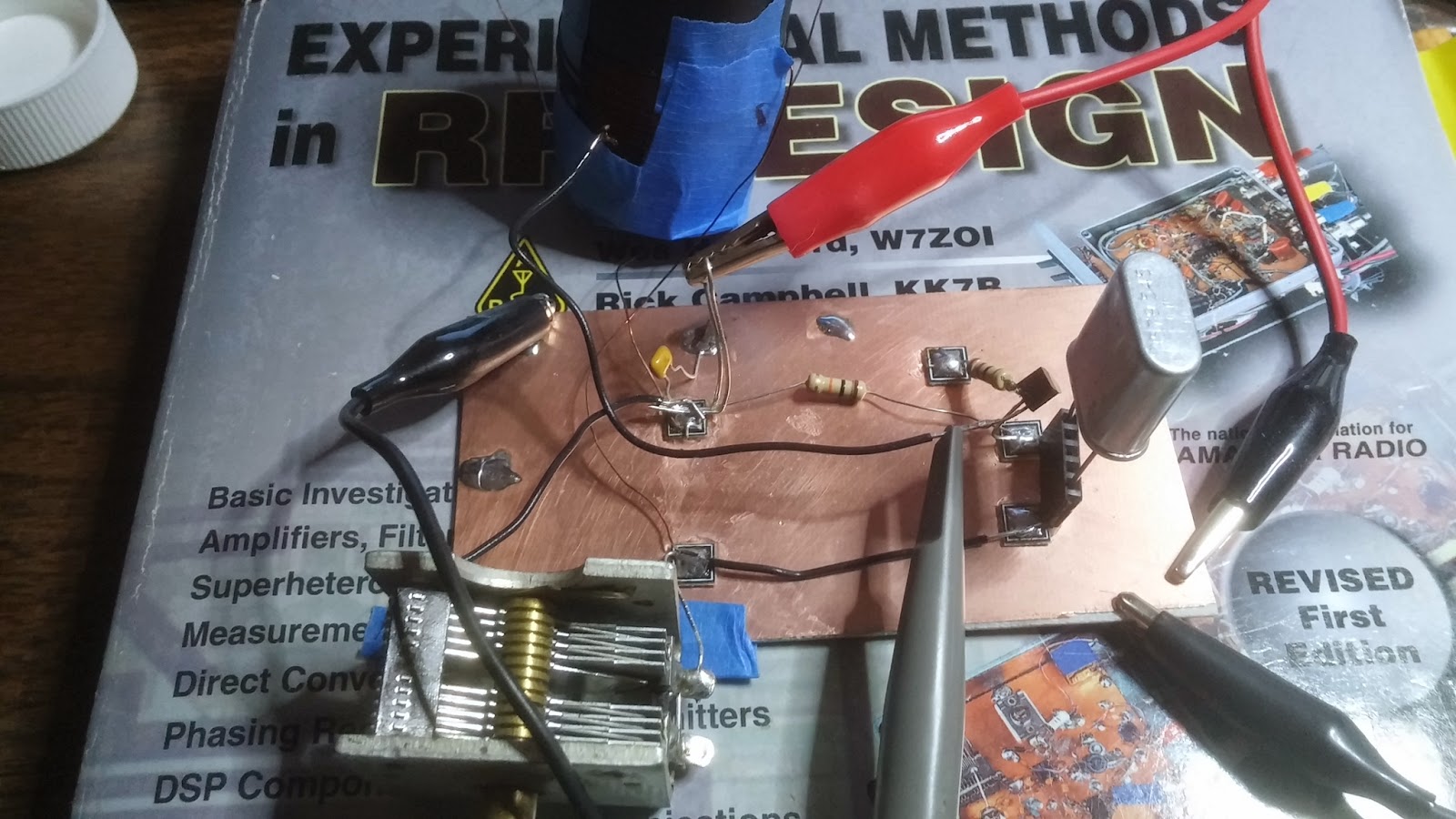
Thanks for the crystal for the mighty mite. I have been pretty busy of
late, but got a few minutes to take a first stab at a build. I am an
electronics neophyte, but learning every day. I am a convert from the
software darkside – software engineer by trade – and enjoying every time
I succeed in getting something to work! I am glad that the circuit is
forgiving because I grabbed what I had at hand to make it and it ain’t
pretty by any means, but I have included a photo of the build as was the
deal and also a snapshot of proof of oscillation from my oscilloscope.
I’ll do it up right soon and try connecting it to my arduino to send
some morse code out to the ether. Send you more pics when I make it
pretty 🙂
Thanks again – 73, AK4ZF
Tony Cekolin
Our book: “SolderSmoke — Global Adventures in Wireless Electronics” http://soldersmoke.com/book.htm Our coffee mugs, T-Shirts, bumper stickers: http://www.cafepress.com/SolderSmoke Our Book Store: http://astore.amazon.com/contracross-20
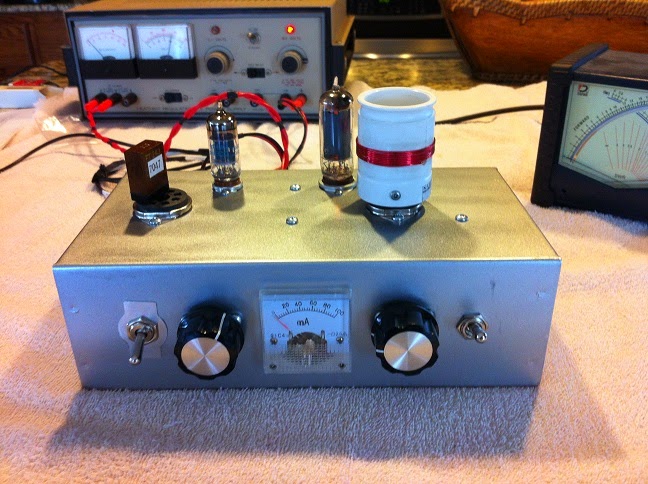
Pete, Bill:
Applied power to the 6C4 / 5763 transmitter for the first time today. I made RF. No smoke was released to the wild. Only issue is the load air variable cap is fully meshed at full capacitance and still not getting the dip on it. Need to root in the junque box for a 220 or 330pF silver mica and wire that in across the load cap.
Our book: “SolderSmoke — Global Adventures in Wireless Electronics” http://soldersmoke.com/book.htm Our coffee mugs, T-Shirts, bumper stickers: http://www.cafepress.com/SolderSmoke Our Book Store: http://astore.amazon.com/contracross-20
Somehow this seems appropriate for Pi Day (3-14). I guess it is because the antenna is circular.
Thanks to David GM4JJJ for sending this to us. There is no audio. Kind of fun to watch the lads struggle with the big antenna while wearing coats and ties!
David writes:
Bill, I really enjoy SolderSmoke podcasts etc, I am returning to ham radio after about a decade, got the bug again….
Our book: “SolderSmoke — Global Adventures in Wireless Electronics” http://soldersmoke.com/book.htm Our coffee mugs, T-Shirts, bumper stickers: http://www.cafepress.com/SolderSmoke Our Book Store: http://astore.amazon.com/contracross-20
Very nice. A beautiful and educational project from Pete and Ben. I have to start putting “tune switches” in my rigs and ammeters in the bias circuits of my finals.
Our book: “SolderSmoke — Global Adventures in Wireless Electronics” http://soldersmoke.com/book.htm Our coffee mugs, T-Shirts, bumper stickers: http://www.cafepress.com/SolderSmoke Our Book Store: http://astore.amazon.com/contracross-20
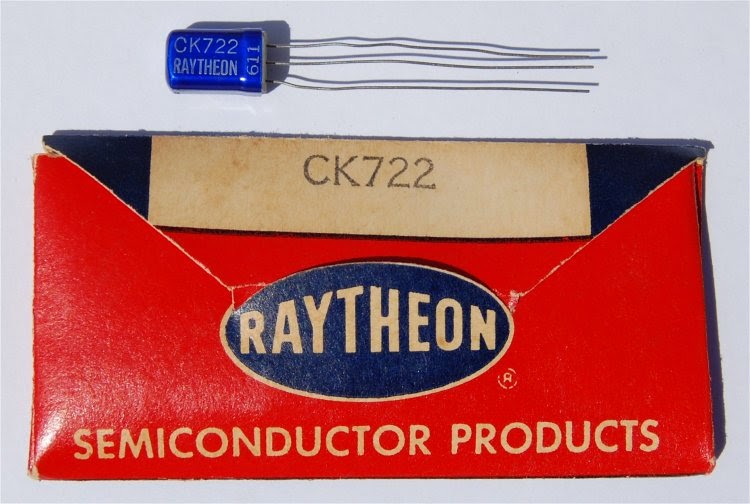
I knew Pete had a lot of experience with transistors, but I didn’t realize just how far back this experience reaches. Pete writes, “The March 2015 issue of QST had an article about a 1953 transistor transmitter project which was really advanced technology since the transistor was only invented about 5 years before that time… About 1953 at the age of 11, I built my first solid state audio amplifier using the venerable CK722 from Raytheon. The transistor did look a bit strange in that cool blue cube shape with a red dot on the side to identify the collector. What a joy and surprise to me that it worked the first time power was applied… It was the CK722 that in large measure started me on a life’s work and engagement in a wonderful hobby. That CK722 path also led me to designing and building a QRP solid state version of the Collins KWM2 which I call the KWM-4.” I asked Pete why an 11 year-old kid in 1953 felt compelled to build a solid state audio amp. The answer is very cool: Pete’s father had introduced him to crystal radios at age 8. Pete wanted an amplifier for his crystal set, but his dad was worried about him building high voltage tube gear. So that’s how Pete got his VERY early start with transistors.
We are really lucky to have Pete Juliano sharing his vast tribal knowledge with us.
Our book: “SolderSmoke — Global Adventures in Wireless Electronics” http://soldersmoke.com/book.htm Our coffee mugs, T-Shirts, bumper stickers: http://www.cafepress.com/SolderSmoke Our Book Store: http://astore.amazon.com/contracross-20
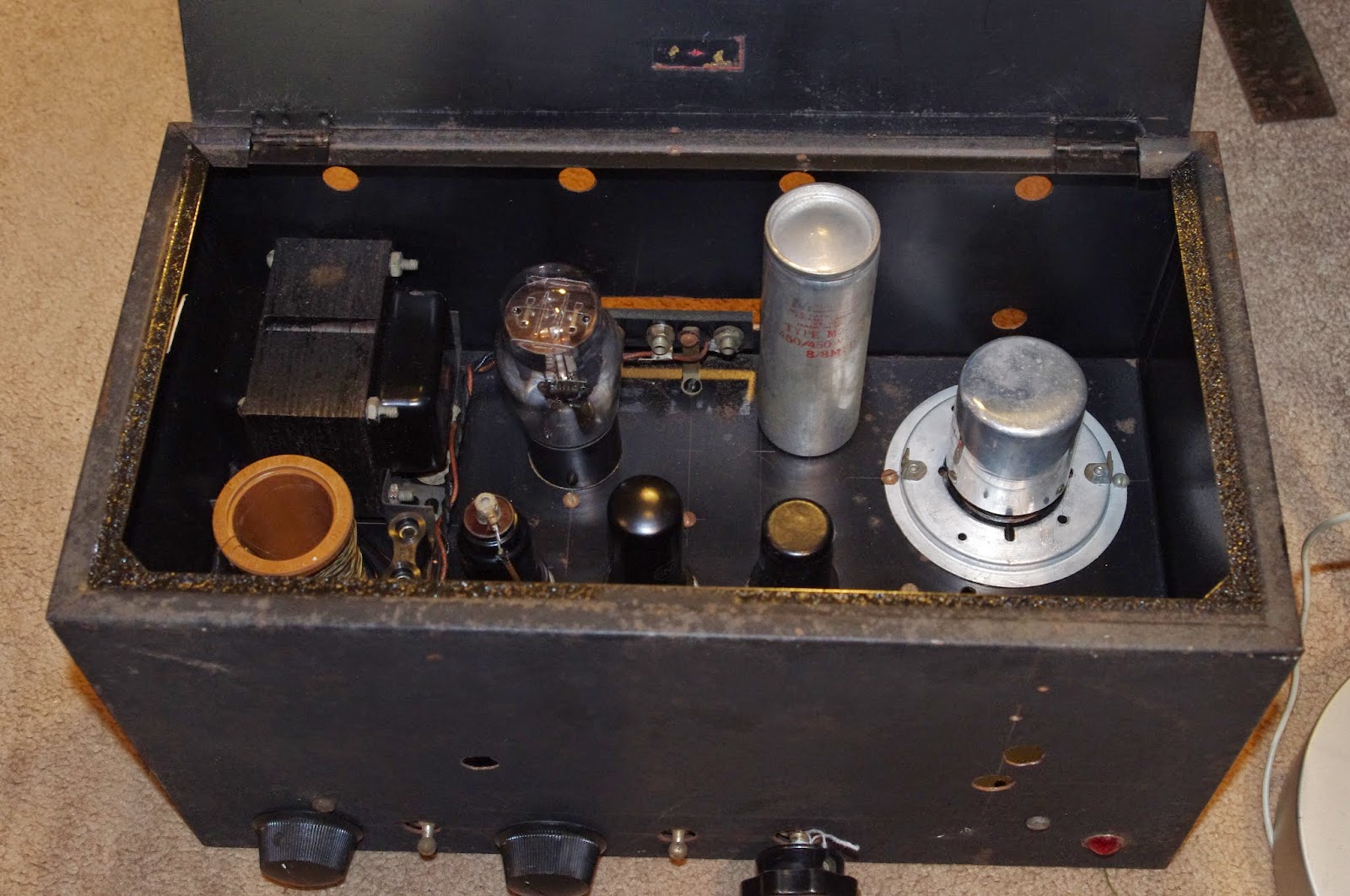
Not even the U.S. Postal Service’s Anti-Crystal Steam Roller can stop an intrepid homebrewer. OM N9IZ got his Mighty Mite working and produced a really nice video and blog post on the project. You can just feel the enthusiasm: On the blog he writes: “Everything was assembled on a bread board for trial. I must admit to being overjoyed when I saw the visual waveform on the PowerSDR panafall display of my Flex-5000A main shack radio. So much so, that I ran through the house calling for my YL, KC9TAH. She was in the shower and thought I’d cut off a finger or something while in the mad scientist lair. Much to her dismay, it was only a nasty CW signal emanating from the Flex speaker. She did humor me by going out to see the marvelous project before asking me what I was going to fix for lunch.” FB OM!
Bill
I thought you might like to hear that another MMM has been brought into the fold. You might remember that the crystal you sent me was steamrolled by the USPS. Believe it or not, it works! Not sure the frequency is exactly spot-on, but who cares…it works! I enjoyed it very much and made a youtube video of the testing process. I also took pictures and posted it all to my webpage. Most of my other projects have been more QRO in nature so I’m treading in uncharted territory. We’ll see how far that goes, but right now I’m loving it. I have my issue of QRP Quarterly and plan to follow along in constructing the LBS project. All for now from Hoosierland. Hope you enjoy the blog post on my webpage. 73 OM.
Our book: “SolderSmoke — Global Adventures in Wireless Electronics” http://soldersmoke.com/book.htm Our coffee mugs, T-Shirts, bumper stickers: http://www.cafepress.com/SolderSmoke Our Book Store: http://astore.amazon.com/contracross-20
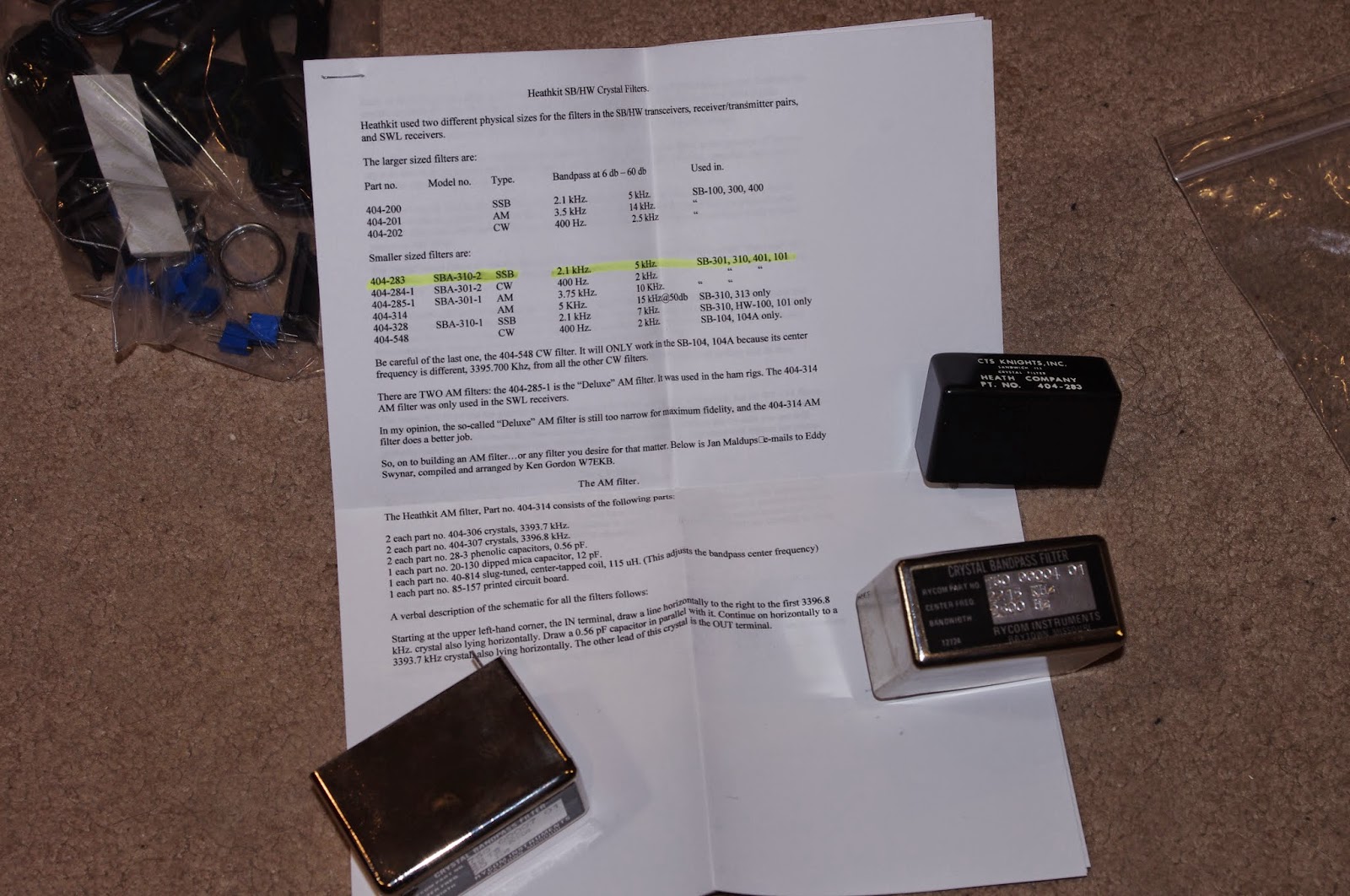
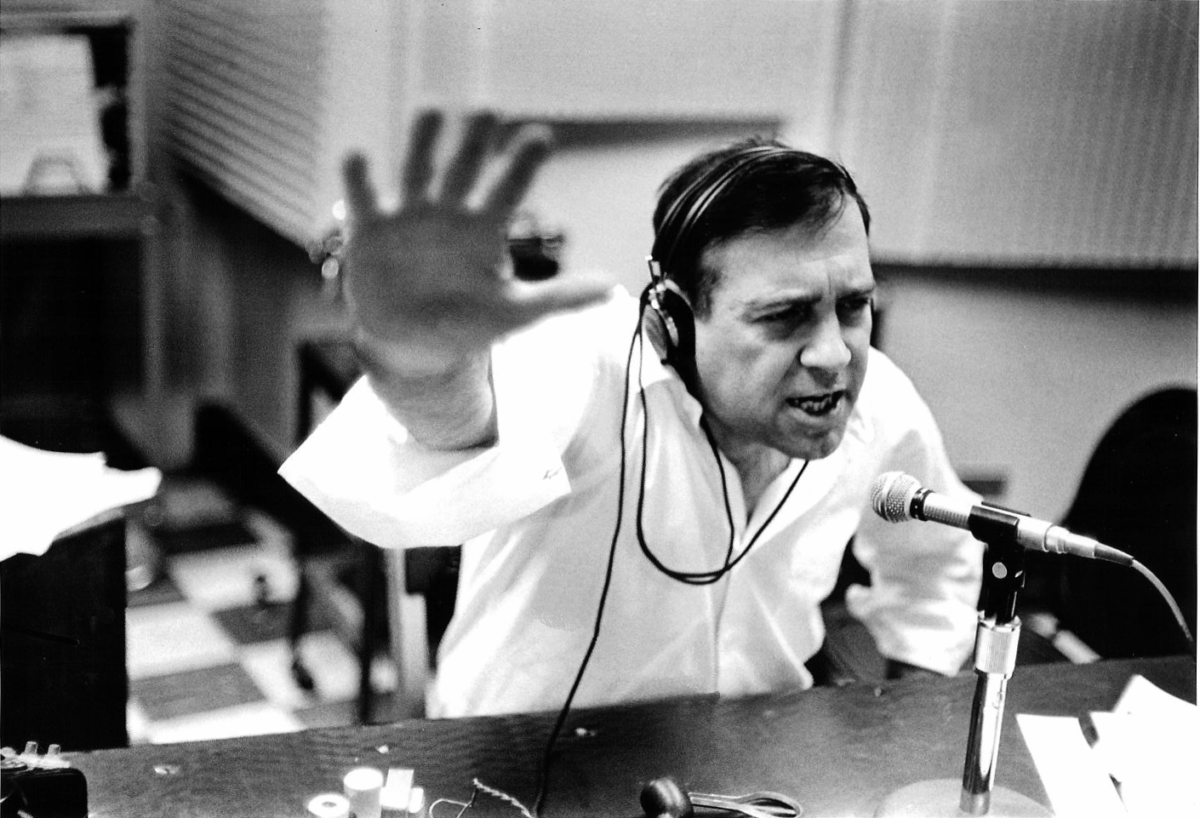
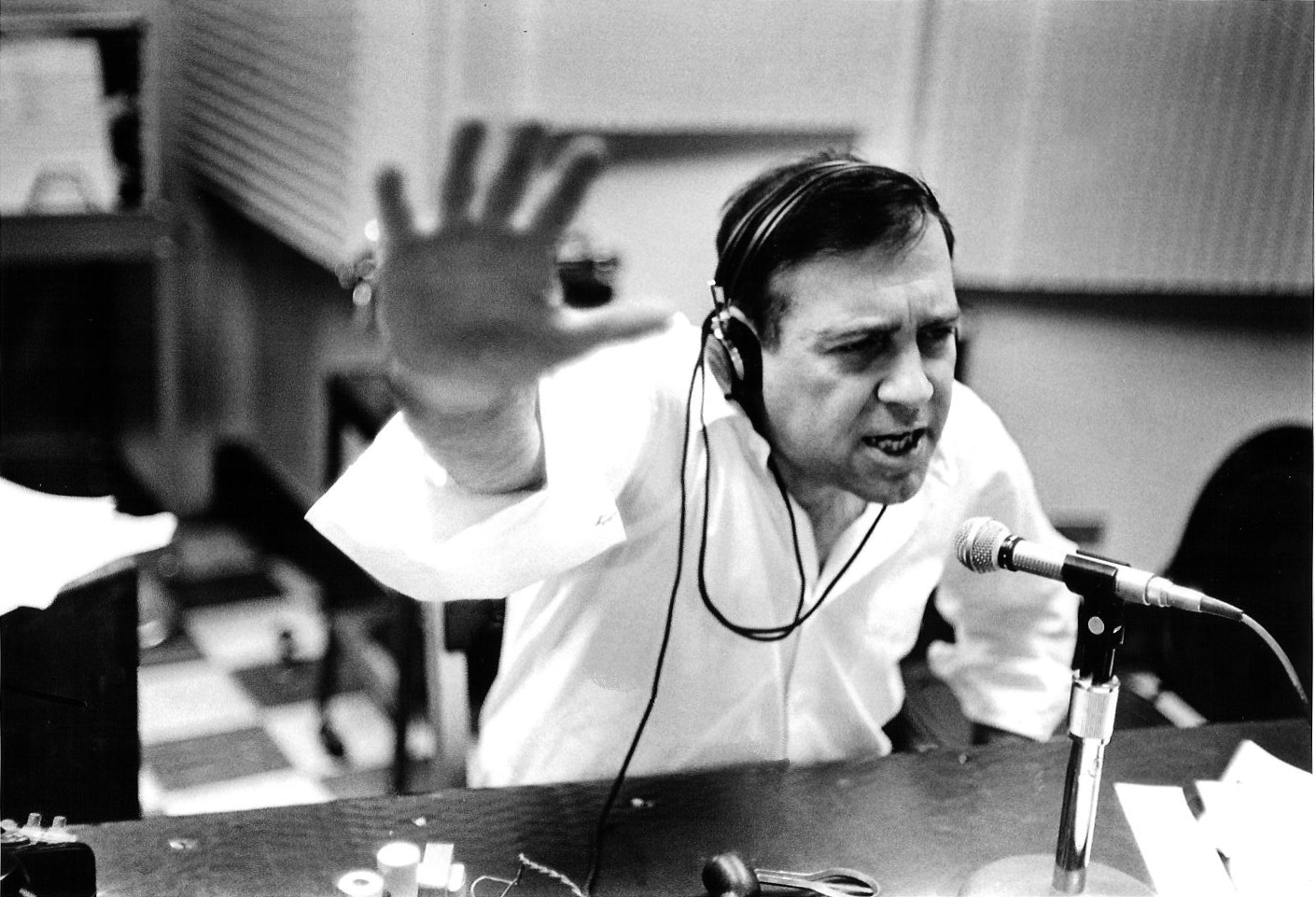
In this 1965 radio broadcast, Jean Shepherd describes his teenage struggles with parasitics and other technical problems in his homebrew 160 meter transmitter.
He describes the sound of parasitics on a signal, saying that they sound as if the signal is being attacked by “debauched erotic locusts.”
He really nails it in describing the scornful, dismissive tone that many hams use in telling their fellow radio amateur that there are problems with his signal. ( I have recently been on the receiving end of this kind of treatment.)
He observes that no one is more worried, “than a man who has built something and can’t get it to work.” Indeed.
During a date with a girl from his high school, he is so obviously pre-occupied with his transmitter trouble that she tells him that something is wrong with him and that his mother “should take him to a doctor.”
And he describes the joy that comes when you figure out the problem and get the thing to work.
The REALLY good stuff begins at about the 25 minute point.
http://ia310115.us.archive.org/2/items/JeanShepherd1965Pt1/1965_01_29_Ham_Radio.mp3
Shep was quoting from King Lear: “O, that way madness lies; let me shun that; No more of that.” In other words: “BASTA!” That is what I have said about my 40 meter troubles. My BITX 20/40 is now a BITX 20.
EXCELSIOR!
Our book: “SolderSmoke — Global Adventures in Wireless Electronics” http://soldersmoke.com/book.htm Our coffee mugs, T-Shirts, bumper stickers: http://www.cafepress.com/SolderSmoke Our Book Store: http://astore.amazon.com/contracross-20
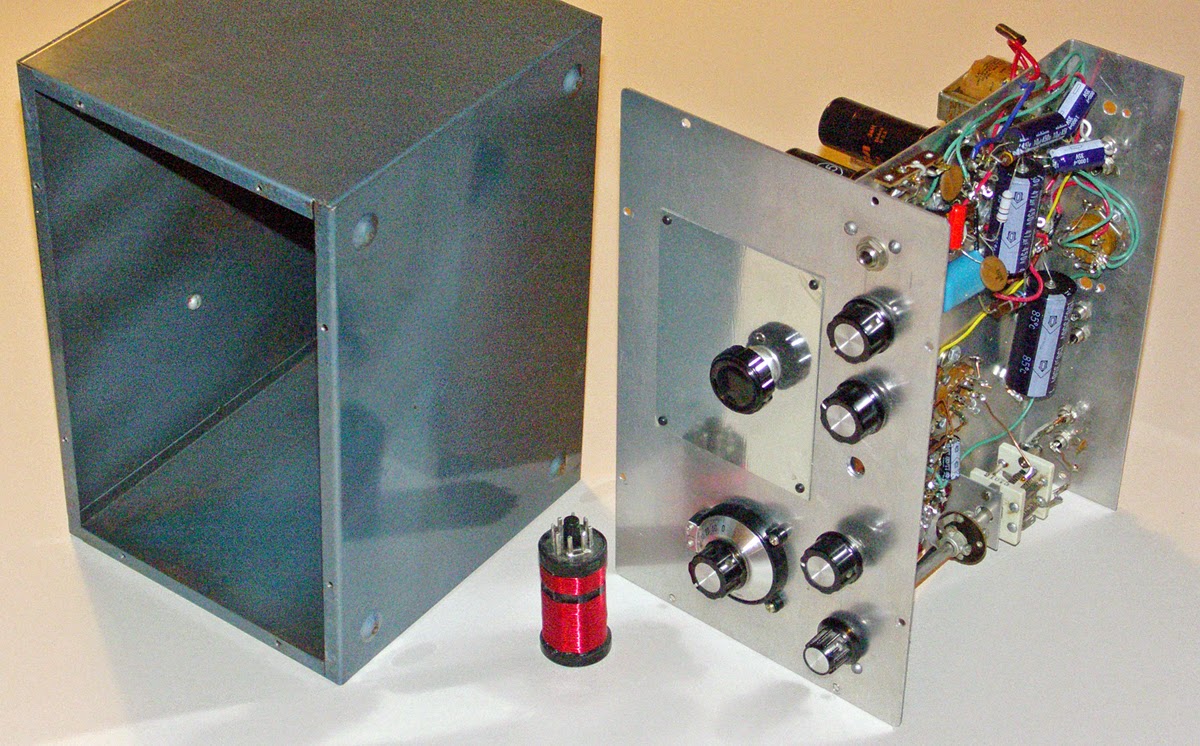
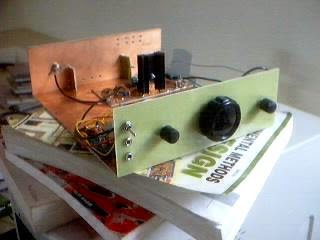
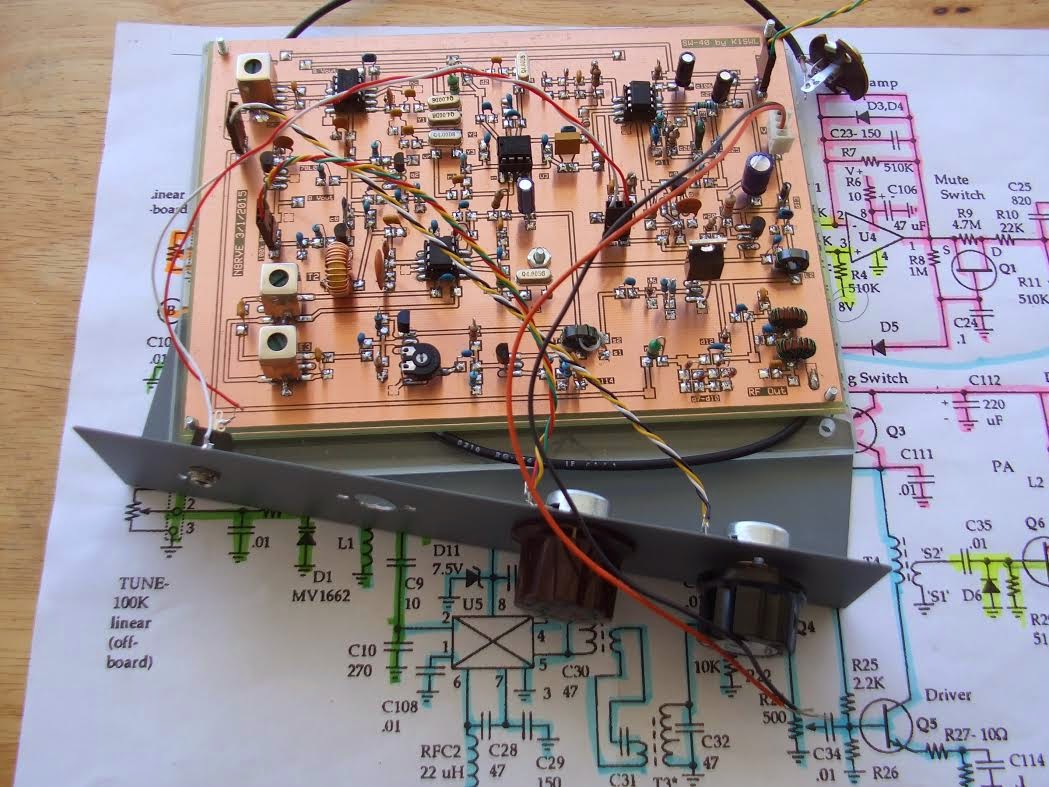
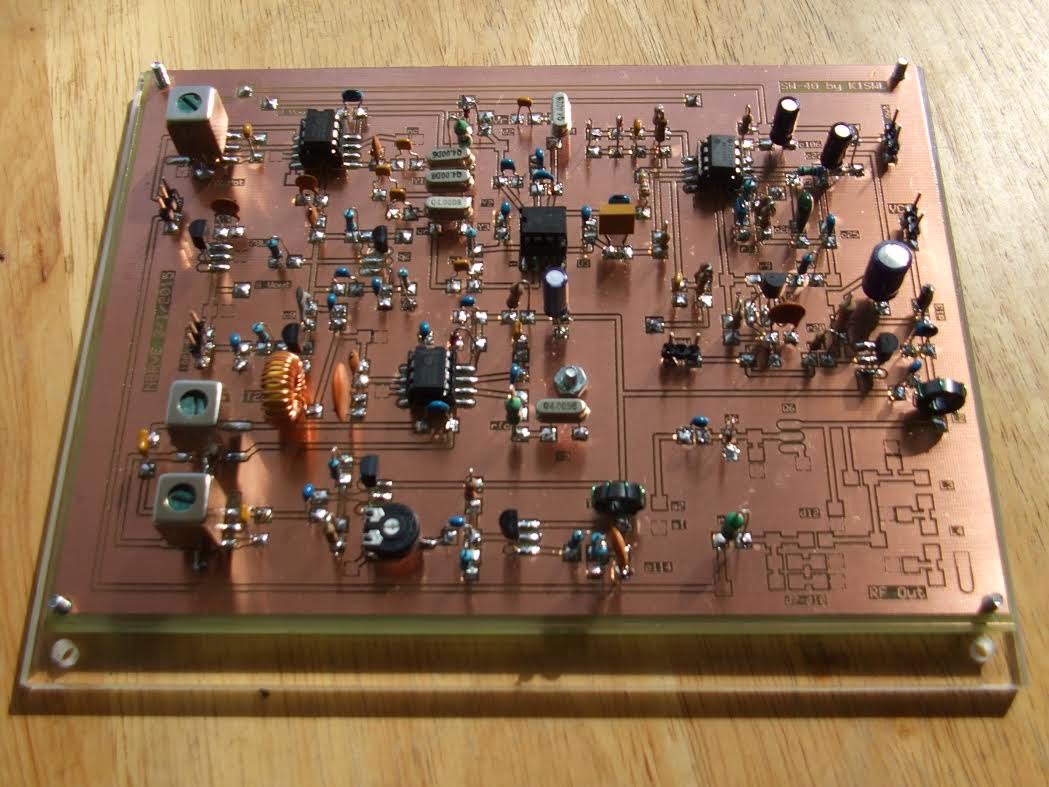
This transceiver was designed during a six hour flight from Europe with paper, pencil and the basic calculator built into my cell phone. It was soldered in three sittings over three days. Very little went wrong during the construction. It was one of those easy designs. The only mistake that I made during construction was that I soldered one of transistors in reverse. The design worked as ‘advertised’. I guess that extensively using feed back amplifiers provides designers with greater repeatability. Also, I realized, a little late in life though, that detailed forethought and ‘mental’ home-brewing is important for a clean design.
The linear chain was initially unstable. It tended to oscillate in the 14MHz band as well as around 500 KHz. I traced the 14MHz oscillations to a choke that I was using at the output of the balanced modulator. It has been removed. The 500 KHz oscillations were because of excessive gain in the driver and pre-driver stages. From 5 ohms, the emitter degeneration has been increased to 10 ohms and better bypassing on the power rail has eliminated the oscillations.The receiver is as hot as I need it to be on 20 meters. Signals from USA, Europe, South Africa and of course India were heard with clarity reminiscent of a clean Direct-conversion receiver on the first evening. The transmitter is powerful enough for local rag chew and it is a modest challenge for DX. VU2PEP has an excellent two element beam at 20 meters at about 40 feet height. DX is easy for OM Paddy who uses the rig regularly. We netted LA2FKA within the first 20 minutes of firing up the rig.

No, I don’t offer PCBs. I don’t repair rigs. I don’t offer kits. I might do a PCB for this rig (I hate PCBs, they hamper experimentation).
This transceiver is dedicated to the memory of OM Juggie, SK (VU2JH) who was a great organizer of India hams, he wrote technical articles in Electronics For You magazine about amateur radio, spurring many to take on ham radio as a hobby. He organized the Millennium Ham Meet in the year 2000. He was always searching for a good and simple homebrew SSB transceiver. He died young. He gave me my first morse key.
Our book: “SolderSmoke — Global Adventures in Wireless Electronics” http://soldersmoke.com/book.htm Our coffee mugs, T-Shirts, bumper stickers: http://www.cafepress.com/SolderSmoke Our Book Store: http://astore.amazon.com/contracross-20